


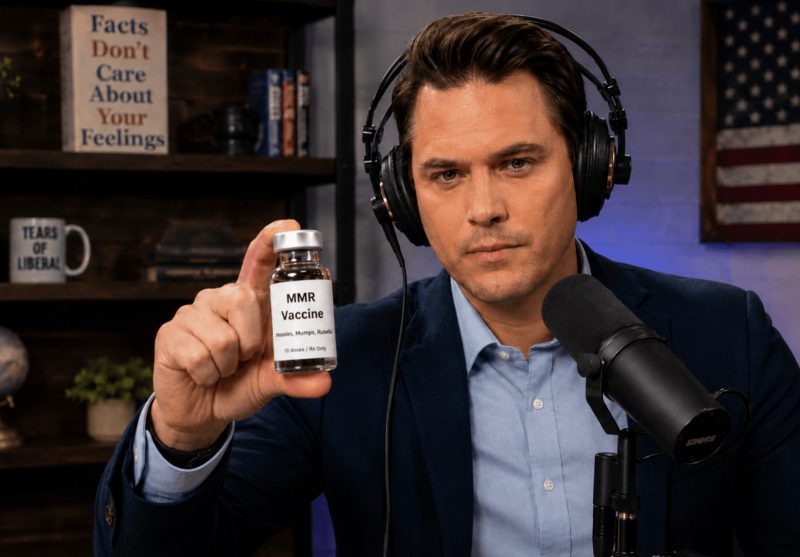

Where Americans get their news may play a significant role in shaping their attitudes toward the measles, mumps, and rubella (MMR) vaccine, according to a national study published in Vaccine.
In the cross-sectional survey of nearly 3,000 US adults led by researchers at Johns Hopkins University, 17% of respondents said they believe the risks of the MMR vaccine outweigh its benefits, indicating vaccine hesitancy. The survey, conducted in August 2025, comes as measles cases have resurged across the country, with more than 2,000 infections reported by the end of 2025. That’s the highest number of annual cases since measles was declared eliminated in the United States in 2000.
Embrace of MAHA movement tied to hesitancy
Most respondents reported engaging with a wide range of news sources across multiple mediums, including social media platforms, but notable differences emerged between hesitant and non-hesitant people. Adults who were hesitant about MMR vaccination were more likely to consume content from right-leaning “new” media outlets and to rely on non-authoritative health information sources.
For example, engagement with right-leaning outlets such as Breitbart was associated with roughly double the odds of MMR hesitancy (adjusted odds ratio [aOR], 2.08). In contrast, consumption of more-mainstream outlets and platforms, including YouTube, Facebook, X (formerly Twitter), podcasts, and Fox News, was generally not linked with increased hesitancy.
People who reported turning to alternative health practitioners, social media influencers, or alternative health newsletters had significantly higher odds of vaccine skepticism. Those relying on alternative health providers had up to 71% higher odds of vaccine hesitancy (aOR, 1.71), and those who often got information from social media health influencers had 41% higher odds of hesitancy (aOR, 1.41).
Conversely, seeking information from physicians or professional medical organizations was linked to lower odds of vaccine reluctance. Adults who reported relying on physicians “sometimes or often” for information had substantially reduced odds (aOR, 0.32).
“These findings build on prior studies that have highlighted the connection between right-leaning media and vaccine hesitancy in two critical ways; first, we reinforce findings that ‘mainstream’ media consumption was not generally associated with vaccine hesitancy, and extend this finding beyond media outlets to include more mainstream social media platforms and digital news services,” write the authors.
Our findings suggest that when everyone is already engaging online, where and how they choose to do so matters.
“And second, we more narrowly identify the subset of ‘new’ right media sources as having associations with MMR hesitancy,” they added. “More generally, our findings suggest that when everyone is already engaging online, where and how they choose to do so matters.”
In the survey, vaccine-hesitant adults also tended to be younger (62% were under age 44) and were more likely to be parents (40% had a child) than their non-hesitant peers. They were also more likely to be racial minorities, have lower education and income levels, express more conservative political beliefs, and identify with the Make America Health Again (MAHA) movement.




Unclear whether media habits drive or reflect skepticism
The data show a clear divide between hesitant and non-hesitant adults in terms of their information ecosystems. “Our work reveals a strong association between people’s specific media habits and their attitudes toward vaccination,” senior author Lauren Gardner, PhD, director of Johns Hopkins’ Center for Systems Science and Engineering, said in a news release.
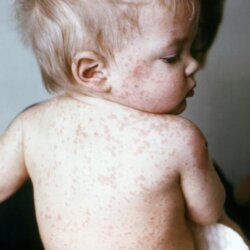
What remains unclear is whether people’s media consumption habits drive hesitancy or result from it. The authors call for more research to investigate the relationship between media habits and vaccine reluctance.
“Are hesitant adults actively seeking out non-authoritative sources, or are susceptible groups disproportionately being digitally targeted by these sources? Or are non-hesitant adults simply better able to filter out non-authoritative information? Or is the relationship bi-directional, creating a feedback loop in any of the scenarios?” write the authors.
While MMR hesitancy remains a minority view, the authors suggest that strengthening trust in clinicians could help offset the impact of different media narratives.
“With public health becoming increasingly polarized, it’s critical to understand people’s attitudes about vaccines, and this work suggests people’s media preferences play an outsized role in influencing those attitudes,” lead author Amelia Jamison, PhD, a health communications researcher at Johns Hopkins, said in the release.
Laine Bergeson is a health and science journalist. Find Laine on LinkedIn
A version of this article was originally posted at the Center for Infectious Disease Research and Policy (CIDRAP) at the University of Minnesota and is reposted here. Any reposting should credit both the GLP and original article. Find CIDRAP on X @CIDRAP


























