


Science Literacy Project Daily Digest

Key to ocean life, coral reefs are disappearing on the way to extinction. Should we mobilize gene editing to save a threatened species?
Coral reefs are fundamental to the health of our oceans. They cover less than 1% of the Earth’s ocean, but ...
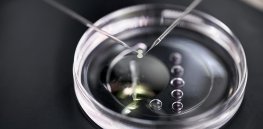
Skin cells can now be used to fertilize eggs
Human eggs made from a volunteer’s skin DNA were fertilized in the lab on September 30, 2025, and some grew ...

Viewpoint: The gap between agricultural reality and regenerative claims about palm oil: ‘It has become less about agronomy and more about allegory’
Today, the creed lighting up meetings, conference stages and supermarket shelves is regenerative agriculture (RA). ... It has become less ...

Big Ag vs. MAHA: Who’s winning and why
Health and Human Services Secretary Robert F. Kennedy Jr. has a reputation for bashing powerful corporate interests in his quest ...

Viewpoint: 10 reasons why we should not fear GMO fruits
[1.] Many people think genetically modified fruit is a recent invention, but the first GMO fruit hit the market in the 1990s. ...
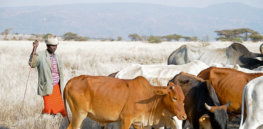
Battling rising feed costs and misinformation, Kenya explores GMO solutions to revive its struggling livestock sector
For years, Kenyan farmers have been complaining of expensive and poor quality livestock feed that is eating into their profits ...

Growing rice traditionally releases dangerous greenhouse gas. Here’s a solution
Rice is perhaps the world’s most important foodstuff — it feeds more than half the global population. But it is ...

Dystopian future? Should the wealthy be able to use AI to hardwire physical or cognitive advantages into their genomes
It is quite possible that the most immediate threat AI poses to humanity is not that its superhuman intelligence will ...

Male Gen Zers’ rejection of reason: ‘Science can slide into conspiracy-tinged mazes rooted in misinformation’
After 30 years as a researcher, science communicator and university science teacher, I’ve been unsettled by what appears to be ...

Avocado orchard of the future: ‘Creating novel types with vibrant skin colors, unique and distinctive flavors and very large sized varieties’
The future of the avocado could look very different, thanks to Westfalia Fruit’s innovative precision breeding programme in South Africa ...

A liver extracted from a genetically modified pig transplanted into a 71-year-old man
Surgeons in China have for the first time transplanted a section of liver extracted from a genetically modified pig into ...

How badly will a long government shutdown impact science?
Threats of federal shutdowns have become routine in the past decade, but this closure could be different: US President Donald Trump’s administration ...

Industry and Trump’s agriculture department: It’s a revolving door
For decades, regardless of who’s been president, some leaders in key government food and farm departments have had strong industry ...

Understanding why coffee is good for our health
Studying the effects of coffee is particularly challenging. Isolating for a beverage with over 1000 compounds is so tricky that ...
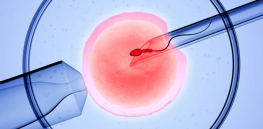
Infertility breakthrough: AI can identify the fastest swimming sperm and then a robot plants it into the embryo
In-vitro fertilization has produced more than 13 million babies since its inception in the late 1970s, but it remains a highly manual ...

Viewpoint: What happened when a liberal food writer makes a science-based case for glyphosate’s safety and importance—in the New York Times
You shouldn’t drink Roundup. You shouldn’t bathe in it, either. But you shouldn’t worry about eating crops sprayed with Roundup ...

Book review: When Everyone Knows that Everyone Knows—Stephen on ‘common knowledge’
Common knowledge is something everyone knows that everyone knows. He saw it. She saw it. He knows that she saw ...

As few as 1% of the world’s population are eating healthy, sustainably-grown food
A major report on the global food system has found that less than 1 per cent of the world is ...

Can CRISPR and other forms of gene manipulation create a new generation of seedless fruits—without the structural risk to food security
Seedless fruit feels like a UX win—no pips, no fuss, just vibes. But the biology behind that convenience is a ...

‘Gene-edited sheep’ are a hot commodity on the black market
The way the federal agents swarmed Jack Schubarth’s ranch in Montana on a late-spring day in 2021, it seemed they ...

As the length of winters continues to get shorter, it screws around with animal instincts and many get confused
"In Norway, we know very well that winters are getting shorter. The Norwegian Meteorological Institute has been collecting measurements across ...

Food producers exploring another alternative meat: Add proteins from plants, fungi, insects and microbial fermentation. It tastes better than it sounds
Alternative proteins derived from various non-animal sources such as plants, mycelium, cultured cells, microbes, and insects are gaining increasing attention ...

Determining your ‘biological age’: Helpful information or longevity scam
You get older every day. But how old are your cells and organs, really? ... Biological age and chronological age ...
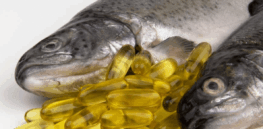
Sashimi that promotes healing and skin rejuvenation? It’s not the latest fad skin care breakthrough, but a yummy-tasting cultivated Omega-3-rich fish fat made using stem cell technology
Sashimi that looks, feels and tastes just like the real deal, but is actually grown in a laboratory. That is ...

“Y” do women outlive men?
Women tend to live longer than men. There are traditional explanations: Men smoke more. They drink more. They tend to ...

After RFK, Jr. is replaced: A breakthrough mRNA vaccine that suppresses food and seasonal allergies
A new mRNA vaccine stopped allergens from causing dangerous immune reactions and life-threatening inflammation in mice, according to researchers from ...

Why do so many rightwing leaders question the science supporting climate change?
"Climate policy and climate research are under heavy attack from the Trump administration," Håkon Sælen recently said at the Cicero ...
