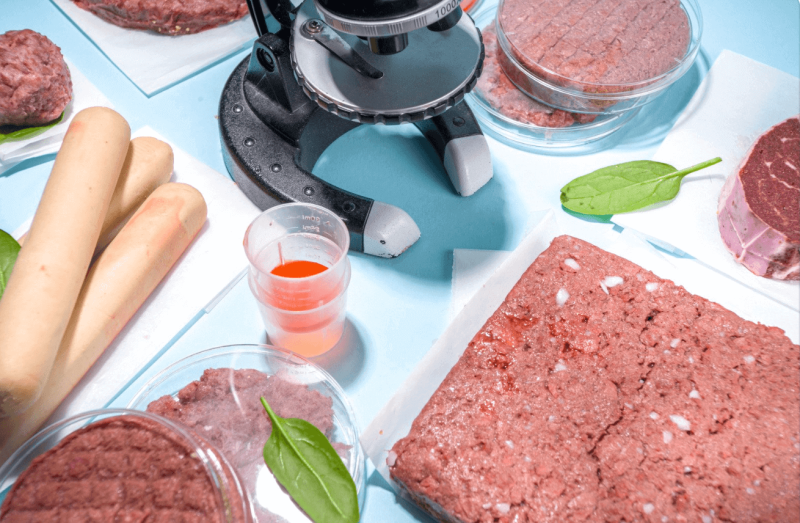
Alternative proteins derived from various non-animal sources such as plants, mycelium, cultured cells, microbes, and insects are gaining increasing attention due to their potential to address global food challenges. … Early innovations focused on plant-based solutions, but recent technological advances have led to the possibility of using cultured cells and microbial fermentation as other viable sources of alternative proteins.
…
Some sources of alternative proteins contain components that adversely affect the flavor, color, or mouthfeel of food products. … Research is therefore being carried out to identify and quantify the various types of “off” colors and flavors in these ingredients and to develop processing operations to remove them.

Ideally, we want hybrid alternative-protein products to significantly enhance our food supply systems while becoming more sustainable. Reducing our reliance on livestock production would improve overall food system sustainability by minimizing adverse environmental effects, such as greenhouse gas production, biodiversity loss, pollution, and water and land use.