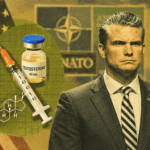
Roughly one in four male US Army soldiers could “fail” the annual testosterone tests Secretary Pete Hegseth has ordered for military personnel aged 30 and over, according to a new analysis of military health data, a result that could leave the Pentagon with some awkward choices, as IFLScience reports.
Purdue University’s Claire E. Berryman and colleagues drew on data from the Military Health and Nutrition Examination Study (MHNES), which sampled soldiers at five Army installations. Hegseth hasn’t said where he’d set the bar, so the team used two common cutoffs for low testosterone in non-obese men: 300 and 264 nanograms per deciliter (ng/dL).
Among 479 male participants, 25.7 percent fell below 300 ng/dL and 14.7 percent below 264 ng/dL. Scaled across the Army, that’s just over 100,000 men under the higher threshold and 57,788 under the lower one. Because testosterone declines with age, the over-30 group bears the brunt: 32.8 percent came in below 300 ng/dL, versus 19.5 percent of younger soldiers.
“These findings help quantify how many service members may require follow-up testing and clinical evaluation after an initial screening,” said Berryman. That follow-up matters, since stress, illness and even time of day can shift testosterone levels, and clinical guidelines call for repeat testing before diagnosing hypogonadism. “This distinction is particularly important when interpreting population-level screening estimates,” the researchers note in the study, published in JAMA.
Experts also point out there’s little evidence that symptom-free men with low testosterone are less fit for combat or make poorer judgments. That leaves the military with unappealing options. Dismissing tens of thousands of soldiers would cripple capacity, while mandatory supplements could invite lawsuits over potential risks such as pulmonary embolism and aggressive prostate cancer. And quietly shelving the results of a likely expensive testing program wouldn’t look great either.