


Cosmos

How plant-based meats are made
As a vegetarian I’d be the first to say that plant-based meat has gotten significantly more pleasant in the last ...

Why do we remember some dreams and not others?
Humans sleep for approximately 230,000 hours over the course of their lives – that’s 26 years spent asleep. We primarily ...
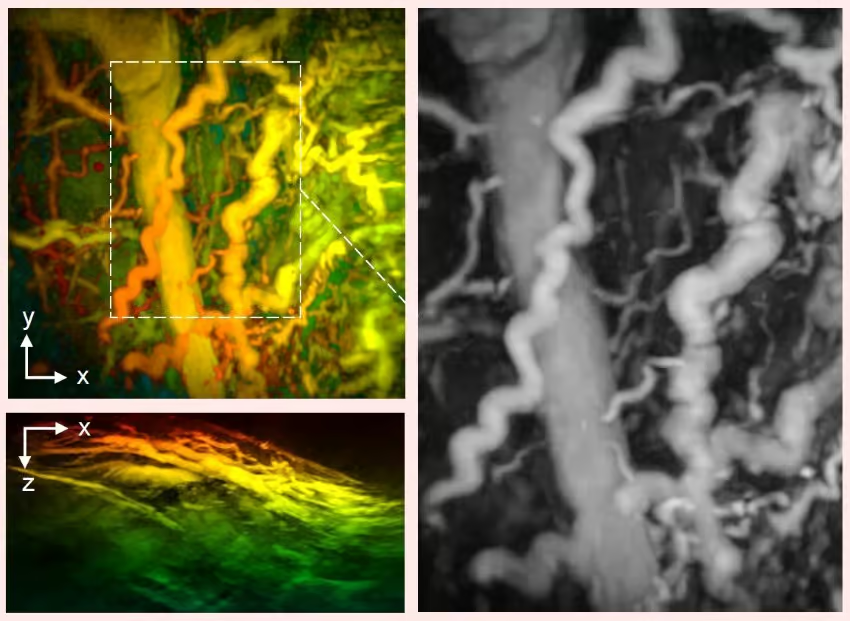
Photoacoustic imaging: Newly-developed scanner that produces 3-D images that show our blood vessels
It’s not the famous Star Trek tricorder but it’s close: researchers have developed a hand-held scanner that can generate highly ...

Eating insects: Ants come in many intriguing flavors. What’s the chemistry behind this phenomenon?
Edible insects are already considered delicacies in some countries, but researchers believe understanding their flavour profiles is essential for the ...

‘Competition between species has shaped our own evolutionary tree’: Human evolution works the ‘complete opposite’ way than most other animals
Interspecies competition in ancient humans saw an evolutionary trend that is the complete opposite of almost all other vertebrates, according to a ...

Australia is first country to approve genetically engineered banana, modified to resist disease
Queensland researchers have just received news over 20 years in the making – their genetically modified banana species called QCAV-4 has ...

Here’s how CRISPR is evolving into a tool to protect small African farmers
A research team has used genome editing to produce a rice variety resistant to yellow mottle virus, which is responsible for high ...
Every minute, a child under 5 dies from malaria. Here’s how gene editing mosquitoes could quickly dramatically suppress disease-carrying populations
US scientists are hailing a new gene modification technique that leads to the suppression of female mosquitoes of the species ...

Cold adaptation: Why did it take humans 30,000 years to adapt to chilly climates?
Ancient DNA has helped scientists reconstruct evolution and adaptation among humans living in Eurasia over the course of 30,000 years ...

‘Opposite of a one-size-fits-all approach’: Every Australian child with cancer eligible for genetic testing and precision treatment
A ‘precision medicine’ program that is expected to reduce deaths and improve life spans is about to be rolled out ...

A ‘dazzling, eggplant-colored’ genetically-modified tomato slated for US rollout. Here are its prospects in Australia
Last month, the US Department of Agriculture issued a statement on a dazzling eggplant coloured fruit ...

Why smiley-face potatoes and other food with ‘human-like’ features repulse us
When food is given human-like features, people do not like to eat it, research from the University of Innsbruck, Austria ...

Differences between human and Neanderthal brains are minimal — so why are we so much smarter?
Our closest human relatives are Neanderthals (split from modern humans at least 500,000 years ago) and their Asian relatives the ...

Once insulated from bee health crisis, Australia invaded by honeybee-killing Varroa mites. How have other countries adapted?
Just three short weeks ago the bee parasite Varroa destructor was detected in Newcastle, NSW. Beekeepers and government bodies have sprung into ...

Australia mulls use of ‘controversial’ gene drives to rid country of feral cats
Synthetic biology and genetic technology could be a safer, more humane way of curbing invasive species. Feral cat populations, for ...

What is a species? New DNA analytic tools upend outdated neat categories
It’s clear to anyone that an African elephant and a garden snail are different species, but the lines blur around ...
Long-standing belief that meat-eating helped drive human evolution called into question
There’s a widespread belief that eating meat became much more common with the advent of big-brained Homo erectus, two million ...
Evidence emerges that this early human species swung from trees but also walked upright
Early hominins used their upper limbs to climb like apes and their lower limbs to walk like humans, according to ...

Another long-term study challenges benefits of moderate alcohol consumption
While the evidence on alcohol consumption varies from study to study, it’s generally thought that people who drink in moderation ...
99.93% of commonly-studied genes are associated with cancer. Is that creating a bias in research?
Have you ever felt like every week or two a new story comes out saying that something is linked to ...
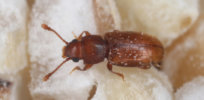
Viewpoint: Glyphosate is great at killing weeds, but there are concerns its use could imperil the microbiome of some insects — both beneficial and harmful
[A] study, published in the journal Communications Biology, showed that glyphosate inhibits a biochemical pathway in bacteria that was previously ...

It has an effect, period: How menstrual cycles influence mood
A research team led by Emma Pierson from Stanford University and Microsoft Research New England, US, found that the menstrual ...

Extinct Denisovans – modern human cousins – may have contributed genes to high-altitude adaptations seen in Tibetans
[A] cave on the Tibetan Plateau was once home to Denisovans, an ancient species of humans whose remains had previously ...

Can listening to Mozart reduce epileptic seizures?
In a paper published in the journal Clinical Neurophysiology and just presented at a virtual meeting of the European College of ...

Here’s why children learn languages more easily than adults
Previous brain scanning research and the clinical findings of language loss in patients who suffered a left hemisphere stroke have ...

How sleep ‘cleans’ the brain
Sleep has critical roles in health and regeneration, and one of those is clearing the brain of metabolic waste, according ...

Video: Sperm are ‘spinners not swimmers’—because they are lopsided
Research by fertility scientists in the UK and Mexico challenges the accepted view of how sperm “swim”, suggesting that it ...

‘Mind blindness’ makes it hard to remember the past and picture the future
[R]ecent studies have found that 2% to 5% of people will see nothing at all [when they try to imagine ...
