


Guardian

Gene editing could all but end world’s most serious livestock diseases
Farming is poised for a gene editing revolution that could overcome some of the world’s most serious livestock diseases, the ...

Neonicotinoid insecticides pose risks to wild bees and honeybees, European Food Safety Authority says
The world’s most widely used insecticides pose a serious danger to both honeybees and wild bees, according to a major ...

How might humans react to alien life? ‘We will take it rather well’
[R]esearchers say the discovery of alien life is more likely to be welcomed with open arms than panic. … To ...

Growing human organs in sheep could help solve transplant shortage
Growing human organs inside other animals has taken another step away from science-fiction, with researchers announcing they have grown sheep ...
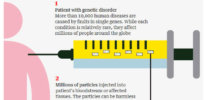
Infographic: Gene editing and CRISPR in action
Much of the excitement around gene editing is fueled by its potential to treat or prevent human diseases. There are ...

3-parent embryos: UK doctors identify two women to undergo breakthrough, controversial procedure
Doctors in Newcastle have been granted permission to create Britain’s first “three-person babies” for two women who are at risk ...

Viewpoint: ‘Scientific racism’ and eugenics are infiltrating legitimate science again
Researchers with extreme views on race number relatively few but, having languished on the margins of their fields for many ...

Some large Australian supermarket chains removing neonicotinoid insecticides from shelves, citing bee health concerns
Woolworths in Australia has joined a growing list of companies to stop supplying a controversial pesticide linked to global declines in ...

European court recommends gene-edited crops be exempt from EU GMO laws
Gene editing technologies should be largely exempted from EU laws on GM food, although individual states can regulate them if they ...

Mars in 15 years? Not without overcoming 3 big challenges
Editor's note: Zahaan Bharmal is the Head of Marketing Strategic Communications at Google and has a degree in Physics from ...

Hunter-gatherer ‘paradise’? Stone Age settlement discovered in Israel
Israeli archaeologists have uncovered next to one of the country’s busiest roads the site of an extraordinarily well preserved prehistoric ...
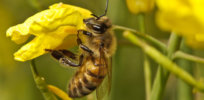
Despite 2014 EU ban, neonicotinoid insecticides still found in quarter of UK honey samples
Almost a quarter of British honey samples remain contaminated after a partial ban on neonicotinoid pesticides, new research has revealed ...

Does our genetics ‘determine’ how ‘smart’ we can become? Debate erupts in Britain
Education in England is no better than mediocre, and billions of pounds have been wasted on pointless university courses and ...

CRISPR 2.0: Targeting incurable diseases by ‘turning up volume’ on good genes
Incurable diseases such as diabetes and muscular dystrophy could be treated in future using a new form of genetic engineering ...
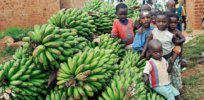
With biotech law in place, will Uganda embrace GMOs to tackle hunger?
After an afternoon drizzle, Ephraim Muhereza carefully scouts his three-acre banana plantation in Gayaza, Wakiso district, plucking male buds from ...

Migraine relief: First drug in 20 years that can prevent and cut in half length of attacks
A new migraine drug that can halve the length of attacks has been hailed as “the start of real change” ...
Countering alarmist health reporting with scientific savvy
Without even thinking about it, the survival instinct is for ever on, which is why, says Brunel University’s James Carney, a ...

Genetics can’t determine your indigenous heritage
Collectively, genetics studies have shown us that the indigenous inhabitants of the Americas are descended from a group that diverged ...

Despite the hype, there was no ‘successful’ human head transplant
In February 2015, Sergio Canavero appeared in this very publication claiming a live human head will be successfully transplanted onto ...
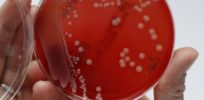
Could ‘superantibiotics’ save us from rising drug resistance?
The need for new classes of antibiotics has repeatedly been emphasised, with researchers turning to some of the most extreme environments on ...
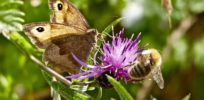
UK backs complete EU ban of neonicotinoid insecticides, citing harm to pollinators
The UK will back a total ban on insect-harming pesticides in fields across Europe, the environment secretary, Michael Gove, has ...

Artificial intelligence fears could lead to over-regulation
[A]s we begin to realise [artificial intelligence] opportunities, the potential risks increase: that AI will proliferate, uncontrolled and unregulated, in ...
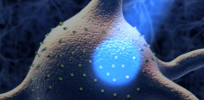
‘Chemical surgery’ could treat diseases by fixing genetic mutations
A breakthrough in “chemical surgery” that can correct a type of genetic mutation behind a host of diseases has been ...

Google’s self-learning AI starts with blank slate and ‘creates knowledge itself’
Google’s artificial intelligence group, DeepMind, has unveiled the latest incarnation of its Go-playing program, AlphaGo – an AI so powerful that ...

‘Ecological Armageddon’? Three-quarters of flying insects in Germany vanished in 25 years, study claims
The abundance of flying insects has plunged by three-quarters over the past 25 years, according to a new study.... Insects ...

Ben and Jerry’s announces organic dairy line in Europe, pledges ‘no glyphosate traces’
Ben & Jerry’s has moved to cut all glyphosate-tainted ingredients from its production chain and introduce an “organic dairy” line ...

Is society ready or willing to embrace an Artificial Intelligence deity?
Intranet service? Check. Autonomous motorcycle? Check. Driverless car technology? Check. Obviously the next logical project for a successful Silicon Valley ...

GMO algae—environmentally-friendly alternative to palm oil—runs into resistance
When green cleaning company Ecover announced the launch of a new laundry liquid containing an oil made from algae, as ...
