


Science News

‘There is no gay gene’: But study suggests genetics may play role in choosing same sex partner
In a large study of more than 490,000 men and women in the United States, United Kingdom and Sweden, researchers ...

Mystery of the mind: How autism got its start in the developing brain
Here are some of the key points [neuroscientist Kevin] Pelphrey made on how autism may get its start in the ...

Plant domestication takes decades. With CRISPR it could take two years
Gene editing can speed up plant domestication, taming wild vines, bushes and grasses and turning them into new crops. Editing ...
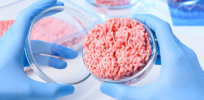
How do you make a lab-grown burger?
In July, [the alternative-meat] movement passed a new milestone: In a packed auditorium in suburban Maryland, the FDA convened the ...

Artificial intelligence could predict where earthquake aftershocks will strike
A new artificial intelligence is turning its big brain to mapping earthquake aftershocks. Scientists trained an artificial neural network to ...

Newly-discovered microbes could save endangered plants from extinction
One fine Hawaiian day in 2015, Geoff Zahn and Anthony Amend set off on an eight-hour hike .... The two ...

Could a good night’s sleep ‘clear away’ Alzheimer’s plaques from our brains?
Neuroscientist Barbara Bendlin studies the brain as Alzheimer’s disease develops. When she goes home, she tries to leave her work ...
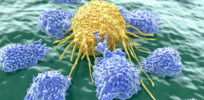
Making CAR-T cancer treatments less risky with ‘safety switches’ and precision targeting
A majority of patients who receive CAR-T cell therapy react [with] varying degrees of severity. Those same T cells that ...

Consumer genetic tests and loss of privacy: ‘It’s often the price you pay’
For a few hundred dollars and a spit sample, you too could take a journey of genetic self-discovery. You may ...
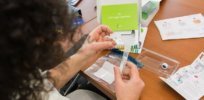
Here’s what you get from 3 very different at-home genetic tests
For health testing, I sent spit samples to 23andMe, Genos and Veritas Genetics, three companies that represent the various levels of DNA testing available ...
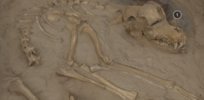
Early North American settlers brought dogs more than 10,000 year ago
A trio of dogs buried at two ancient human sites in Illinois lived around 10,000 years ago, making them the oldest ...
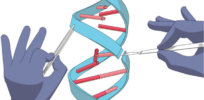
What was CRISPR before humans ‘discovered’ it for use in gene editing?
[T]here is a less sequins-and-glitter side to CRISPR that’s just as alluring to anyone thirsty to understand the natural world ...
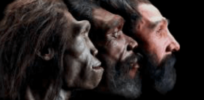
Homo sapiens may only have appeared 300,000 years ago, and evolved modern features gradually
Human origins are notoriously tough to pin down. Fossil and genetic studies in 2017 suggested a reason why: No clear ...

2017: The year gene therapy became a ‘clinical reality’
This year, gene therapy finally became a clinical reality. The U.S. Food and Drug Administration approved two personalized treatments that ...
Stressed out? It could alter your sperm
Sperm from stressed-out dads can carry that stress from one generation to another. “But one question that really hasn’t been ...
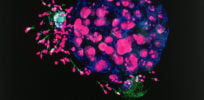
What makes a female? How XX embryos destroy male reproductive tissue
A protein called COUP-TFII is necessary to eliminate male reproductive tissue from female mouse embryos, researchers report in the Aug. 18 Science. For ...

How do you define ‘species’? Turns out, it’s not so easy
At first glance, “species” is a basic vocabulary word school children can ace on a test by reciting something close ...

Why hunter-gatherer civilizations did not destroy themselves through inbreeding
Much like hunter-gatherers today, ancient Eurasians married outside their home groups and formed webs of friends and in-laws vital for ...

Air pollution, while abating in most places, poses ‘greatest threat to public health?’
Even with vast improvements in air quality since the ’70s, people haven’t stopped dying from the air they breathe. An ...

Brain ‘flexibility’ could help explain why people learn differently
As a person learns, connections between brain regions can change. Some neural partners connect, then split apart […]; others form ...

CRISPR red flag? Gene drives may not always work as advertised
A genetic-engineering tool designed to spread through a population like wildfire — eradicating disease and even whole invasive species — ...

Origins of man’s best friend: Dogs likely domesticated only once, likely in Asia
New data from ancient dogs indicates that dogs became distinct from wolves between 20,000 and 40,000 years ago, researchers report ...

No longer ‘dead’: Our bones communicate through hormones with brain, other organs
In addition to providing structural support, the skeleton is a versatile conversationalist. Bones make hormones that chat with other organs ...
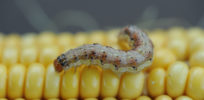
Climate change may speed up pest’s tolerance of insect-resistant GM Bt corn
Climate change might be great news for pests looking to munch on genetically modified crops, researchers propose. In particular, researchers ...

Building a face ‘bit by bit’: Human recognition by monkeys
A monkey’s brain builds a picture of a human face somewhat like a Mr. Potato Head — piecing it together ...

How humans and chimps diverged: DNA parasite ‘jumping genes’ played key role
Face-to-face, a human and a chimpanzee are easy to tell apart. The two species share a common primate ancestor, but ...
CRISPR’s long ‘natural history’ in microbes predated its recent ‘miracle’ applications
It is the dazzling star of the biotech world: a powerful new tool that can deftly and precisely alter the ...

DNA markers can help explain children’s reading ability
An international team of scientists from the United Kingdom, the United States, and Sweden has used a genetic scoring technique ...
