How do viruses become contagious?

Here are two recent stories about viruses. They started out alike, and ended up very differently.

In October, a woman in Guinea died of Ebola, leaving behind two daughters, one of them two years old, the other five. A relative named Aminata Gueye Tamboura took the orphaned children back to her home in northwest Mali–a 700-mile journey. Tamboura didn’t know it then, but the younger girl, named Fanta Conde, was infected with Ebola as well. For three days, they traveled on buses and in taxis as Fanta grew ill, developing a scorching fever and a perpetual nosebleed. Soon after arriving in Mali, she died.

Yet Tamboura never became infected with Ebola. Nor did Fanta’s sister or her uncle, who also made the trip. Nor did anyone else who shared the buses and taxis with Fanta, or who encountered Fanta elsewhere on her doomed journey. After Fanta’s death, the entire country of Mali braced for a devastating outbreak. But the outbreak never came.

The other story began in December. Someone–we don’t know who–paid a visit to Disneyland in California. That person, who we’ll call Patient Zero, was infected with the measles virus. But Patient Zero probably didn’t realize that he or she was incubating it, because the obvious symptoms, such as a rash and a high fever, wouldn’t emerge for several days. Strolling around Disneyland, Patient Zero cast off the measles virus in all directions, infecting dozens of people. Those people later developed measles, and may have spread the virus to others. By the end of January, the Disneyland outbreak had reached 94 cases, and that number is certain to rise higher.
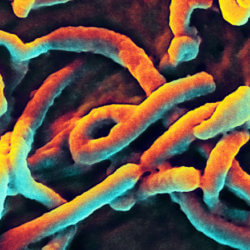
These two stories show just how different viruses can be. For all the fear that Ebola can inspire, it’s a pretty bad transmitter. Measles, on the other hand, is among the most contagious viruses on Earth. There’s no single secret to measles’s power of contagion. Its adaptations for spreading are sprinkled across its whole life cycle.

Read full original article: How The Measles Virus Became A Master of Contagion

{{ reviewsTotal }}{{ options.labels.singularReviewCountLabel }}
{{ reviewsTotal }}{{ options.labels.pluralReviewCountLabel }}
{{ options.labels.newReviewButton }}
{{ userData.canReview.message }}

Related Articles

Infographic: Global regulatory and health research agencies on whether glyphosate causes cancer

Infographic: Global regulatory and health research agencies on whether glyphosate causes cancer

Does glyphosate—the world's most heavily-used herbicide—pose serious harm to humans? Is it carcinogenic? Those issues are of both legal and ...

Most Popular

Screenshot-2026-06-08-at-10.19.30-AM
‘Natural’ wellness supplements linked to liver injury
Screenshot 2025-08-25 203032
Mazzenga’s 20-year old muscles: How a still-going-strong 92-year old sprinter wins every race she enters
Credit: ACSH
Viewpoint: Who and what’s to blame for the surge in vaccine-preventable diseases?
ChatGPT-Image-May-28-2026-12_56_54-PM
Viewpoint: Vaccines' non-specific effects? The ‘shoddy’ Danish couple whose 'research’ inspires RFK, Jr.’s health delusion
Screenshot-2026-06-05-at-2.12.30-PM
Some plants can poison you. So how did humans figure out what is safe to eat?
Screenshot 2025-07-30 at 10.48
Can gene editing eliminate Down syndrome? Scientists have done it in lab-grown cells
ChatGPT-Image-Jun-9-2026-03_24_05-PM
Misinformed parents overdosing children with Vitamin A to fight measles
Screen Shot at AM
Facts & Fallacies Podcast: Right-wing politics bad for your health? Separating speculation from science
ChatGPT Image Jun 3, 2026, 03_14_43 PM
Viewpoint: How Earthjustice became the poster child for the abuse of special interest activist funding
Screenshot-2026-06-08-at-11.05.51-AM
Can vaping lead to cancer? New ‘association study’ raises questions of “links"
ChatGPT-Image-Mar-10-2026-01_39_01-PM
Viewpoint—“Miracle molecule” debunked: Why acemannan supplements don’t work
ChatGPT-Image-Jun-9-2026-11_54_59-AM
Why weight-loss drugs might be reducing cancer rates and making treatment more effective
glp menu logo outlined

Get news on human & agricultural genetics and biotechnology delivered to your inbox.