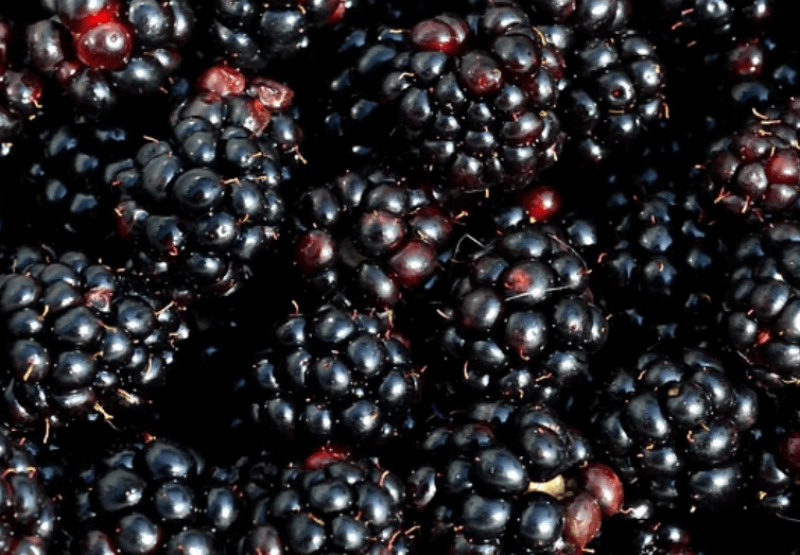
“Everyone would love to eat a better fruit, such as a seedless berry,” says Redpath, who earned her doctoral degree in horticultural science from the College of Agriculture and Life Sciences in 2021. “I am interested in making fruit more accessible to more people. Plant gene editing makes these goals accessible and achievable on a faster timeline than conventional breeding.”
Plant gene editing innovation
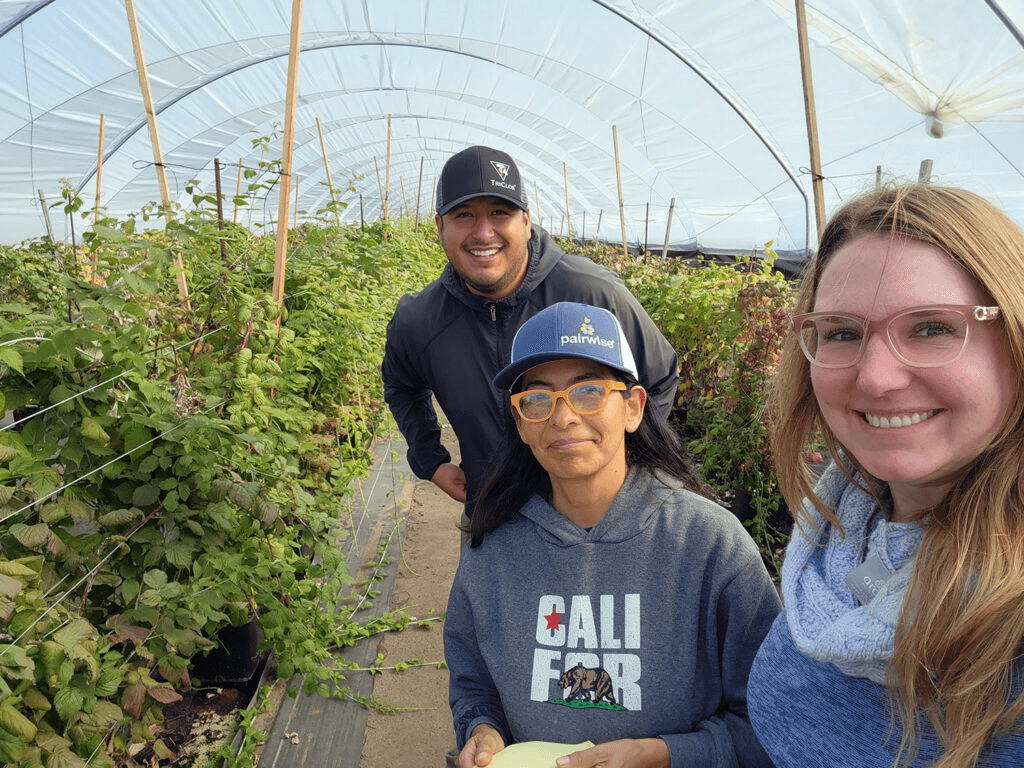
Redpath works at Pairwise, a Durham-based tech company pioneering the application of gene editing innovation in food and agriculture. Redpath and other Pairwise experts leveraged the highly sophisticated CRISPR technology to develop the new seedless fruit by editing its DNA.
CRISPR, or Clustered Regularly Interspaced Short Palindromic Repeats, acts like a GPS for DNA by identifying specific points of a genome. Those points can then be edited to change traits in a plant.
“Developing the seedless blackberry was a multi-year endeavor which relied upon many subject matter experts working together to achieve our goal,” says Redpath.
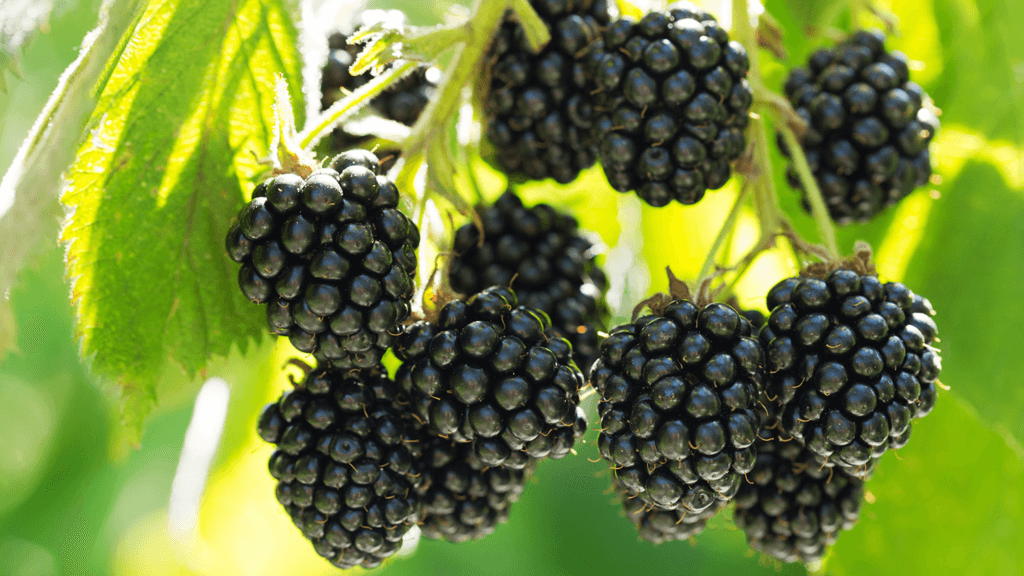
Once the specific traits to be altered were identified, it was a matter of locating the correct genetic sequence, editing the plants and seeing if the new variety grew with the desired results.
“We investigated the genes involved in development of the pit and their functions. Pairwise developed a blackberry transformation and regeneration system, then utilized an in-house genome to identify the correct genetic sequences and used them to develop constructs to create edited blackberry plants,” says Redpath. “Plants were then screened for successful editing and grown in a controlled environment for phenotypic evaluation.”
Why the blackberry?
Pairwise chose the blackberry for editing because it is nutritious and tasty and has several traits which could benefit from genetic edits.
“With many gene targets yet to be discovered, the blackberry is an appealing choice for Pairwise to make major advances in crop improvement,” says Redpath. “We have already achieved several blackberry traits that offer grower and consumer improvements, including thornlessness and seedlessness.”
The blackberry plant is a polyploid, meaning it has multiple sets of chromosomes, which makes it more difficult than other crops to work with, explains Redpath. However, it has a shorter time from planting to fruiting.
Starting with a fast-growing plant like the blackberry allowed Pairwise to figure out how to develop a “seedless” variety much faster than if they had started with a plant that takes longer to grow.

“Now that we’ve achieved the seedless trait in blackberries, we can take those learnings and apply them to removing the pits in other fruits, such as cherries,” says Redpath.
Planting the foundation at CALS
Redpath’s journey started with studying chemistry and microbiology as an undergraduate. She then joined the Department of Horticulture at the University of Georgia to pursue her master’s degree, followed by her doctoral program at NC State. It was at NC State that she decided to focus on tangible results and sustainability.
“While at NC State, I worked on a genome-wide association panel to discover genetic markers for different traits of interest in blueberries,” says Redpath. “I deployed skills in bioinformatics, statistics, lab management, phenotyping and breeding to achieve my research.”
Those foundational principles have been valuable to Redpath in her professional career.
“The skillset I cultivated at NC State serves as an excellent knowledge base in understanding different processes and research endeavors conducted by my Pairwise colleagues,” says Redpath.
“The expertise I developed in phenotyping, data management and analysis, experimental design, and genetic data interpretation is continuously refined and has been instrumental in developing new skills and techniques in my role as a trait testing scientist at Pairwise.”
From CALS to Pairwise
Academia provided Redpath with a solid foothold into horticultural research and led her to Pairwise while still a Ph.D. candidate. A few years and a major breakthrough later, it’s clear Redpath and Pairwise are well matched.
“Pairwise started in the early days of CRISPR. Our founders saw the potential of gene editing technology and wanted to help people eat more fruits and vegetables,” she says. “Here, we start with highly nutritious products and ask, ‘What are the barriers to consumption?’”
With blackberries, the answer was seeds. So, Pairwise eliminated that barrier and increased the desirability of the fruit.
“When fruits like seedless grapes and seedless watermelon were introduced, consumption went way up,” Redpath says. “Blackberries are highly nutritious, but people don’t like the seeds. So we developed a seedless blackberry variety.”