A bipartisan group of US lawmakers is calling on the Trump administration to restore US funding for Gavi, the Vaccine Alliance.
In a letter sent [on May 4, 2026], members of the Senate appropriations committee urged Secretary of State Marco Rubio to restore the $600 million appropriated by Congress in fiscal years 2025 and 2026 for the public-private partnership, which helps poor countries purchase and administer vaccines that protect children against 20 infectious diseases. The funding expires on September 30 if it’s not released.
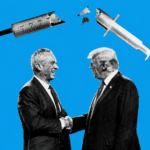
According to reporting by Politico, the State Department has been withholding that money because of concerns expressed by Health and Human Services Secretary Robert F. Kennedy Jr., who has criticized Gavi over its use of vaccines containing the preservative thimerosal. Kennedy has long claimed that thimerosal, which is used in multidose vaccine vials to prevent contamination, is linked to developmental delays and neurodevelopmental conditions.
Evidence reviews by the World Health Organization (WHO) have concluded that small doses of thimerosal in multidose vaccines do not cause harm.
Kennedy has also accused Gavi of not taking vaccine safety seriously. In June 2025, he told Gavi leaders that the United States would withhold financial support from the organization until it has “re-earned the public trust.”
Gavi has decades-long history of bipartisan support
Launched by the WHO, World Bank, UNICEF, and the Gates Foundation in 2000, Gavi has vaccinated more than 1.1 billion children across 78 low- and middle-income countries since its inception. The US government has long been a major financial supporter, and in 2024 the Biden administration pledged $1.6 billion in funding over 5 years. But the Trump administration said last year that it’s planning to end funding for the organization.
The letter asked Rubio why the State Department has not used the congressionally appropriated funds to replenish the US government’s pledge to Gavi.
“GAVI plays a critical role in averting the spread of preventable diseases around the globe and helps protect public health in our country by stopping outbreaks before they reach our borders,” senators Susan Collins (R-ME,) Patty Murray (D-WA), Mitch McConnell (R-KY), Brian Schatz (D-HI, Lisa Murkowski (R-AK), and Jeanne Shaheen (D-NH) wrote. “Congressional support for GAVI endures because of its proven success as a public-private partnership, immunizing more than 1.1 billion children – and in turn preventing 20.6 million deaths – since its inception in 2000.”
When asked by CIDRAP News why the funding is being withheld, a State Department spokesperson said in an email, “The Trump Administration has made its position on Gavi clear.”
Potential consequences of reduce funding for Gavi
Withdrawal of US funding could pose a significant challenge to Gavi and global immunization efforts. According to a recent KFF analysis, the US government has been the organization’s third-largest financial contributor in recent years, and has provided 13% of its funding since inception. But other countries have also pulled back their funding for the organization.
Gavi replenishes its funding every five years. At its most recent funding summit, Gavi secured pledges of $9 billion from donor governments, philanthropic organizations, and individuals for the 2026-2030 funding period. But it fell short of its target goal of $11.9 billion.

Leah Rosenzweig, PhD, a senior fellow at the Center for Global Development (CGD) and director of the Market Shaping Accelerator, said in an email statement that vaccines are “among the most impactful health innovations ever developed,” and that weakening the main institution that helps get vaccines to people at scale “would mean fewer children reached and more preventable disease.”
CGD has estimated that US support for Gavi alongside other bilateral funding for global vaccine efforts saves more than 500,000 lives each year. But Rosenzweig said there are additional benefits.
“The administration does not have to be motivated by global solidarity to see the case for Gavi,” Rosenzweig said. “If it cares about U.S. national security, economic stability, and containing infectious disease threats before they spread, then supporting Gavi is a worthwhile investment.”
Among Gavi’s strategic goals for 2026-2030 is reducing the number of children aged 1 to 5 around the world who’ve received no doses of vaccine, and helping countries reach under-vaccinated populations. Another goal is to provide support to targeted countries that have phased out of Gavi funding, which occurs when a country’s economy has grown large enough that it can self-finance childhood immunization programs. When that happens, Gavi begins a phased withdrawal of its funding.
The administration does not have to be motivated by global solidarity to see the case for Gavi….If it cares about U.S. national security, economic stability, and containing infectious disease threats before they spread, then supporting Gavi is a worthwhile investment.
A recent study in BMJ Global Health suggests that countries struggle during the transition process. The study, led by researchers at the City University of Hong Kong, found that the short- and medium-term effects of reduced Gavi support include an increase in the prevalence of children receiving no basic vaccines and upticks in infant mortality, under-5 mortality, and disability-adjusted life years. The adverse impacts were most pronounced during the accelerated transition phase, when countries move toward minimal Gavi financing.
The study authors say these findings highlight “the fragility of health systems during periods of diminished aid” and suggest they hold important lessons in light of the Trump administration’s dismantling of the US Agency for International Development (USAID), the agency that funneled US money to Gavi before it was shut down.
“This underscores the potential value for policymakers to adopt a more strategic and measured approach to aid transitions, ensuring that the lessons learnt from our analysis of Gavi’s support withdrawal are applied to any changes in USAID’s operations, thereby safeguarding the health gains achieved over decades of international assistance,” the authors wrote.
Chris Dall is a news reporter for CIDRAP News, focusing on antimicrobial resistance and stewardship, and is the host of the Osterholm Update podcast. Find Chris on X @cvdall
A version of this article was originally posted at CIDRAP (Center for Infectious Disease Research and Policy at the University of Minnesota), and has been reposted here with permission. Any reposting should credit the original author and provide links to both the GLP and the original article. Find CIDRAP on X @CIDRAP