MERS papers are duplicates, point to dysfunction is Saudi scientific community

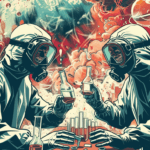
A great story can be told again and again. But scientists working on the deadly Middle East respiratory syndrome (MERS) virus are puzzled by two papers appearing in separate journals that not only tell the same story, but also are based on data from the very same patient in Saudi Arabia.

The double publication—the first in Emerging Infectious Diseases (EID), the other later in The New England Journal of Medicine (NEJM)—has pitted Saudi Arabia’s former deputy minister of health, Ziad Memish, against infectious diseases specialist Tariq Madani of King Abdulaziz University in Jeddah, who recently became the Saudi government’s chief scientific adviser on MERS. Caught in the uncomfortable middle is German virologist Christian Drosten of the University of Bonn, who helped both and became a co-author on Memish’s paper.

“This is a much bigger issue than just a duplicate publication,” adds Michael Osterholm, director of the Center for Infectious Disease Research and Policy at the University of Minnesota, Twin Cities. “It really is a sign of the overall scientific investigation dysfunction that has occurred to date in Saudi Arabia.”

Read the full, original story: Research teams clash over too-similar MERS papers


{{ reviewsTotal }}{{ options.labels.singularReviewCountLabel }}
{{ reviewsTotal }}{{ options.labels.pluralReviewCountLabel }}
{{ options.labels.newReviewButton }}
{{ userData.canReview.message }}

Related Articles

Infographic: Global regulatory and health research agencies on whether glyphosate causes cancer

Infographic: Global regulatory and health research agencies on whether glyphosate causes cancer

Does glyphosate—the world's most heavily-used herbicide—pose serious harm to humans? Is it carcinogenic? Those issues are of both legal and ...

Most Popular

Screenshot-2026-05-01-at-1.29.41-PM
Viewpoint: What happens when whole grains meet modern food manufacturing? Labels don’t tell the whole story.
S
As vaccine rejectionism spreads, measles may be taking a more dangerous turn
ChatGPT-Image-Mar-27-2026-11_47_30-AM-2
FDA’s expedited drug reviews are hailed in some quarters but other approval practices are problematic

Farmers can talk to plants
Farmers are a major source of misinformation—about farming
Screenshot-2026-04-20-at-2.26.27-PM
Viewpoint — Food-fear world: The latest activist scientists campaign: Cancer-causing additives
Screenshot 2026-05-06 at 2.56
Singularity crisis ahead? Can super babies save us from rogue AI geniuses?
Screenshot-2026-04-30-at-2.19.37-PM
5 myths about summer dehydration that could damage your health — or even kill you
Screenshot-2026-05-06-at-2.07.43-PM
Manufacturing a conspiracy: The timeline of how  the White House embraced the fringe claim that scientists are being mysteriously murdered
Screenshot 2026-05-06 at 2.19
Vaccine shootout at the CDC 
Screenshot-2026-03-13-at-12.14.04-PM
The FDA wants to make many popular prescription drugs OTC—a great idea. Here’s why it’s unlikely to happen
Screenshot-2026-04-03-at-11.15.51-AM
Paraben panic: How a flawed study, media hype, and chemophobia convinced the public of the danger of one of the safest classes of preservatives
glp menu logo outlined

Get news on human & agricultural genetics and biotechnology delivered to your inbox.