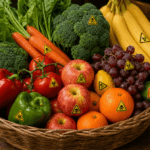
Parents seeking non-GMO foods driving organic sales

Parents’ desires to avoid genetically modified organisms (GMO) are partially driving the increased sales of organic products, according to a study conducted by the Organic Trade Association (OTA) released last week.

The study, a survey of over 1,200 households across the U.S. with at least one child under 18, found that nearly 25 percent of parents already buying organic said that avoiding GMOs is a top reason they choose organic. Only 16 percent of parents said the same in 2013, OTA says.

“Each year we see an increase in parents’ self-described knowledge of organic topics,” said Laura Batcha, OTA CEO and executive director. “Parents have become more informed about the benefits of organic, and they have also become more aware of the questions surrounding GMOs. That heightened awareness is being reflected in their buying decisions.”

The news comes as the organic industry works to differentiate itself from “GMO free” and “Non-GMO Project” labels. USDA prohibits the use of GMOs in its certified organic products. As Miles McEvoy, the Agriculture Department’s National Organic Program (NOP) deputy administrator, explained last year, “This means an organic farmer can’t plant GMO seeds, an organic cow can’t eat GMO alfalfa or corn, and an organic soup producer can’t use any GMO ingredients.”

Read the full, original article: Study: GMO aversion driving organic sales

Related Articles

Infographic: Global regulatory and health research agencies on whether glyphosate causes cancer

Infographic: Global regulatory and health research agencies on whether glyphosate causes cancer

Does glyphosate—the world's most heavily-used herbicide—pose serious harm to humans? Is it carcinogenic? Those issues are of both legal and ...

Most Popular

Picture1
Hiroshima at 81: America’s new nuclear bomb, a buried Iranian target, and a question no one wants to ask
png livestock cow cattle a
Consumer skepticism about gene-edited milk is neither fixed nor particularly high—and falls even more if it’s priced lower
ChatGPT-Image-Mar-10-2026-01_39_01-PM
Viewpoint—“Miracle molecule” debunked: Why acemannan supplements don’t work
ChatGPT-Image-Jul-31-2026-07_35_35-AM
Wikipedia has assembled an informative list of fake news websites from across the ideological spectrum
Screenshot-2026-08-03-at-2.15.16-PM
Viewpoint: Trump’s relaxed controls on supplying China with microchips could undermine U.S. AI dominance
Screenshot-2026-07-31-at-10.52.03-AM
Love sweets and fatty foods? You can blame your genes, but there are ways to quell the obsessions
Screenshot-2026-08-03-at-2.25.49-PM
As measles vaccination rates collapse, scientists push for treatments long considered unnecessary
ChatGPT Image Jul 29, 2026, 09_08_15 AM 2
The retreat of environmental extremism: Why activist NGOs are losing favor
Screenshot-2026-07-17-at-1.34.59-PM
Poll: Vaccine hesitancy soars when patients distrust health providers and turn to social media
ChatGPT Image Jul 29, 2026, 10_17_59 AM
Viewpoint: What does it mean when critics of conventional agriculture say many fruits and vegetables are “linked” to pesticide poisoning?
Screenshot-2026-08-03-at-2.06.39-PM
Viewpoint: Green energy supporters ‘fight back’ against conservative foundations backing  fossil fuel industry
ChatGPT Image Jul 31, 2026, 08_05_37 AM
With trust in RFK, Jr.'s CDC vaccine advice collapsing, physicians scramble to fill the information gap
glp menu logo outlined

Get news on human & agricultural genetics and biotechnology delivered to your inbox.