Evidence continues to build that at least part of our ancestors’ story is encoded in our DNA. This takes the form of environmental pressures such as pathogens actually causing modifications in genetic structure over short timescales.
In a story published earlier this year in the Proceedings of the National Academy of Sciences on how the Black Plague altered the European gene pool a research team from the Netherlands looked at two culturally distinct groups from India and Europe (who eventually co-located) and found that they began to share parallel changes in their genes after co-location. They concluded it was likely owing to exposure to the organism responsible for the Black Death.
Principal author Mihai Netea and his colleagues unraveled this thread by looking at over 190,000 single-nucleotide polymorphisms (SNPs) with advanced scanning methods. SNPs are short segments of DNA that vary among people with different traits. Netea and his team tested people from Romania, as well as Roma people, who have lived among Europeans since about A.D. 1000.
Interestingly, Netea claims that for social and economic reasons, there has not been much interbreeding between the two groups. This peculiarity gives Netea and his team a rare opportunity to study two genetically-distinct populations in one geographical region. This allows the researchers to take a look at the independent genetic tracks the groups developed along and not have to worry about any found differences being the result of differences in location.
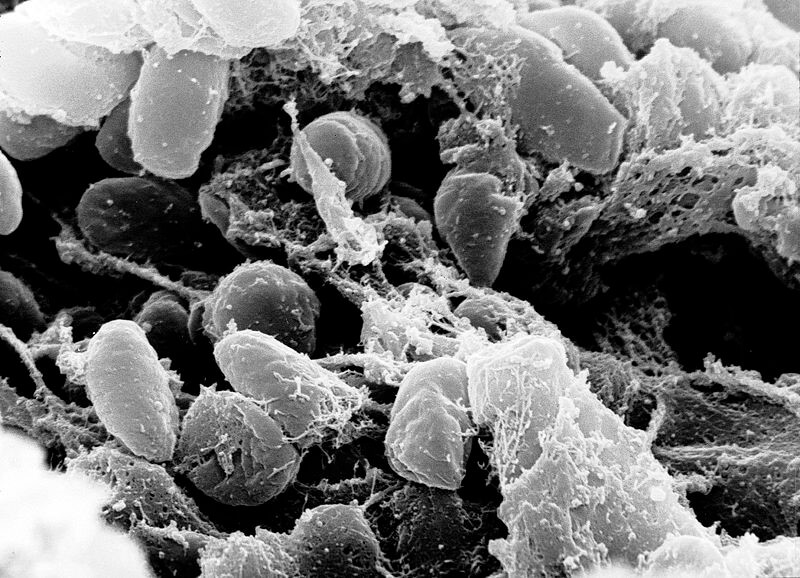
The team observed that some of the genetic responses that were co-developing across the two groups were found in one immune-related cluster of three altered genes called TLR2. The TLR2 gene codes for Toll-like receptor 2, which is a membrane protein that acts as a receptor so that immune cells (leukocytes) are able to recognize foreign pathogens. What’s interesting about this protein is that it is especially sensitive to exposure to the Gram-negative organism Yersinia pestis, cause of the Black Plague (and the the Justinianic Plague, which ravaged Byzantium in the sixth century).

According to Netea, “[Humans] were modified, basically, by the infections.”
The study had a few weaknesses, including the fact that the researchers were post-hoc looking for associations in humans who died 600-700 years ago; drawing inferences in such genetic modifications based on a snapshot in time; and attempting to attribute causality to a mix of immediate and persistent genetic changes. Nevertheless, the results so far are intriguing. Netea and his team found “a list of about 20 genes that show evidence of convergent evolution between Europeans and Roma—meaning the two groups started out different but evolved to look more similar because of pressures in their environment.”
We shouldn’t be surprised to (re-) learn that all of our traits currently thriving on Earth are the long-run result of nearly infinite permutations of genetic modification, our evolutionary response to environmental selective pressure. What this research finding provides is a satisfying sense that our ongoing hypotheses of how Earth’s species survive and thrive — or disappear — through genetic adaptation and selective pressure, have been validated once again.
Ben Locwin is a Contributor to the Genetic Literacy Project and is an author of a wide variety of scientific articles for books and magazines and is also a researcher and consultant for a variety of industries including food and beverage, pharmaceutical, marketing, and advertising.