First trial of GM crops rich in omega-3s harvested in UK

Britain’s first trial of GM crops enriched with nutrients to improve health has been successfully harvested. Following a groundbreaking field trial, the first camelina (false flax) crop genetically modified to produce seeds rich in omega-3 fatty acids was harvested at Rothamsted Research on 5 September.

Project leader Johnathan Napier and his team of researchers harvested the 8x8m crop by hand at Rothamsted’s experimental field site in Harpenden, Hertfordshire. The GM plants were cut and bagged up and removed from the field. The plant material was taken to a glasshouse on site where it will remain for one week to dry out. The seeds will then be analysed for their omega-3 fatty acid composition. Any waste material will be removed to landfill.

“It’s a landmark step,” an emotional Prof Napier told Farmers Weekly. “It’s the first UK trial of a GM crop with a nutritional benefit trait in it. “This is the culmination of at least a decade’s worth of fundamental research. We know that the engineered crop will produce the omega-3s in the glasshouse.

Read the full, original article: Genetically modified crop harvested at Rothamsted

Genghis Khan and the role of power, wealth and behavior in human genetic ancestry

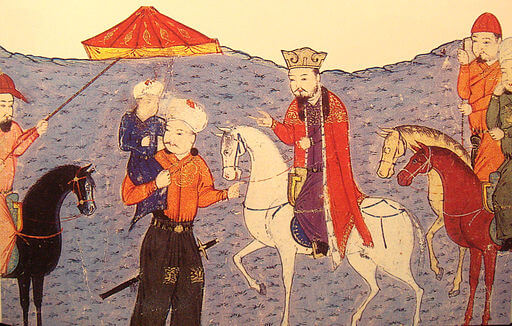
AbaqaOnHorseArghunStandingGhazanAsAChild

In 2003 the first paper documenting Mongol ruler Genghis Khan’s extraordinary genetic contribution to the world was published. The finding added a twist to the already extensive information historians and anthropologists had about his creation of the largest contiguous empire in history: Khan was not just a great ruler, he and his generals were prolific fathers as well.

Scientists documented his reproductive reach by tracing the Y-chromosome that nearly 8 percent of males living in areas conquered by Khan still carry. National Geographic called it an example of ‘extreme natural selection’ at the time:

“This is a clear example that culture plays a very big role in patterns of genetic variation and diversity in human populations,” said geneticist Spencer Wells, one of the 23 co-authors of the paper. “It’s the first documented case when human culture has caused a single genetic lineage to increase to such an enormous extent in just a few hundred years.”

But one of the original study’s author backtracked a bit lately, according to anthropologist Gregory Cochran, by saying that the genetic data can’t exactly pinpoint Khan as the originator of that chromosome. Cochran took to his blog to chide the field as a whole for not taking advantage of other avenues of science, particularly history and anthropology, that can illuminate genetic data. The oversight is not just limited to the Khan effect:

It seems to me that this error stems from geneticists thinking that genetic data is the only real data: sloppy genetic time estimates trump precise historical dates.  In much the same way, people (using the old too-high mutation rate) estimated that the split with Neanderthals was ~300,000  years ago, even though the fossil record clearly showed hominids in Europe shambling towards Neanderhood half a million years ago.  The new, lower estimates of the mutation rate have reconciled genetic and paleontological evidence on the split time  – but the geneticists should have realized that there was an inconsistency.

Although the historical counts for Neanderthal homo sapien interaction are a bit lacking, there are other, better documented examples of how human behavior became an ‘extreme driver of natural selection’ like historical economist Gregory Clark’s survival of the richest, or how the English upper-class prospered and reproduced so quickly and the rapid development of Ashkenazi Jews.

Blending together the historical and genetic records for these events will be the best way to understand them. And, data generated from these analyses will help inform further study of events for which there is not robust historical data, like that of the Neanderthal’s demise.

Meredith Knight is a blogger for Genetic Literacy Project and a freelance science and health writer in Austin, Texas. Follow her @meremereknight.

Additional Resources:

Climate Corp co-founder is Monsanto’s new unlikely champion

When Monsanto Co. purchased Climate Corp. for $930 million last year, it got a San Francisco-based startup that crunches weather data to improve crop yields and design insurance. It also got David Friedberg, the company’s 34-year-old co-founder, who may prove an even more valuable asset.

Friedberg, a former Google Inc. executive, now oversees the “precision agriculture” services Monsanto sells to farmers, a major initiative encompassing high-tech planting equipment, soil and seed analysis, and weather modeling. The lifelong vegetarian has also emerged as an unlikely champion of Monsanto at a time when the company—and the business of genetically engineering crops that it pioneered—face intensifying attacks.

Enter Friedberg, whose Silicon Valley pedigree helps him advocate for Monsanto in a region that helped to cultivate the organic food movement and to launch California’s 2012 ballot initiative to require GMO food labeling—an effort that failed, but generated the “March Against Monsanto” crusade.

Genetically modified seeds, in Friedberg’s view, enable farmers to grow larger crops with less resources and represent a way to help sustain the growing world population. Some of Monsanto’s critics “want to live in a natural world where we’re all living in treehouses in the rainforest and picking coconuts out of the tree,” Friedberg said. “Maybe it would be possible if we had 100,000 people living on earth, but that’s not the reality that we’re living in today.”

Read the full, original article: Monsanto, under attack for GMOs, has a new defender

Agriculture official speaks out against GM ban in Vietnam

Deputy Minister of Planning and Investment Dang Huy Dong last week said the ministry had worked with the Ministry of Agriculture and Rural Development about genetically-modified (GM) production in Vietnam.

“We will ban GM animal production and will likely allow GM crop production in the new Law on Investment,” he said.

An official from the Ministry of Agriculture and Rural Development’s (MARD) Department of Crop Production told VIR that GM crop production should not be banned in Vietnam.

The official, who declined to be named, said the ban on GM crop production in Vietnam was unreasonable, as it would go against Decree 69/2010/ND-CP, passed on June 21, 2010, on bio-safety for GM organisms and the National Assembly Standing Committee’s Seed Ordinance 15/2004/PL-UBTVQH11. These two documents outlined the development of GM crops in Vietnam.

According to the MPI, GM crop production was proposed to be included in the draft amendment to the list of eight sectors banned from business and investment in Vietnam, outlined in the draft new Law on Investment, which is expected to be adopted this November.

“GM crops are hugely advantageous to farmers and enterprises,” the official said.

Read the full, original article: Local agro authorities urge GMOs ban be removed

NaturalNews endorses GMOs as solution to bee crisis

Here we go again, folks. Recently Natural News published an article titled “New, all-natural pesticide unveiled by scientists – and it won’t kill the bees!“

Good news on the honeybee front — a team of scientists in the UK have created a biopesticide made from spider venom and plant protein that may provide hope for the endangered pollinators.

A study published in the research journal Proceedings of the Royal Society B states that the experimental, nontoxic biopesticide Hv1a/GNA is “unlikely to cause detrimental effects on honeybees.”

Let’s just take a little peek at the source document – “Proceedings of the Royal Society B,” shall we?

Recombinant GNA, and the fusion protein Hv1a/GNA were produced in the yeast expression system…

So, according to Natural News, genetic engineering, cloning and mutagenesis are “all natural.” So much for labels. Need I say more?

Read the full, original article: “All Natural” bee-saving pesticide is genetically engineered

GMOs for Dummies!

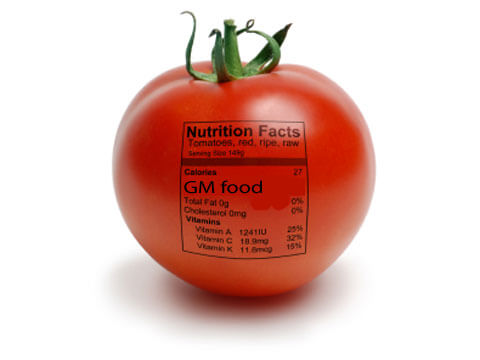
tomato gmo label

Marc Brazeau who blogs at Food and Farm Discussion Lab has posted an extremely useful guide covering many key GMO issues. He covers everything from the nuts and bolts of the basic science of genetic engineering to the quality of current research to potential impacts on the environment. Here are some highlights.

What people refer to as Genetically Modified Organisms, or GMOs, are crops bred with the most sophisticated breeding technology. In this context, genetic modification happens when breeders take the specific trait that they want from one plant or organism and transfer it to another plant. Or it can be as simple as slightly changing how a single protein in a given plant expresses itself, as in the case of the Arctic Apple which is an apple that has been bred to resist browning after it’s been cut.

Perhaps the most striking example of the radical impact of human intervention on wild plants is the brassica family. Starting in the wild as mustard, it has been bred into cabbages, brussels sprouts, mustard greens, cauliflower, rapeseed (canola), turnips, rutabaga, collard  greens, bok choy, watercress, radish, wasabi and of course, broccoli. It’s amazing to think what we coaxed out of a little mustard seed when we put our minds to it.

Breeders have always known which traits they want their plants to exhibit. Today they know which genes are responsible for those traits. Technology is allowing them to get the desired genes, to produce the desired traits, into the plants with fewer and fewer steps, and greater and greater precision.

It’s important to keep in mind that we are talking about a single, or a few at most, well understood genes being transferred and that the traits they bring with them are very well understood. That’s why it’s so misleading when anti-GMO activists portray cartoon images of a tomato crossed with a fish. Inserting one or two genes from another organism is not crossbreeding. There was a tomato bred in the early 90’s that never made it to market, that utilized a single gene from a winter flounder to make a tomato withstand frost better. One gene out of 31,700 tomato genes does not result in a half fish, half tomato hybrid. It simply would have been a tomato that withstands frost better. You share half your DNA with a banana. To a geneticist those genes are the same, whether they come from you or the banana.

Read full original article: GMOS—An Introduction 

DNA-based stool test now available for colon cancers

Exact Sciences Corp. recently announced that Mayo Clinic will be the first health system to offer Cologuard®, the first and only Food and Drug Administration (FDA) approved, noninvasive stool DNA screening test for colorectal cancer.

Cologuard will be available to patients through their primary care physicians at Mayo Clinic.

Available by prescription only, Cologuard offers people 50 years and older who are at average risk for colorectal cancer an easy to use screening test which they can do in the privacy of their own home. It is the first noninvasive screening test for colorectal cancer that analyzes both stool-based DNA and blood biomarkers to detect cancer and pre-cancer. The Cologuard technology platform was co-developed by Exact Sciences Corp. and Mayo Clinic as part of a broad, exclusive collaboration.

“Cologuard represents a significant advancement in identifying colorectal cancer at its most treatable stage. We believe offering this new tool will promote patient and community public health and may move more patients to get screened earlier—a critical step in beating this prevalent and preventable cancer,” says Vijay Shah, M.D., chair of Mayo Clinic gastroenterology and hepatology.

Colorectal cancer is highly preventable with screening. However, 23 million Americans between the ages of 50 to 75 are not getting screened as recommended, and as a result, it remains the second-leading cancer killer in the United States. For those whose cancer is detected at an earlier stage, the five-year survival rate can be greater than 90 percent.

Read the full, original story: Mayo Clinic first to offer stool-based DNA screening test for colorectal cancer

Is “reductionism” in behavioral genetics a boon or curse?

file

Breaking a watch into its components to study how they work independently and together is a perfectly acceptable method of understanding watches. No one who would claim “a screw is involved in the keeping of time” would be accused of reductionism.

Yet reductionism—which wasn’t always and isn’t necessarily—a bad word, haunts modern science, and genetics in particular. It has come, largely, to connote a myopic approach that misses the complexities and nuance of the whole in its focus on individual components. In other words, studying the trees and ignoring the forest.

The invocation of genetic reductionism is often used as a rhetorical club to hammer home the fact that genes are modulated by other genes and by the environment. As applied to human sexuality, it can be a curse; as applied to modern research into mental health it may be a blessing. This is arguably an issue of perception, and it’s not exclusively divided between “Public” and “Science.”

Let’s look at the two examples. A “gay gene” backlash emerged from the American Association for the Advancement of Science (AAAS) annual meeting in February, and I wrote about it for Gene-ius. A post from the Wiring The Brain blog by neurogeneticist Kevin Mitchell sums up the reaction:

Reductionism! Single genes can’t cause complex traits – it’s patent nonsense to say that they can! Biological organisms are complex systems interacting in complex ways in an ever-changing environment – particular behaviours can’t be simply determined by genes.

My reaction, in line with Mitchell’s, was to point out that no one, least of all the authors of the “gay gene” study, claim that a single gene can explain all of homosexuality. This form of reductionism present in the study is an acceptable and necessary step in developing a full understanding of human behaviour; it’s taking apart the watch. Whereas geneticists studying sexuality are met with anger at what is perceived as an excessively reductionist approach, the mental health research establishment has been shaken up lately by people pointing out what is essentially a lack of reductionism in the discipline.

The mental health “bible,” the D.S.M. (Diagnostic and Statistical Manual of Mental Disorders), was grilled for a distressing “lack of validity”. The practice of treating mental illness, for all the headlines pointing out new genes associated with some disorder or another, has remained largely a macro-level, behavioral affair. Indeed, as the New York Times has pointed out, the genetics- and neuroscience-oriented overhaul of the National Institute of Mental Health by its newest director, Thomas R. Insel, has ruffled more than a few feathers. He has taken what was an almost purely behavioral endeavor and sharply shifted the focus to biological brass-tacks in an attempt to get at the fundamental underlying causes of mental illness. Not everyone thinks the answer can be found in genetics and neuroscience, though:

“Instead of being an institute of mental health, he has made it almost exclusively a brain research institute,” Dr. Allen Frances, an emeritus professor of psychiatry at Duke and the author of the book “Saving Normal,” wrote in an email. “N.I.M.H. is betting the house on the long shot that neuroscience will come up with answers to help people with serious mental illness.” He added, “It does little or no psychosocial or health services research that might relieve the current suffering of patients.”

Might a fear of reductionism-as-myopic be in part behind the reactions of those who oppose Insel’s changes? As a young science writer, I am sensitive to the perceived tide of reductionism in biology. It affects all of us, in science and in journalism. Even the GLP carries headlines that reflect a sensitivity—perhaps an exaggerated one—to concerns about reductionism; just recently we changed a ScienceDaily headline from “Scientists identify gene linking brain structure to intelligence” to “IQ gene? Uh-oh, scientists believe they have found one.”

Mitchell cuts through this Gordian knot with a simple, obvious-in-hindsight distinction: There is a difference between methodological reductionism, a tool, and philosophical reductionism, a guiding principle. Gay gene studies, Insel’s changes to the NIMH: both are using a reductionist method—modern genetics—in a quest for understanding. It’s all too easy to perceive methodology as philosophy. As a philosophy, it does indeed risk missing the forest for the trees. We can appreciate the precise, ordered beauty of a watch (or the staggering spectrum of human behavior) in action while still taking it apart to better understand the whole.

Kenrick Vezina is the Gene-ius editor for the Genetic Literacy Project and a freelance science writer, educator, and amateur naturalist based in the Greater Boston area.

Opponents of GMO labeling in Vermont use Hawaii court ruling to try to block Center for Food Safety intervention

Opponents of Vermont’s new GMO labeling law are citing a recent federal court ruling in Hawaii to try to block the Center for Food Safety from helping to defend Vermont, Politico reported Wednesday.

On Aug. 22, 2014, Judge Barry Kurren denied the Center for Food Safety’s request to intervene on behalf of Hawaii County to defend the county’s new partial ban on genetically engineered crops. The Hawaii Floriculture and Nursery Association and several other farming groups sued the county in June saying that the law was unfair and burdensome.

“CFS had failed to rebut the presumption of adequate representation by the government, and that amicus status would provide CFS sufficient means to express its views,” GMA argued.

Read the full, original article: Food industry leverages Hawaii court ruling in Vermont GMO labeling fight

Both small and large farms are needed for ‘optimal’ sustainable farming system

Small farms are inefficient but are more likely to grow healthful foods and might be more environmentally friendly, while large farms are sometimes environmentally unfriendly but raise large amounts of food efficiently and affordably.

The idea that we should replace the large, polluting farms with the small, diversified farms ignores what might be the best solution: Get the large farms to stop polluting.There are some hopeful signs that it’s already happening. Cover cropping and no-till farming, which help improve soil health and reduce runoff, are on the rise. Recent droughts have underscored the importance of building up organic matter, which retains water, in soil.

Small and large both have benefits. Saying we need both isn’t some kind of namby-pamby, can’t-we-all-get-along compromise. It’s the optimal system, with each kind filling a different demand.

What if advocates on each side focused on getting their own house in order? If you’re in the small camp, work on efficiency. Perhaps you can reconsider organic’s natural/synthetic line in the sand, which increases costs without benefiting either customer or environment.

Down the line, think about incorporating genetically modified crop varieties that are disease- or drought-resistant. Find ways to cut back on waste. And those in the large, why not make some of the basic organic-style practices, like cover cropping and no-till, standard? Consider a target level of organic matter in the soil, to cut back on water use. How about strengthening the conservation practices required for farms to receive federal dollars, even linking them to results like runoff reductions or increased organic matter?

Read the full, original article: Small vs. large: Which size farm is better for the planet?

Genetic short cuts: Horizontal gene transfer

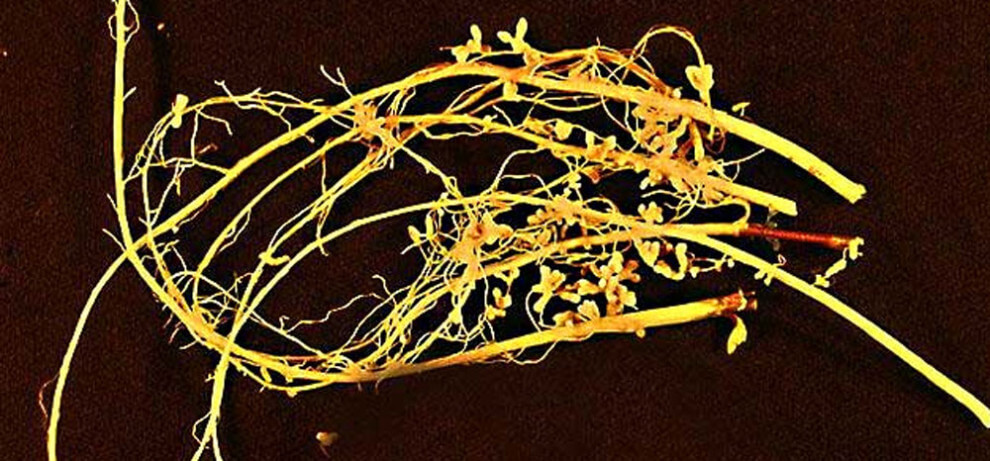
Rhizobia x

Rhizobia are little bulbs full of bacteria that live in the roots of lots of kind of plants, many of which are important bumper crops for humans. And just as we rely on peas and legumes to eat, so doe these bacteria. But, they also offer something in exchange for the plant. They breakdown nitrogen into amino acids that hang around the roots so the plants can use them to grow.

In traditional evolutionary theory, one might thing all these bacterial nodes evolved separately to do the same job, just as tea and coffee plants evolved caffeine production separately. But new research confirms this is not the case. These bacteria shared the ‘symbiosis genes’ that make them valuable to plants in an instant upload. Ed Yong explains at National Geographic:

From these groups of undertakers and disease-makers, several members have repeatedly and independently evolved into plant partners. They did it by picking up large packages of genes from other microbes that had already colonised roots. These “horizontal gene transfers” are everyday events for bacteria, allowing them to instantly pick up new skills without having to evolve them from scratch.

The transferred genes don’t work instantly. There is still a learning curve. The plants have to tailor those genes to their particular plant host. But the symbiosis package also has an ‘app’ for that. It contains genes that rapidly accelerate mutation to speed up the chances new changes will arise that make the bacteria a good fit for the plant.

The process of sharing large chunks of genes is called horizontal gene transfer, and it’s a big deal in the single-cell organism world. We know that this process is also responsible for antibiotic resistance, a huge problem for our healthcare system, and it probably happens with the microbes that line our gut.

We don’t know if these same type of transfers happen in higher level organisms, beyond bacteria and viruses. But it t is a remarkably quick and dirty way of sharing and changing genetic material.

Meredith Knight is a blogger for Genetic Literacy Project and a freelance science and health writer in Austin, Texas. Follow her @meremereknight.

Additional Resources:

Human ‘angry face’ knows no cultural divide, rooted in DNA

images

In the U.S., the thumbs-up is typically a gesture that everything’s just hunky-dory—but in the Middle East, it implies that the gesturer is about to do something decidedly unfriendly with that thumb and another person’s anatomy. In Brazil, the “OK” sign—another innocuous move in America—is an obscene way of saying that things are definitely not OK.

And in Greece, facing your palm towards another person doesn’t imply a sassy 90s-throwback “talk to the hand” reference so much as a desire to rub excrement in another person’s face.

But while these particular pieces of body language differ wildly in meaning depending on where they take place, the response to an offensive gesture anywhere in the world will likely look the same: nostrils flared, lips thinned, chin pushed up and out. In other words, the natural human anger face.

Unvarying across cultures, the expression of anger is made even by children who have been blind since birth, a fact used by evolutionary psychologists to argue that it’s innate rather than learned. While conventional scientific wisdom has previously held that the anger face is an arbitrary set of features that we’ve simply come to understand as an indicator of anger, new research suggests that it may actually serve a more specific purpose: On its own, each aspect of the anger face may make its wearer appear physically stronger.

“If you think of anger as a signal, then any old signal will do,” says Aaron Sell, a psychology professor at Griffith University in Australia. “You could raise one eyebrow, you could stick your tongue out—it could be anything. But what natural selection appears to have done is tailored a pretty complicated display.”

Read the full, original story: The Origins of the anger face

Phenol exposure during pregnancy may affect boy’s fetal growth

A research consortium has just published an epidemiological study indicating that exposure to certain phenols during pregnancy, especially parabens and triclosan, may disrupt growth of boys during fetal growth and the first years of life.

Bisphenol A was not associated with any definite modification in growth.

These results are published in this month’s issue of the journal Epidemiology, September 2014.

Pregnant women are exposed to several compounds that are widely produced and abundant in our environment. This is the case for parabens (used as preservatives in cosmetics and healthcare products), triclosan (an antibacterial agent and pesticide found in some toothpastes and soaps), benzophenone-3 (used in sun protection products as a UV filter), dichlorophenols (the precursors of which are used in the manufacture of indoor deodorisers), and bisphenol A (the uses of which include manufacture of polycarbonate-based plastics (plastic bottles, CD cases, etc.) and epoxy resins (lining of food cans, dental amalgams) . These compounds belong to the phenol family, and are endocrine disruptors.* Experimental studies carried out in vitro and on animals have indicated that these compounds interact with the hormone systems involved in growth and weight gain.

Read the full, original story: Exposure of pregnant women to certain phenols may disrupt growth of boys during fetal development and first years of life

Russia’s Putin interested in cloning mammoth

Upon meeting a 28,000-year-old mammoth mummy in a museum in the Russian Far East, Russian President Vladimir Putin wondered if the preserved soft tissues of the ancient animal could help clone it.

The mammoth museum in Russia’s Yakutia is a unique place, hosting the rarest findings of the ancient animals’ remains discovered over the last decade.

But the main treasure of the museum is the so-called Mamolyakhovsky mammoth, which was found along the Kolyma River shores in 1977. The 28,000-year-old discovery is not only a full skeleton of a baby mammoth (which means over 75 percent of bones belong to the same animal), but also boasts soft tissues and even liquid blood preserved in the animal’s mummy.

The mammoth was about seven or eight months old when it died, and the scientists named him Dima.

Upon seeing Dima on Monday, President Putin, who arrived in Yakutsk to participate in a meeting on regional development, became very interested in whether the mammoth’s remains could pave way for its cloning.

“The soft tissues are preserved, so can it be cloned?” he asked.

Read the full, original story: ‘Can you clone that?’ Putin has close encounter with mammoth Dima in Russia’s Far East

UK Parliament begins discussion of “3-parent IVF”

The British government continues to move toward legalizing a form of inheritable genetic modification that would combine eggs or embryos from two women in an effort to prevent the transmission of mitochondrial disease.

But the controversy over the technique, variously known as “3-person IVF,” “mitochondrial replacement,” and “nuclear genome transfer,” is far from over, and the issues received a public airing in the House of Commons on September 1.

This was not the official government-initiated debate — that remains some way off — but one brought by a group of MPs who urged the government “to delay bringing forward regulations on mitochondrial replacement” until more research had been completed. (The British system combines the executive and legislative powers but also allows some time for debates requested by members of parliament who do not hold party or government office.) The complete transcript is available, as is archived video.

Opinion in the House of Commons was clearly divided. About half of those who spoke favored moving forward with the technology, some for rather crass reasons (“this is a great piece of British scientific advance”), some out of understandable concern for individual constituents who suffer from mitochondrial diseases. The debate also stirred some local newspapers to feature patients criticizing MPs for “standing in the way of a pioneering new treatment” or wanting to “help future generations.”

Read the full, original story: “3-Person IVF” debated in UK Parliament

Vandana Shiva responsible for ‘irrational’ fears of GMOs, dismisses science that doesn’t suit ideology

The person most responsible for cementing the GMO-suicide link in European minds is the environmentalist Vandana Shiva. She is given to statements like,“270,000 Indian farmers have committed suicide since Monsanto entered the Indian seed market… It’s genocide.”

Responding to to Natasha Gilbert’s May 2013 article in Nature  which debunked the myth of GM crops causing farmer suicides, Shiva began by touting her qualifications as a “quantum physicist”.

The prevarication about her education becomes relevant because Shiva has consistently highlighted her physicist background as a source of scientific authority. It could be ignored if she actually followed anything approaching a scientific method. Instead, when confronted with all the data pointing to the safety of GM crops, and to the absence of any connection between GMOs and farmer suicide rates (see the chart in Natasha Gilbert’s article), she questions the sources of the data. Companies like Monsanto, she says, “control the entire scientific literature of the world.” The world’s most widely respected publications such as Nature, Science, and Scientific American, “have just become extensions of their propaganda. There is no independent science left in the world.”

When it comes to the most pressing environmental issue of our time, which is undoubtedly climate change, environmentalists, Shiva included, take the scientific literature at face value, while right-wingers of all stripes argue anthropogenic global warming is a hoax perpetrated by compromised scientists.

When it comes to the safety of GMOs, on the other hand, Greens reject the scientific consensus out of hand. This is the central hypocrisy of several environmentalists: they tout the science when it suits their ideology, and dismiss it when it doesn’t.

Read the full, original article: Vandana Shiva is confusing ideology for science – and getting rational people to believe her

Man Scalia mocked as murderer deserving of death penalty now exonerated by DNA

scalia

A North Carolina death row inmate exonerated by DNA evidence on Tuesday was once held up by Supreme Court Justice Antonin Scalia as an example of someone who deserved to die.

When the court declined to review an unrelated death row case out of Texas in 1994, Justice Harry A. Blackmun issued a dissenting opinion arguing that capital punishment is cruel and unusual, and therefore unconstitutional.

Scalia answered back with an opinion of his own:

“For example, the case of an 11-year-old girl raped by four men and then killed by stuffing her panties down her throat,” Scalia wrote in Callins v. Collins. “How enviable a quiet death by lethal injection compared with that!”

He was referring to Henry Lee McCollum, who at the time had already been on death row for 12 years. McCollum’s conviction was overturned on Tuesday when DNA evidence implicated another man in the case.

McCollum had been on death row for almost 30 years.

Read the full, original story: Scalia once pushed death penalty for now-exonerated inmate Henry Lee McCollum

Viewpoint: Neither individuals nor (especially) the government should support ‘National Politically Correct Radio’

old radio

This article originally ran at Forbes and has been republished here with permission of the author.

NPR–“National Politically Correct Radio”–has a long and sordid history of bias, which is obvious in both the attitude of its reporters and the content of its programming. The coverage of genetic engineering is particularly unfair and inaccurate. Why should the federal government subsidize and lend respectability to this left-wing, anti-science propaganda shop?

The political leanings of many of National Public Radio’s prominent reporters and commentators are hardly a secret. Nina Totenberg, NPR’s veteran legal affairs correspondent, is the poster-child for the network’s inflammatory, mean-spirited, left-wing vitriol. She said in 1995 about then-Senator Jesse Helms (R-N. Carolina), an ultra-conservative Southerner who staunchly opposed civil rights legislation: “I think he ought to be worried about the–about what’s going on in the good Lord’s mind, because if there’s retributive justice, he’ll get AIDS from a transfusion, or one of his grandchildren will get it.” That’s not so much political as just plain vile.

Totenberg also dismissed then-Supreme Court nominee Samuel Alito as “some white guy.” (Not surprisingly, she seems pleased with the liberal mediocrities appointed to the Court by President Obama.)

Following the death of Sen. Ted Kennedy (D-Mass.), who years earlier had availed himself of the “Massachusetts Kennedy family exemption” from prosecution after callously leaving Mary Jo Kopechne to drown after he drove his car off a bridge, Empress Nina granted forgiveness: “He’ll be remembered as a truly Shakespearean figure: tragic, flawed; who in the end achieved redemption through greatness—both in his personal life and in his professional life, and did enormous things for millions and millions of people.”

In the interest of balance, perhaps NPR’s crack legal affairs reporter should have sought a comment from the Kopechne family about Kennedy’s “redemption through greatness.”

On Oct. 10, 2010, Totenberg offered this penetrating analysis of the U.S. Supreme Court’s decision on Citizens United v. Federal Election Commission, a free-speech case that opened up political campaign contributions and was toxic to liberals: “Well, you know, really, this is the next scandal. It’s the scandal in the making. They don’t have to disclose anything. And eventually, this is the kind of thing that led to Watergate.”

It is hard to square the way that Totenberg wears her politics on her sleeve and repeatedly displays venom in her public utterances with the NPR policy on outside appearances: “NPR journalists should not express views they would not air in their role as an NPR journalist.” It was the alleged violation of this policy that got commentator Juan Williams fired in 2010 after he had expressed some personal discomfort at seeing people in “Muslim garb” on airplanes.

The obvious question: Would Totenberg get away with wishing AIDS on a politician’s grandchildren in her news reports?

There are numerous other ways in which NPR and its affiliates reveal their biases–which are manifested not only by political favoritism but also by a kind of back-to-Nature, New Age-y fundamentalism that embraces environmental myths and hyperbole and is systematically antagonistic to certain sectors of science and technology. The “Living on Earth” program, in particular, seems to reflect reporting from a parallel universe devoid of balance or objectivity in which every radical environmental anxiety and prejudice is accepted uncritically.

The nationally syndicated Diane Rehm show, whose selection of guests is a veritable showcase for systematic bias, is consistently anti-science and anti-technology while it promotes big and paternalistic government and pillories the Right. Rehm views representatives of self-interested, anti-industry, radical NGOs as offering worthy and objective expertise while genuinely disinterested academics or industry-affiliated scientists are treated as shills and hucksters.

Rehm and others at NPR seem to have it in for genetic engineering in particular. One example was Rehm’s January 3, 2012 program on the labeling of genetically engineered foods, a bash-fest dominated by a rabidly anti-science, shamelessly mendacious (and self-interested) friend of Rehm’s who heads an organic yogurt company. Predictably, it became an exercise in advocacy for government-mandated labeling, although such a requirement is demonstrably misleading and unnecessary and according to federal appeals courts would violate the constitutional guarantee of commercial free speech.

Among the most egregious transgressions of fair, professional journalism was a series of programs called “The DNA Files” which set up a false moral equivalence by juxtaposing the views of Princeton University Professor Lee Silver against those of Margaret Mellon, long-time NGO-dweller, troglodyte and antagonist of any and all applications of biotechnology. This pairing was a paradigm of NPR’s notion of “balance”: a mainstream, non-ideological academic versus an intransigent, anti-industry, anti-technology, uneducable activist.

Another baseless assault on genetic engineering occurred in December 2011, when on NPR’s “Talk of the Nation” Jason Clay of the World Wildlife Fund was permitted to excoriate the genetic engineering of plants without any opposition or correction. It was particularly ironic because the subject of the segment was “A Planet Running Low on Water,” and genetic engineering’s greatest boon to food security and to the environment in the long term will likely be the ability of new crop varieties to tolerate periods of drought and other water-related stresses. (One drought-resistant variety – of corn – is already available commercially in the United States, and many more are in advanced stages of the development pipeline.)

Where water is scarce, the development of crop varieties that grow under conditions of low moisture or temporary drought could boost yields and lengthen the time that farmland is productive. Even where irrigation is feasible, plants that use water more efficiently are needed. Agriculture accounts for about 70% of the world’s freshwater consumption — and more in areas of intensive farming and arid or semi-arid conditions, so the introduction of plants that grow with less water would free up much of it for other uses.

Where does genetic engineering come in? Plant biologists have identified genes that regulate water use and transferred them into important crop plants. These new varieties grow with smaller amounts of water or with lower-quality water, such as recycled water or water high in natural mineral salts. For example, Egyptian researchers have shown that by transferring a single gene from barley to wheat, the plants can tolerate reduced watering for a longer period of time. This new, drought-resistant variety requires only one-eighth as much irrigation as conventional wheat and in some deserts can be cultivated with the meager rainfall alone.

Ever creative, Living on Earth even managed to find an activist to trash the genetic engineering of trees that will provide fast-growing and reduced-lignin varieties for more sustainable sources of timber, paper and biofuels. (Don’t producers or editors vet the content of these programs?) Her actual objection concerned commercial tree plantations that contain a single genetic variety – that is, monoculture – but she wasn’t smart enough to understand that that issue is distinct from concerns about genetic engineering.

Among the worst of many atrocious segments on Living on Earth was a report on the two-year-long experiments performed by French scientist Gilles-Eric Séralini which purported to show harmful effects, including a high incidence of tumors, in laboratory rats fed genetically modified corn and/or water spiked with the commonly used herbicide, glyphosate. There is so much wrong with the experimental design that the conclusion is inescapable that the investigators intended to get a spurious, preordained result.

The experiments were immediately and universally condemned by the scientific community worldwide, and the research article was retracted by the journal that published it. However, in a segment misleadingly labeled, “New Study Links Genetically Modified Corn to Cancer,” Living on Earth reporter Bobby Bascomb reported the results uncritically.

Any biology graduate student could have seen immediately, it was a non-study. Bascomb concluded that “most scientists will tell you that we need to do more research. This study needs to be done again to see if it gets the same results.” Wrong. In fact, “most scientists” have shown no inclination at all to replicate experiments designed to yield uninterpretable or false results. For more than 25 years, there has been a consensus in the scientific community that the molecular techniques of genetic engineering are essentially an extension, or refinement, of earlier, less precise, less predictable techniques.

Not satisfied with the original flawed, irresponsible reporting on his program about the Séralini study–which was retracted by the journal that published it–14 months later Steve Curwood, the host of Living on Earth, then offered notorious ideologue Michael Hansen of Consumers Union an opportunity to criticize the retraction of the Séralini paper and to spout more misinformation about genetic engineering and the herbicide glyphosate. The know-nothing Hansen, a favorite of Living on Earth who lacks any scientific credentials related to genetic engineering, was back yet again in May with more of his propaganda. Some advice to Curwood and his producers: Heed the Rule of Holes – when you’re in a hole, stop digging.

It is particularly ironic that genetic engineering can contribute to the amelioration of precisely the kinds of environmental and human health challenges that NPR and its activist fellow-travelers claim to care about: greenhouse gas emissions, sustainable agriculture, the spraying of insecticides, the pollution of waterways from runoff of agricultural chemicals, food security for the poor, and conservation of water. The success of plants made with the new genetic engineering techniques is incontrovertible: Worldwide, these new varieties have provided “very significant net economic benefits at the farm level amounting to $18.8 billion in 2012 and $116.6 billion for the 17-year period” from 1996 to 2012, according to an authoritative report published earlier this year.

It seems to have escaped the management, producers and program hosts at NPR that not every issue has two sides. Or maybe they have simply abdicated their responsibility to ascertain where the weight of scientific evidence lies, instead attaching equal value to various points of view in a clumsy attempt to approximate fairness. If the latter, I have news for them: Decision-makers in academia and government as well as in the media make such decisions routinely. For example, in the 21st century we no longer argue about whether vaccines prevent childhood diseases; and who would contend that the administration of antibiotics to a patient with pneumonia or an infected heart valve is interfering with God’s Plan? But by continuing to pretend that certain viewpoints are legitimate long after they have been discredited, NPR programs mislead listeners and prolong pseudo-controversies.

The most recent example of NPR’s bias and ignorance was the airing on August 1 of a Commonwealth Club debate, which featured Andrew Kimbrell, one of the most dedicated, detestable and mendacious antagonists of genetic engineering applied to agriculture. Another of the four participants was Jessica Lundberg, an “organic farmer,” whose comments ranged from the dumb to the irrelevant. I had the feeling that she had stumbled into the wrong discussion. The piece was advertised thus: “Future severe weather is expected to put upward pressure on crop prices. That prospect raises thorny questions. Is there a role for seeds that are genetically modified to be drought resistant? Can 10 billion people be fed without GMO crops? Can organics feed a growing and hungry world?”

To pretend that these are unresolved questions that can be constructively illuminated by the chosen speakers is asinine, tantamount to debating topics like, “Do antibiotics save lives?” or “Can perpetual-motion machines give the economy a boost?” One imagines the organizers and broadcasters congratulating themselves on “good balance” by including not only a troglodyte activist but also Monsanto’s Chief Technology Officer and a farmer who actually handles compost every day, whereas all they did was to confuse listeners by perpetuating pseudo-controversy. The really thorny question is why NPR would broadcast the drivel offered by Living on Earth.

Donald Kennedy, president emeritus of Stanford University, chided those “who give up the difficult task of finding out where the weight of scientific evidence lies, and instead attach equal value to each side in an effort to approximate fairness. In this way, extraordinary opinions. . . are promoted to a form of respectability that approaches equal status.”

NPR’s coverage of these issues goes far beyond incompetence and ideological bias: It is shameful.

Amity Shlaes makes a subtle argument for why the federal government’s funding of NPR at even a low level is pernicious:

NPR’s staff and friends pretend that NPR isn’t such a big deal, that it’s just one creature in the great forest of talk radio, which happens to be funded–but only fractionally–by the federal government . . . But the reality is that NPR is not one among many. It’s a Tyrannosaurus rex, whose every move pounds the forest floor. The reason for this is not the money NPR receives from the government but the colophon of authority that federal subsidy confers. Having the government’s seal makes NPR respectable, and that, in turn, gives it access to customers, including tender young ones, whom Fox [News] can never reach.

M.I.T. meteorologist Richard Lindzen observed that science “provides our only way of separating what is true from what is asserted. If we abuse that tool, it will not be available when it is needed.” The same is true of science-related journalism, and NPR is dulling that tool.

For many reasons–shoddy science reporting, relentless political bias and intellectual dishonesty among them–NPR should be delegitimized by the elimination of its federal funding. Come to think of it, individuals, too, might wish to reconsider whether NPR deserves their philanthropy.

Henry I. Miller, a physician, is the Robert Wesson Fellow in Scientific Philosophy & Public Policy at Stanford University’s Hoover Institution.  He was the founding director of the FDA’s Office of Biotechnology. Follow him on Twitter @henryimiller.

Food industry gradually embracing pending new GM products

It looks like soon I’ll have to update my standard response when someone comments on our website about genetically modified fruits and vegetables.

“There are likely no GMO products in your produce department, although some squash, corn and Hawaiian papayas have been altered without the traditional crossbreeding or selective breeding methods,” is what I usually say. Now I’ll have to add apples and potatoes.

Judging from comments at the U.S. Apple Association Crop Outlook and Marketing Conference I attended and the Idaho Grower-Shippers Association Conference that a colleague went to, GMO versions of apples and potatoes will be approved by the Food and Drug Administration. It’s not a matter of if, but when. The Arctic apple, which has a non-browning trait, and Innate potato, which cuts down on bruising and acrylamides, are aimed at the processing market.

Every time we write about a new club variety of apple, the eventual question is about its GMO origins. You get the sense anything new is suspect, and although conventional wisdom is that consumers want more options, there is an increasing amount that distrust any genetic tinkering, even by traditional methods.

Read the full, original article: Guess who’s not hating on GMOs — you’ll be surprised