Genetic factors make women more susceptible to Alzheimer’s disease than men

woman old

Years ago, many scientists assumed that a woman’s heart worked pretty much the same as a man’s. But as more women entered the male-dominated field of cardiology, many such assumptions vanished, opening the way for new approaches to research and treatment.

A similar shift is underway in the study of Alzheimer’s disease. It has long been known that more women than men get the deadly neurodegenerative disease, and an emerging body of research is challenging the common wisdom as to why. Although the question is by no means settled, recent findings suggest that biological, genetic and even cultural influences may play heavy roles.

Of the more than 5 million people in the United States who have been diagnosed with Alzheimer’s, the leading cause of dementia, two-thirds are women. Because advancing age is considered the biggest risk factor for the disease, researchers largely have attributed that disparity to women’s longer life spans. The average life expectancy for women is 81 years, compared with 76 for men.

Read the full, original story: Why do more women get Alzheimer’s? Research points to genetics, other factors.

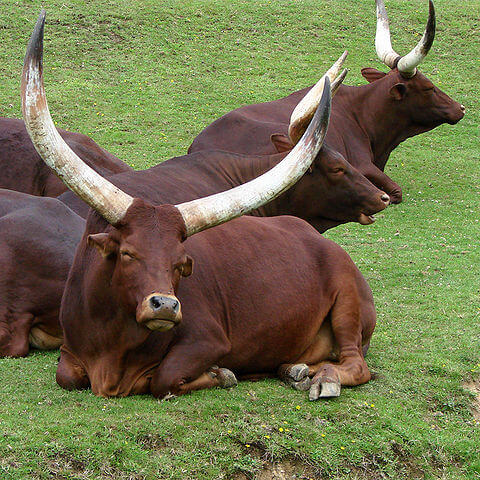
Hornless cattle make case for gene editing and less restrictive regulation of GM animals

cattle w horns

Hornless cattle, described by GLP’s Jon Entine here last year, have lumbered onto the GMO scene once more. This time they appear as an example in Antonio Regalado’s speculations at Technology Review about the future of GMO regulation, especially animal biotechnology.

Because the cattle are made using gene editing techniques and no genes from other species, the hope by some is that regulators will accept them more readily than they have GM animals produced in other ways. The hornless cattle are the brainchild of molecular geneticist Scott Fahrenkrug, who used to be at the University of Minnesota but left to form his animal GMO startup, Recombinetics. He wants to breed GM pigs as model animals for human disease research as well as cattle without horns.

Hornless cattle are desirable because they are less dangerous to people and to each other. Some breeds are hornless naturally, but dairy cattle breeds usually have horns that are burned or sliced off, a horribly painful process. A Recombinetics investor who took part in dehorning in his youth told Regalado that it was a bloody mess. “You wouldn’t want to show that on TV.”

Fahrenkrug, whose company is using a gene editing method called TALENs, is not the only scientist hoping that gene editing will pass muster with regulators. A few weeks ago I wrote here at GLP about a gene deletion, using a different gene editing technique called CRISPR, which helps wheat resist powdery mildew. The hope is that because the work did not involve gene transfer it will not arouse opposition.

Is gene editing close enough for government work?

It’s not clear that organisms made via gene editing techniques will be able to avoid the name-calling and regulatory suspicion usually heaped on GMOs. Optimists are hoping that gene-edited products will impress regulators when they contain no foreign genes and so make it to market.

The Chinese scientists who developed the disease-resistant wheat said that explicitly. China has invested in research on GM crops but has approved none for field-testing recently, ostensibly in response to public concern. Two plant geneticists (one from China) took to the pages of PLOS Biology in June to make the case for regulatory approval of genetic modification of plants that does not involve “foreign” genes. In addition to gene editing methods like CRISPR, there are plant GM methods that resemble natural mutations, and also mutations produced by  techniques long accepted in agriculture, such as those induced by chemicals, X-ray, and gamma rays.

The hornless cow people are hoping for regulatory benignity too. A hornless cow has a uniquely attractive quality: its purpose is to produce dairy herds that don’t have to undergo the painful de-horning procedure now common in the industry. This is a GMO that is the embodiment of kindess to animals, in contrast to the complaints often leveled against genetically engineered livestock. Good PR for a change?

The question of “foreign” genes is a little iffier here though. Hornlessness is produced by insertion of genes from other cattle breeds that are naturally hornless. “We’re talking about genes that already exist in a species we already eat,” Fahrenkrug told Tech Review.

Is that close enough for government work? Would the Food and Drug Administration nod and approve its first genetically modified food animal because–although a hornless dairy cow is, strictly speaking, a transgenic organism–it contains only inserted genes from the same species?

Even if the argument is persuasive with regulators, would it fly with the general public, and particularly with opponents of genetic modification? I’m doubtful. For one thing, the professional GMO antagonists often have agendas not directly related to genetic modification, for example opposition to agricultural multinationals. For them, how GM is done doesn’t matter much.

For others, a lot of the unease with genetic modification appears to involve inchoate worries about “tinkering with Nature” and “playing God.” For people with those concerns, the methods of genetic modification are irrelevant. It’s the very idea of genetic modification that worries them.

Note also that not all applications of gene editing are transgene-free. Presumably they would encounter the same objections made to any GM project involving insertion of foreign genes. One extraordinary example: The breathtaking proposal to modify the genes of the entire species of mosquito that carries malaria. The proposal employs CRISPR gene editing. But it also involves insertion of a gene, designed by the researchers, that would make mosquitoes resist the malaria parasite. My July GLP article about this plan, and proposals made by the researchers themselves for public discussion of this massive project, is here.

Bringing home CRISPR bacon

Meantime, gene editing, especially CRISPR, continues to take genetic science by storm. (Here’s my GLP description of how CRISPR works.)

In just a year, Spanish researchers say, CRISPR has made possible “an immense range of genetic modifications in most model organisms.” With CRISPR, multiple genetic modifications can be introduced seamlessly in a single step. It has enabled precise genetic engineering of organisms with difficult-to-edit genomes. Also technically challenging species. (They are speaking here of primates.)

Scientists at the Université Laval in Quebec report that they have used CRISPR to alter virulent phages. Phages are viruses that infect bacteria, not people; they can’t even recognize animal cells. That kind of thing will make it possible to study relationships between phages and their hosts, and presumably could lead to engineered phages that could destroy disease bacteria.

CRISPR and other synthetic biology techniques will lead to cures for diseases of neurodegeneration, according to researchers at Imperial College London.

On September 5 in Science, scientists at the University of Texas Southwestern Medical Center announced that they had prevented muscular dystrophy in mice by using CRISPR to correct the mutation that causes it. They did this in the mouse germline, so the correction showed up in their offspring. The plan for humans is to cure the disease, not prevent it, by correcting disease-causing mutations in the muscle tissue of patients with muscular dystrophy.

But why wait until a patient has suffered? Why not prevent the disease long before birth? Researchers at the University of Wisconsin say the CRISPR “system is poised to transform developmental biology by providing a simple, efficient method to precisely manipulate the genome of virtually any developing organism.”

Franco J. DeMayo and Thomas E. Spencer, Editors-in-Chief of the journal Biology of Reproduction, declared last month that CRISPR “is completely revolutionizing genome engineering.” This was a commentary on “sizzling work” describing the “easy and efficient” way CRISPR generates genetically engineered pigs. They say the techniques are critical to developing new animal biomedical research models, agricultural animals with specific desired traits achieved without a complicated breeding scheme, and therapeutics to correct human and animal diseases. “In summary, we expect this technology to revolutionize all aspects of science.”

Wow. That’s a pretty comprehensive forecast. And please believe me when I tell you that these examples are just a few highlights. There’s more, much more about the coming glory days of gene editing methods, especially CRISPR. My point is to emphasize once more the unprecedented power that scientists are claiming for these techniques. And it’s not just boyish enthusiasm and hype. They think gene editing, which employs a tactic that bacteria invented 3 billion years ago for warding off disease, is light-years better than other genetic engineering techniques. Easier. Cheaper. And therefore bound to become more widespread.

And just to be clear, we are not talking here only about plant and animal GMOs. In a New England Journal of Medicine paper recounting gene editing techniques for modifying primate embryos and calling for public discussion of the implications of this work, scientists at the University Medical Center Freiburg, Germany said this: “The successful genetic editing of one-cell primate embryos raises ethical issues that go beyond the balance between the scientific value of transgenic monkey models in understanding human disease and concerns about their creation. These studies bring us one step closer to the potential for manipulating genes in human embryos.”

Tabitha M. Powledge is a long-time science journalist and a contributing columnist for the Genetic Literacy Project. She also writes On Science Blogs  for the PLOS Blogs Network. Follow her @tamfecit.

Ag department accused of ‘industry-friendly approach’ in regulating outdoor GMO tests

x

At a secret location among the vineyards of California’s Central Coast, a plot of genetically engineered corn is producing proteins for industrial and pharmaceutical uses, including an experimental vaccine for hepatitis B.

The altered corn is growing with federal approval 100 feet from a steelhead stream in San Luis Obispo County, in designated critical habitat for the threatened California red-legged frog. Agriculture Department inspectors have reported two “incidents” at the site, including conventional corn sprouting in a 50-foot fallow zone, but the findings did not rise to the level of a fine or even to a formal notice of noncompliance for the company that planted it, Applied Biotechnology Institute Inc.

Details of Applied Biotechnology’s inspections and hundreds of other field trials with genetically modified plants were obtained by Hearst Newspapers under Freedom of Information laws. The inspection reports and other Agriculture Department records present a picture of vast, swiftly expanding outdoor experimentation and industry-friendly oversight of those experiments.

The documents show how the obscure Animal and Plant Health Inspection Service (APHIS), part of the Agriculture Department, takes an industry-friendly approach in seeking to prevent contamination or economic harm from field trials.

Read the full, original article: GMO experiments receive questionable oversight

GMO fears are ‘mirror image’ of climate change denial

Back in July, the bipartisan Horticulture, Research, Biotechnology, and Foreign Agriculture subcommittee held hearings on the subject of whether food containing GMOs should carry mandatory labels, and the panel recommended that no, they should not be forced to carry labels. Perhaps you’re saying, labeling?

How can anyone be against providing the American people with basic information? Labeling food products seems so darn reasonable, resonating with values and phrases that sound so obviously good, like transparency and sunshine and empowering the consumer.

The call for labeling GMO altered foods, of course, comes from those who view them as unsafe, or even dangerous. (Other arguments against GMOs concern giant corporations patenting seeds, and mono-culture {one-crop] farming. These are important, but peripheral).

The problem is, this is one of those issues, like evolution and climate change, where minds are made up and no amount of information seems capable of changing them. Any study that characterizes GMOs as safe is summarily dismissed by critics as a “hoax,” “conspiracy,” “media propaganda” and/or “funded by giant corporations,” etc. Basically arguments that “shoot the messenger” without refuting any of the evidence.

If these objections sound familiar, it’s because they’re the words the Tea Party and the religious right use when scientific study after scientific study comes down on the side of evolution or climate change. The thing is, this time many of the most vociferous objections are coming from the “left,” the supposed “science’ people. GMOs are the mirror image of the right’s denial of climate change.

Read the full, original article: Genetically modified ignorance

Overturning of Kauai’s anti-GMO bill good for Hawaii’s farmers and agriculture

The recent ruling on Kauai County’s Ordinance 960, formerly Bill 2491, has profound positive implications for the Garden Island and the entire state. For farmers and ranchers, the backbone of Hawaii’s agricultural industry, this was a major step forward, but there is still much more work ahead.

Ordinance 960 was directed at only a handful of large farming operations on the island, redundant, but inconsistent and costly regulations burden all farmers, many of whom are already struggling. They need protection from overzealous special interests if we are going to continue the long history of agriculture in Hawaii. For these reasons, we applaud U.S. District Court Judge Barry Kurren’s decision that state law invalidates the proposed county ordinance.

As part of the statewide farming community, we believe this decision has positive implications for the other counties facing similar issues fomented by mainland activist organizations. With high-powered public relations campaigns, these organizations infiltrate our counties and recruit willing elected officials and well-intended but uninformed residents to further their cynical agenda of producing fear, not food. We hope the Kauai County Council and other counties will look to this ruling when considering future proposed laws that would threaten the livelihood of Hawaii’s farmers without basis in science or fact.

Read the full, original article: Nixing Kauai’s Anti-GMO Ordinance Was Good for Hawaii

Genetic engineering could save Florida’s $9 billion citrus industry from deadly disease

The $9 billion Florida citrus industry is being threatened by a disease believed to have originated in China known as huanglongbing, commonly referred to as citrus greening. The bacteria that causes the disease is carried by an Asian citrus psyllid, a small insect that packs a large, deadly punch for citrus trees.

Although not at the same level, this incident evokes a little “fruit déjà vu.” In Hawaii, starting in the 1940s, the papaya plant was being ravaged by disease, the ringspot virus. A solution was needed in order to save the papaya industry. Luckily, since at least the mid-1980’s, researchers were trying develop a papaya plant that was resistant to the ringspot virus. In 1998, the genetically modified “Rainbow papaya” became available to farmers in an attempt to solve the problem. Success was immediate.

Modern advances in science could help address the problems in Florida, as it did in Hawaii. Other potential solutions should be pursued, but biotechnology should be included in the arsenal. Not surprisingly, efforts have been under way to find a solution through genetic engineering, and it is quite possible the Sunshine State’s signature commodity could be salvaged through such innovation.

Read the full, original article: Genetic engineering could provide the solution to Florida’s citrus problem

Do GMO farms ‘contaminate’ neighboring crops? A farmer’s view of co-existence

maize female flower zoom

A rash of anti-GMO articles recently came across my newsfeed. These things come in waves, but rarely vary in terms of the claims made against biotechnology, the companies that are doing the research or the farmers who have made the choice to plant gm-seed.

In almost every instance GMO was referred to as poison, chemicals or just plain evil. The pictures accompanying these posts featured an apple or an ear of corn being injected by a syringe; with what I don’t know because that isn’t how a genetically modified organism is created.

In fact, as I was reading one rant about dark underground labs and mad scientists, I looked out at our cornfield. We raise corn, soybeans and seed corn on our farm. My husband is the seventh generation of his family to farm.

Our specialty crop is seed corn, and we grow a variety of hybrids for Wyffels Hybrids, a regional family-owned company. Growing seed corn (the seed that farmers will purchase to plant the following year) whether genetically modified or not, is a complex process.

Our first priority is working with our neighbors and learning what will they be planting in adjacent fields. Cross-pollination can occur, whether you are an organic or conventional farmer or plant GM seeds. It’s not “contamination”; it’s a fact of modern farming. Agriculture with and without genetic engineering must coexist side by side.

The right measures need to be taken so that GM pollen won’t drift into other fields and fertilize conventional cultivars. We are required to plant seed corn in isolation in order to lessen the likelihood of pollen from other fields entering ours or ours entering another field. The integrity of the hybrid and the traits of that hybrid depend upon this.

On the north and east sides of our seed fields, we put 220 feet between the seed corn and the next crop. On the south and west sides, 330 feet. Why the difference? Prevailing winds during the time of pollination have typically been out of the south and west. We take in to account roadways, creeks, ditches, and water ways and will often plant a strip of soybeans or another crop around the seed corn in order to achieve the proper setbacks. Inside that isolation, we also plant 60 feet of male row to ensure during pollination the field is flooded with the “right” kind of pollen.

Seed cornfields are planted with male and female rows, in a one/four or two/four pattern (one male row to every four female, etc.). The pollen from the tassels on the male plants is used to pollinate the silks on the female plants, creating a hybrid seed.

Female plants are de-tasseled when the silks are ready to accept pollen because we want the traits from the male plant to pollinate the female. De-tasseling involves first cutting the tops from the plants and then walking the fields and hand-pulling any remaining tassels.

As soon as pollination is complete, the male rows are destroyed before the kernels on their ear of corn become viable. Destroying them eliminates the threat of volunteer corn sprouting in the field the next year, and eliminates a need to apply additional herbicide.

Seed corn is not dried in a field like commercial corn. We harvest seed corn on the ear and need as many kernels as possible to stay on the cob. Kernels with more moisture are likely to stay on the ear longer. Seed companies also want to preserve the integrity of the germ and choose to dry the kernels slowly in their plants, rather than subject them to the whims of Mother Nature.

Planting and harvesting seed corn is all about cleanliness. When planting, we scour the planters between fields lest a seed from one hybrid makes it into another field. The same precautions are taken during harvest. The pickers are kernel-cleaned. Any kernels not on an ear are destroyed.

The same care is taken raising non-GM seed corn or GM-seed corn. In both cases it is the preservation of certain traits that are important to the farmers buying the seed: No labs, no white coats, no masks, just soil, water, sun and help from a farmer.

Katie Pratt and her husband farm raise corn, soybeans seed corn and farm kids in Illinois. She serves as the county’s ag literacy coordinator with the Ag in the Classroom program, volunteers with the Illinois Farm Families program and advocates for a respectful farm/food dialogue at her blog at Rural Route 2: Life & Times of an Illinois Farm Girl; on Facebook; and at @KatiePratt4 on Twitter. 

Beyond family history: Should all women be screened for BRCA breast cancer genes?

Woman receives mammogram

Ashkenazi Jewish women are more likely to carry breast and ovarian cancer-causing mutations in the BRCA 1 and 2 genes more often than women of other ancestries. However, the medical community has assumed that offering tests only to women with a known family history of these cancers allowed for a conservative but safe genetic screening protocol to evaluate these women.

But a new study of Isreali Ashkenazi Jews showed that many women without a known family history of the disease tested positive for one of the three BRCA mutations and developed cancer at substantial rates:

Of those who had reached age 60, 60 percent of the BRCA1 carriers and one third of BRCA2 carriers had developed breast or ovarian cancer; of those who had reached age 80, 83 percent of BRCA1 carriers and 76 percent of BRCA2 carriers had one of the cancers.

Researchers found these women by first looking at their brothers, fathers and sons. They offered BRCA status testing to 8,000 Ashkenazi men who’d never developed cancer. They identified 175 carriers, then tested their female relatives. More than 200 women, most of who had never had a family history of breast or ovarian cancer were identified in the study.

BRCA mutations can be passed down through fathers, thereby eliminating the chance that a first degree female relative would have ever developed breast or ovarian cancers. Men with BRCA mutations are more likely to develop prostate cancers.

Many groups have pointed to this study and the discovery of silent BRCA carriers as a call for universal screening, both among women of Ashkenazi heritage and all women.

Mary-Claire King, the University of Washington geneticist who discovered the BRCA1 gene and was just awarded America’s most prestigious science prize, said every woman 30 or older should be tested for these mutations regardless of their racial or ethnic backgrounds.

The cost for testing would be ‘minimal’ King and her colleagues argued, and the first round of screening would identify 250,000 to 400,000 women who carry harmful BRCA mutations. Early detection would allow young woman to chose preventative surgeries to remove their ovaries or breasts. These surgeries could prevent development of the disease and consequently save lives, King and other proponents argue.

Other experts met the new push for universal screening with hesitation, citing the harmful effects psychological effects of knowing carrier status and the chance that women would elect to have these surgeries when there was not a true need:

Women who test positive face difficult choices. The risk-reducing options for them might include surgical removal of healthy breasts and ovaries, Dr. Susan Domchek, director of the University of Pennyslvania’s Basser Research Center for BRCA noted… “These are not trivial,” she said. “They have the potential to cause harm.”

Actress Angelina Jolie famously underwent a a preventative mastectomy in 2013, which some breast cancer experts worried would increased the chances that other women would over estimate their own cancer risks and request the surgery.

Other experts pointed out that universal screening protocols might not be necessary because anyone interested in their BRCA status can chose to have the test. However, the U.S. insurance system pays for testing largely based on established medical protocols, like BRCA testing for those with a family history of cancer. Patients without the required history who want to know their status may have to shoulder the cost.

But King, for one, isn’t buying the argument:

Critics may object that “women aren’t ready for this,” King said. But she argued: “Why should women be protected from information that will empower them and allow them to control their lives? We don’t need that kind of protection.”

Early screening allows women at high risk to be identified early, before most cancers would ever develop, and to enter into enhanced screening programs. For instance, yearly MRIs, which give clearer, more accurate pictures of breast tissue, can be used in place of traditional mammograms.

Ashkenazi women most often have BRCA-associated breast and ovarian cancers, while women from other populations often have non-BRCA cancer-causing mutations. That makes the Jewish community a good first step towards universal screening. But others argue that many women, especially within the United States, have some Jewish ancestry through intermarriage but don’t know it. These women would be harmed if screening was limited to Jewish women:

We didn’t want to recommend population screening until we knew that women who carry the mutation who are ascertained through a population approach have the same risks as women who are ascertained through a relative or having had cancer,” Dr. King said. The new study “settles that argument.”

Meredith Knight is a blogger for Genetic Literacy Project and a freelance science and health writer in Austin, Texas. Follow her @meremereknight.

Additional Resources:

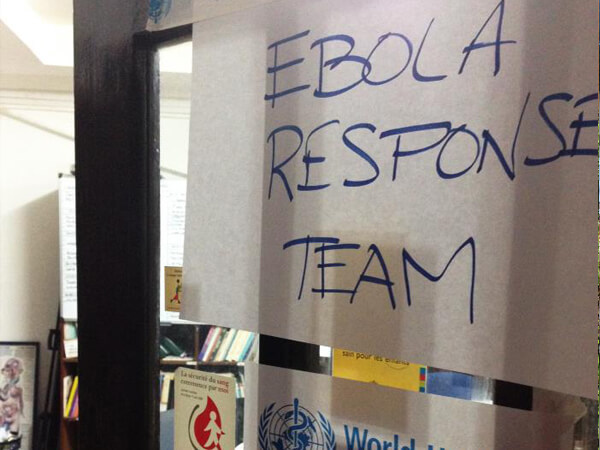
World woefully under supporting Ebola response

img px

World, you still just don’t get it. The Ebola epidemic that is raging across West Africa, killing more than half its victims, will not be conquered with principles of global solidarity and earnest appeals. It will not be stopped with dribbling funds, dozens of volunteer health workers, and barriers across national borders. And the current laboratory-confirmed tolls (3,944 cases, with 2,097 deaths) will soon rise exponentially.

To understand the scale of response the world must mount in order to stop Ebola’s march across Africa (and perhaps other continents), the world community needs to immediately consider the humanitarian efforts following the 2004 tsunami and its devastation of Aceh, Indonesia.

The U.S. and Singaporean militaries launched their largest rescue missions in history: The United States alone put 12,600 military personnel to a rescue and recovery mission, including the deployment of nearly the entire Pacific fleet, 48 helicopters, and every Navy hospital ship in the region. The World Bank estimated that some $5 billion in direct aid was poured into the countries hard hit by the tsunami, and millions more were raised from private donors all over the world. And when the dust settled and reconstruction commenced, the affected countries still cried out for more.

In contrast, the soaring Ebola epidemic garnered only a negligible international response from its recognition in March until early July. The outbreak originated in the tropical rain forest of Guinea in December 2013, but local health authorities did not recognize the new disease in humans in the country until four months later..

. During that time the outbreaks were largely rural, confined to easily isolated communities, and could have been stopped with inexpensive, low-technology approaches.

As I wrote last month, the world simply didn’t get it. And it still doesn’t. The WHO doesn’t have a giant SWAT team of disease-fighting soldiers ready to swoop into a beleaguered area on an agency-owned transport jet, armed with lifesaving drugs and vaccines.

In reality, the WHO begs airlines for tickets in coach, pleads with drug companies and protective gear manufacturers for free handouts, and has only the expertise on hand that governments are prepared to payroll and donate, such as scientists from the U.S. Centers for Disease Control and Prevention (CDC).

And now the epidemic is skyrocketing — nearly half of the cumulative case burden of Ebola in the three countries has occurred in just the last 21 days, according to the WHO. This week CDC Director Tom Frieden returned from Liberia visibly stunned, flabbergasted by what he had witnessed, warning that “There is a window of opportunity to tamp this down, but that window is closing.”

Read the full, original story: We Could Have Stopped This

Evolution created obesity epidemic? Theory of calorie-hoarding genes challenged

Screen Shot at AM

The obesity crisis has given prehistoric dining a stardom not known since Fred Flintstone introduced the Bronto Burger. Last year, “Paleo diet” topped the list of most-Googled weight loss searches, as modern Stone Age dieters sought the advice of bestsellers like The Paleo Solution or The Primal Blueprint, which encourages followers to “honor your primal genes.”

The assumption is that America has a weight problem because human metabolism runs on ancient genes that are ill equipped for contemporary eating habits. In this line of thinking, a diet true to the hunter-gatherers we once were — heavy on protein, light on carbs — will make us skinny again. While the fad has attracted skepticism from those who don’t buy the idea whole hog, there’s still plenty of acceptance for one common premise about the evolution of obesity: Our bodies want to stockpile fat.

For most of human history, the theory goes, hunter-gatherers ate heartily when they managed to slay a fleeing mastodon. Otherwise, prehistoric life meant prolonged stretches of near starvation, surviving only on inner reserves of adipose.

Today, modern humans mostly hunt and gather at the drive-thru, but our Pleistocene genes haven’t stopped fretting over the coming famine.

The idea that evolution favored calorie-hoarding genes has long shaped popular and scientific thinking. Called the “thrifty gene” hypothesis, it has arguably been the dominant theory for evolutionary origins of obesity, and by extension diabetes. (Insulin resistance and diabetes so commonly accompany obesity that doctors have coined the term “diabesity.”)

However, it’s not that difficult to find scientists who call the rise of the thrifty gene theory a feat of enthusiasm over evidence. Greg Gibson, director of the Center for Integrative Genomics at Georgia Tech in Atlanta, calls the data “somewhere between scant and nonexistent — a great example of crowd mentality in science.”

Instead, thrifty genes, if they exist, are just part of a complex genetic picture that contributes to the obesity epidemic, says Hertzel Gerstein, director of endocrinology and metabolism at McMaster University in Hamilton, Canada. The interaction between any one person’s predisposition and the calorie-dense Western smorgasbord is still not well understood.

“People are looking for an explanation,” he says. “The thrifty gene hypothesis might be a piece of an explanation. However, if you accept it too uncritically, you close your mind and thinking to possibly better explanations.”

Read the full, original story: Ancient famine-fighting genes can’t explain obesity

European brain initiative mired in too much IT

Launched in October 2013, the Human Brain Project (HBP) was sold by charismatic neurobiologist Henry Markram as a bold new path towards understanding the brain, treating neurological diseases and building information technology.

It is one of two ‘flagship’ proposals funded by the European Commission’s Future and Emerging Technologies programme. Selected after a multiyear competition, the project seemed like an exciting opportunity to bring together neuroscience and IT to generate practical applications for health and medicine.

Contrary to public assumptions that the HBP would generate knowledge about how the brain works, the project is turning into an expensive database-management project with a hunt for new computing architectures.

In recent months, the HBP executive board revealed plans to drastically reduce its experimental and cognitive neuroscience arm, provoking wrath in the European neuroscience community.

The crisis culminated with an open letter from neuroscientists (including one of us, G.L.) to the European Commission on 7 July 2014, which has now gathered more than 750 signatures. Many signatories are scientists in experimental and theoretical fields, and the list includes former HBP participants. The letter incorporates a pledge of non-participation in a planned call for ‘partnering projects’ that must raise about half of the HBP’s total funding. This pledge could seriously lower the quality of the project’s final output and leave the planned databases empty.

Read the full, original story: Neuroscience: Where is the brain in the Human Brain Project?

Venture capital firms pushing into synbio funding

Synthetic biology, which uses engineered gene sequences to create new biological systems and devices, used to be a subject for futurists and sci-fi writers.

In the last few years, however, applications of synthetic biology are regularly showing up in the business models of venture-backed healthcare companies. Startups engaged in drug, biofuel and crop development, as well as several producing tools and processes for biological research, have attracted sizable, and in some cases, exceptionally large rounds.

Venture firms have invested more than $400 million in companies with a significant synthetic biology focus since last year, according to a VCJ analysis based on Thomson Reuters data. Most of that total is for companies like Juno Therapeutics, which employ engineered gene sequences into therapies.

Also raising significant capital are companies that don’t directly work on therapies, but develop technologies for engineering gene sequences. That includes companies like Twist Bioscience, a San Francisco-based company developing a semiconductor-based synthetic DNA manufacturing process.

Investments add up to what look like large numbers. But VCs active in the space say commitments are miniscule in comparison to the impact synthetic biology will have over the next few decades.

Read the full, original story: Synthetic biology goes for scale: VCJ

How the Ebola virus has spread

If you’ve been following the fast moving Ebola outbreak in West Africa, you may wonder why containing the deadly virus is proving to be so difficult.

After all, there have been nearly 20 previous Ebola outbreaks and few have gotten into the triple digits when the final case count is tallied. This outbreak, with over 3,700 cases and nearly 2,000 deaths, exceeds all previous known Ebola cases combined.

An update released last week by the World Health Organization provides a small but enlightening piece of the puzzle of how this virus is wreaking havoc through several countries in West Africa.

This story relates to spread in Nigeria, which experienced a single importation of the virus in late July. It has been hoped Nigeria would be able to stamp out spread of the virus by tracing contacts of cases and putting them into quarantine until it was clear whether they were infected or not.

For a while, it looked like the continent’s most populous country might be able to stop Ebola transmission. It looks considerably less promising now.

A man from Liberia named Patrick Sawyer became infected in that country, reportedly while looking after his sister, who died from Ebola. A government official, Sawyer was due to go to an economic conference in Nigeria and did so  — even though health officials in Liberia were urging people who were contacts of known cases not to travel.

Sawyer was sick by the time he arrived in Nigeria on July 20 and he died on July 25. Within days of his case being diagnosed, authorities in Nigeria were following 59 people who had had contact with the man. The case count started to grow. A doctor tested positive. Then a nurse, who died.

Read the full, original story: Ebola: See how it spreads

If GMOs are so harmful, where are the ‘victims’?

monsanto

According to the anti-GMO Center for Food Safety, “It has been estimated that upwards of 75 percent of processed foods on supermarket shelves — from soda to soup, crackers to condiments — contain genetically engineered ingredients.”

So where are the victims?

To hear the nation’s anti-GMO activists tell it, you would think that the aisles of our nation’s supermarkets would be choked with corpses, that most of the nation’s farmers and their families would have one foot in the grave, that the country’s cows, pigs and chickens, which consume most of its corn and soybeans, would be dying or dead in their pens and coops.

But none of those things has happened.

What has happened is that American farmers are harvesting record crops this year.

However 14 years of benign and beneficial experience with GMO crops hasn’t stopped anti-GMO activists from claiming that GMO crops are a ticking time-bomb and that the only reason the truth hasn’t come out is that Monsanto and other companies have paid off scientists — thousands of them — to skew their studies, and pressured politicians to approve their seeds.

Read the full, original article: Ban GMOs? First show us the victims

First trial of GM crops rich in omega-3s harvested in UK

Britain’s first trial of GM crops enriched with nutrients to improve health has been successfully harvested. Following a groundbreaking field trial, the first camelina (false flax) crop genetically modified to produce seeds rich in omega-3 fatty acids was harvested at Rothamsted Research on 5 September.

Project leader Johnathan Napier and his team of researchers harvested the 8x8m crop by hand at Rothamsted’s experimental field site in Harpenden, Hertfordshire. The GM plants were cut and bagged up and removed from the field. The plant material was taken to a glasshouse on site where it will remain for one week to dry out. The seeds will then be analysed for their omega-3 fatty acid composition. Any waste material will be removed to landfill.

“It’s a landmark step,” an emotional Prof Napier told Farmers Weekly. “It’s the first UK trial of a GM crop with a nutritional benefit trait in it. “This is the culmination of at least a decade’s worth of fundamental research. We know that the engineered crop will produce the omega-3s in the glasshouse.

Read the full, original article: Genetically modified crop harvested at Rothamsted

Moving closer to GM cup of coffee

A consortium of scientists announced in Science that they’ve sequenced the coffee genome for the first time. By determining all of the genes that make up robusta coffee, a plant variety that accounts for about one-third of the world’s consumption, they’ve opened the door to better breeding practices and even genetic engineering.

Some members of the group are continuing on to sequence arabica coffee, which produces the world’s fancier varieties of coffee bean. Since arabica is a hybrid of robusta and another variety of coffee plant, it has a duplicated genome. With twice as much genetic information to sift through, Victor Albert, the lead author and a professor of biological sciences at the University at Buffalo, said, this becomes “a much more complicated affair.”

“When we compared the coffee to several other species, we saw a huge enrichment in disease-resistant genes,” Albert said. “Those can now be rapidly explored in more detail, and could be of use in both coffee breeding and in the molecular modification of coffee.”

The obvious route, he said, would be to make coffee crops more resilient to climate change and increased pest problems. But his team’s work on coffee’s caffeine-producing enzymes could also help take the buzz out of your brew.

“This might make it possible to knock off caffeine production in a variety of coffee plant,” Albert said, “So to make decaff coffee, you wouldn’t have to go through the process of extracting the caffeine. You could just grow coffee beans that don’t make it at all.”

Read the full, original article: Genetically modified coffee could be just around the corner

Audio: Lobbying on GMO labeling now ‘booming business’

Interview with Carey Gillam, a food and agriculture reporter for Reuters.

Across the globe, 64 countries have enacted mandatory labeling laws for GMO foods. Major food makers like Coca-Cola and biotech giants like Monstanto and DuPont are determined to stop the passage of such laws in the US — so much so that they’ve spent more than $27 million in the first six months of this year on GMO-related lobbying. That’s roughly three times their spending in all of 2013.

The current drive is coming from Vermont, according to Gillam, who’s been following GMOs for 16 years, almost since their inception. In May, Vermont Governor Peter Shumlin signed a law that requires that GMO foods sold in the state be labeled. In early June, the Grocery Manufacturers Association, a trade group that represents Monsanto, General Mills, Coca-Cola, and other food companies, filed a lawsuit arguing that the measure is unconstitutional.

“That litigation is ongoing, and who knows how long that will take,” Gillam says. “Vermont is trying to raise money to defend the law and has raised over $1 million so far. But it looks like a long battle ahead.”

Read the full, original article: GMO lobbying is a booming business as labeling laws increase

American industry groups pressuring EU to allow GM imports

Britain and other European Union member states are under increasing pressure from North American business groups to open their borders to imports of genetically modified food as part of negotiations for a new Transatlantic trade deal, environmental campaigners have warned.

The Transatlantic Trade and Investment Partnership (TTIP) is being negotiated among European governments, the U.S. and Canada, with the active participation of dozens of large businesses. It has already attracted strong criticism from democracy campaigners, who say it could mean the UK could have to open the National Health Service further to private companies, and complaints against large companies could be treated in secret without proper legal recourse.

The European commission has strongly denied that the partnership would allow North American companies to circumvent EU food standards, particularly with regard to genetic modification.

“TTIP will not change the way we regulate GMOs [genetically modified organisms] in Europe. EU trade commissioner Karel De Gucht stressed that publicly many times. The EU has its red lines in the negotiations and the GMOs is one of them,” a spokesman for the commission told the Guardian.

Read the full, original article: EU under pressure to allow GM food imports from US and Canada

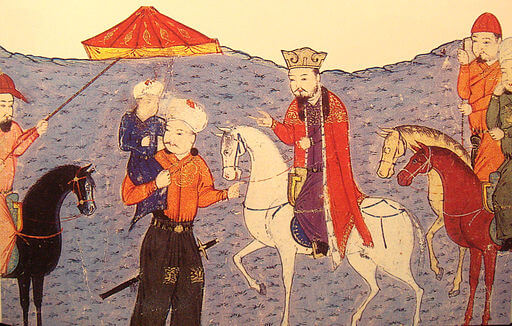
Genghis Khan and the role of power, wealth and behavior in human genetic ancestry

AbaqaOnHorseArghunStandingGhazanAsAChild

In 2003 the first paper documenting Mongol ruler Genghis Khan’s extraordinary genetic contribution to the world was published. The finding added a twist to the already extensive information historians and anthropologists had about his creation of the largest contiguous empire in history: Khan was not just a great ruler, he and his generals were prolific fathers as well.

Scientists documented his reproductive reach by tracing the Y-chromosome that nearly 8 percent of males living in areas conquered by Khan still carry. National Geographic called it an example of ‘extreme natural selection’ at the time:

“This is a clear example that culture plays a very big role in patterns of genetic variation and diversity in human populations,” said geneticist Spencer Wells, one of the 23 co-authors of the paper. “It’s the first documented case when human culture has caused a single genetic lineage to increase to such an enormous extent in just a few hundred years.”

But one of the original study’s author backtracked a bit lately, according to anthropologist Gregory Cochran, by saying that the genetic data can’t exactly pinpoint Khan as the originator of that chromosome. Cochran took to his blog to chide the field as a whole for not taking advantage of other avenues of science, particularly history and anthropology, that can illuminate genetic data. The oversight is not just limited to the Khan effect:

It seems to me that this error stems from geneticists thinking that genetic data is the only real data: sloppy genetic time estimates trump precise historical dates.  In much the same way, people (using the old too-high mutation rate) estimated that the split with Neanderthals was ~300,000  years ago, even though the fossil record clearly showed hominids in Europe shambling towards Neanderhood half a million years ago.  The new, lower estimates of the mutation rate have reconciled genetic and paleontological evidence on the split time  – but the geneticists should have realized that there was an inconsistency.

Although the historical counts for Neanderthal homo sapien interaction are a bit lacking, there are other, better documented examples of how human behavior became an ‘extreme driver of natural selection’ like historical economist Gregory Clark’s survival of the richest, or how the English upper-class prospered and reproduced so quickly and the rapid development of Ashkenazi Jews.

Blending together the historical and genetic records for these events will be the best way to understand them. And, data generated from these analyses will help inform further study of events for which there is not robust historical data, like that of the Neanderthal’s demise.

Meredith Knight is a blogger for Genetic Literacy Project and a freelance science and health writer in Austin, Texas. Follow her @meremereknight.

Additional Resources: