Colorado GMO label law = $500 food tax

GMO labeling How vulnerable is Proposition to a legal challenge strict xxl

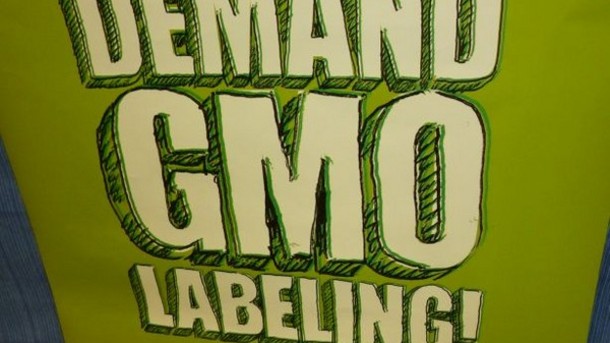
The Right to Know Colorado GMO proposition 105 mandates the labeling of GMO food products. Since consumers like to know what they eat, the idea of GMO labeling is appealing. However, the proposal is ill-conceived and poorly written. It creates more confusion than enlightenment, it will dramatically increase the costs of foods, and taxpayers will face huge legal bills defending the law.

A recent analysis of GMO labeling costs by two Cornell University scientists pegged the costs at $500 per family of 4 per year. Three similar studies carried out in California and Washington State have calculated price tags of $400-800. Why do we need to have mandatory GMO food labeling when voluntarily labeled non-GMO products are readily available?

The GMO food labeling law only requires information on whether a given product was produced by a GMO. It will not inform the consumer what type of genetic change has been made to the organism (has a new gene been added? has an existing gene been silenced or its activity been increased as in classic breeding? has the plant been “vaccinated” to fight viral diseases, or does it produce a toxin to kill corn borers, or a pheromone gas that drives away aphids?).

It will not provide information about the composition or the nutritional properties of the product, nor information about the amount of GMO product contained in the food. Finally, it will not inform the consumer whether the food contains genetically engineered molecules, or if – as in the case of refined sugar produced from GM sugar beets – it is free of GMO molecules.

Read the full, original article:
GMO labels a $500 food tax

Aussie organic farmer who lost GMO ‘contamination’ case faces $800,000 in court costs

Organic farmer Steve Marsh and his wife Sue could be forced to pay almost $804,000 in court costs after suffering defeat in a landmark property rights case earlier this year.

In late May, the Western Australian Supreme Court comprehensively rejected the Marshes’ attempts to sue their genetically modified (GM) canola farming neighbour Michael Baxter. The Marshes had claimed $85,000 in alleged damages after GM canola swathes were detected on their organic farm in late 2010, sparking organic decertification on about 70 per cent of the 478-hectare Kojonup farm.

But Justice Ken Martin’s 150-page judgement rejected assertions GM canola was unsafe in dismissing both the Marshes’ causes of action in common law negligence and private nuisance.

Mr Marsh’s campaign which questioned the safety of GM crops was supported by the Safe Food Foundation (SFF) and raised $750,000 through public donations.

Read full, original article: Marsh to face $800,000 costs for GM test case

Mobile chunks of DNA important for recent human evolution

Mobile pieces of DNA can jump around in the human genome and exert powerful regulatory effects on neighboring genes at new insertion sites.

The most common mobile genetic elements are known as LINE-1 retrotransposons and comprise almost 20 percent of all our DNA. Yet most genome-wide studies have underestimated the full impact of these important genetic regulators.

To correct this, a team led by William Burkholder at the A*STAR Institute of Molecular and Cell Biology in Singapore took a fresh look at the effects of LINE-1 retrotransposons on gene function and disease susceptibility. When they did this, the researchers found evidence that a subset of LINE-1 elements seems to have exerted a beneficial effect on recent human evolution.

Alexandre Kuhn from the Burkholder laboratory and other colleagues performed a comprehensive survey of LINE-1 retrotransposons in the genomes of 20 individuals of Asian descent. The research team, which included scientists from Singapore and the United States, found that, on average, an individual has more than 800 LINE-1 retrotransposons.

Despite their high prevalence, these important have not been adequately accounted for in standard arrays designed for genome-wide analyses of human disease or natural variation.

Read the full, original story: Humans may have benefited from mobile genetic element insertions

USB-drive gene sequencer finally hits the market

When it comes to DNA, France has always been behind the times. Never mind the hefty fines and prison sentence a man apparently can get for trying to order a paternity test, it seems that just knowing your own genetic sequence is offensive enough.

Now that the much anticipated MinION USB stick genome sequencer has finally been rolled out, it’s going to be a whole lot tougher for the gene police.

The MinION took a little longer than we originally reported. Even now the 4-inch USB stick has only been made available to select labs Oxford Nanopore has chosen to let purchase the device. Early reports suggest that the MinION will indeed be all that it had originally claimed — namely, have the ability to sequence long reads (i.e. 80,000 base letters long) and up to 150 million bases in six hours. The main concern now is its accuracy.

Some researchers are claiming that they are only getting about 65 to 80 percentaccuracy out of the device. Fortunately for the French citizenry, if only a limited percentage of genome report is correct you could probably make the case that you don’t really know your DNA. The key to getting reliable reads from unreliable nanopore readers is simple redundancy.

Provided the sequencing errors are not significantly correlated, and the sequencing can be perpetuated without performance decay, then in theory any arbitrary degree of accuracy can be attained.

Read the full, original story: MinION USB stick gene sequencer finally comes to market

European Jews closley related and not converted Khazars

If you’re European Jewish and meet another European member of the community, odds are you’re at least 30th cousins.

A study by an international team suggests the central and eastern European Jewish population, known as Ashkenazi Jews, from whom most American Jews are descended, started from a founding population of about 350 people between 600 and 800 years ago.

Further, that group of Jews who experienced this “bottleneck” was of approximately evenly mixed Middle Eastern and European descent.

The findings bolster the mainstream view that the ancestors of European Jews were people from the Levant and local Europeans. An earlier, 19th-century theory posited that the core of the Ashkenazi Jewish population is descended from Khazars, from the Russian steppes, but the genetic evidence makes that even less likely, said study researcher Itsik Pe’er, an associate professor of computer science and systems biology at Columbia University.

The team analyzed the genomes of 128 Ashkenazi Jews, comparing them with a reference group of 26 Flemish people from Belgium. From that the researchers were able to work out which genetic markers in the genome are unique to Ashkenazi. The number of similarities within the genomes allowed the scientists to compute a rough estimate of the founding population and put upper and lower limits on the amount of time that had passed since that group originated. In this case it is 30 to 32 generations, or at most 800 years. “[Among Ashkenazi Jews] everyone is a 30th cousin,” Pe’er said. “They have a stretch of the genome that is identical.”

Read the full, original story: Oy Vey! European Jews are all 30th cousins, study finds

Night owl or early bird, your genes matter

A couple of weeks ago I asked students in one of my classes whether they were early risers or night owls. Almost all identified as one or the other. But is either being up at dawn or burning the midnight oil simply habit, or is something else going on?

Humans are no different to most of the other creatures on earth. We have an internal body clock, which determines a 24-hour rhythm to our activity. This clock can be found in the hypothalamus, at the base of the brain. Across the animal kingdom, the majority of species are either nocturnal (active at night) or diurnal (active during the day).

But does it all come down to habit? Or do the brains and genes of early birds and night owls actually differ?

The simple answer is yes. A number of studies have identified genes that influence a person’s chronotype. The genes known as PER1, PER3 and ABCC9 all play a role in regulating our body clocks and vary predictably among people of different chronotypes.

Read the full, original story: Can a night owl become an early bird?

Ebola virus preys on human caretaking behaviors for transmission

As the Ebola epidemic in West Africa has spiraled out of control, affecting thousands of Liberians, Sierra Leonians, and Guineans, and threatening thousands more, the world’s reaction has been glacially, lethally slow. Only in the past few weeks have heads of state begun to take serious notice.

To date, the virus has killed more than 2,600 people. This is a comparatively small number when measured against much more established diseases such as malaria, HIV/AIDS, influenza, and so on.

[But] the most striking thing about the virus is the way in which it propagates. True, through bodily fluids, but to suggest as much is to ignore the conditions under which bodily contact occurs. Instead, the mechanism Ebola exploits is far more insidious. This virus preys on care and love, piggybacking on the deepest, most distinctively human virtues.

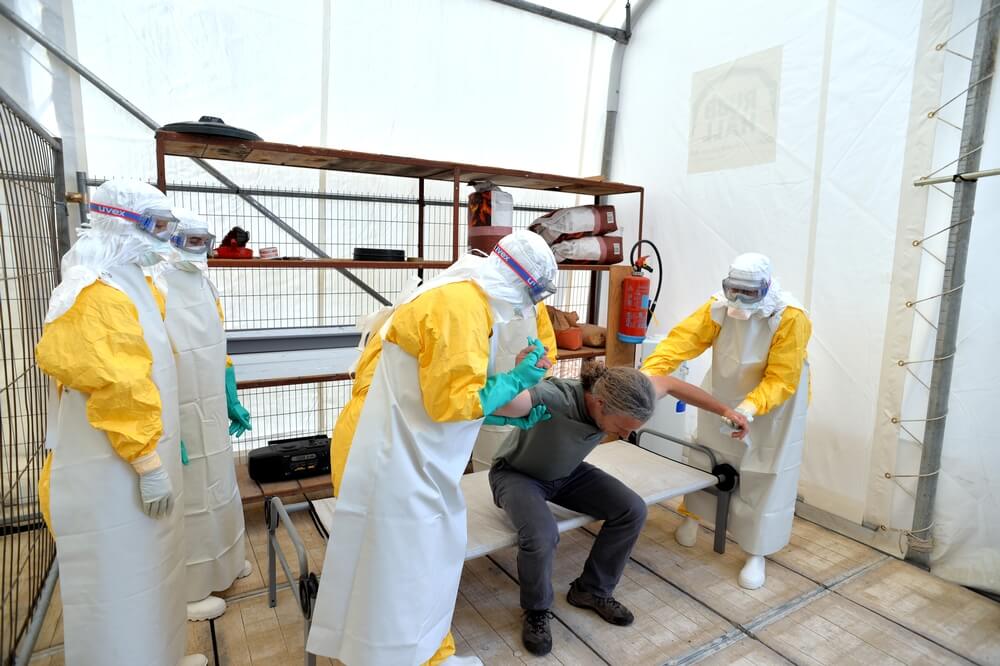
Affected parties are almost all medical professionals and family members, snared by Ebola while in the business of caring for their fellow humans. More strikingly, 75 percent of Ebola victims are women, people who do much of the care work throughout Africa and the rest of the world. In short, Ebola parasitizes our humanity.

More than most other pandemic diseases (malaria, cholera, plague, etc.) and more than airborne diseases (influenza, swine flu, H5N1, etc.) that are transmitted indiscriminately through the air, this disease is passed through very minute amounts of bodily fluid. Just a slip of contact with the infected party and the caregiver herself can be stricken.

Read the full, original story: The most terrifying thing about Ebola

Human language gene linked to early attentional multi-tasking

Neuroscientists have found that a gene mutation that arose more than half a million years ago may be key to humans’ unique ability to produce and understand speech.

Researchers from MIT and several European universities have shown that the human version of a gene called Foxp2 makes it easier to transform new experiences into routine procedures. When they engineered mice to express humanized Foxp2, the mice learned to run a maze much more quickly than normal mice.

The findings suggest that Foxp2 may help humans with a key component of learning language — transforming experiences, such as hearing the word “glass” when we are shown a glass of water, into a nearly automatic association of that word with objects that look and function like glasses, says Ann Graybiel, an MIT Institute Professor, member of MIT’s McGovern Institute for Brain Research, and a senior author of the study.

“This really is an important brick in the wall saying that the form of the gene that allowed us to speak may have something to do with a special kind of learning, which takes us from having to make conscious associations in order to act to a nearly automatic-pilot way of acting based on the cues around us,” Graybiel says.

Read the full, original story: Neuroscientists identify key role of language gene

Ebola virus response “inadequate” to match new potential mutations

MSB

In the wake of President Obama’s announced plans to redouble U.S. emergency aid efforts to fight the epidemic, there are fears that the virus could evolve new mutations and could go airborne.

There is increasing concern that the virus could acquire mutations that make it more easily spread or even airborne. A study published in the journal Eurosurveillance found that in Guinea, Liberia, and Sierra Leone – three countries that have been hit the hardest by the epidemic – for each person infected with Ebola between June and August, as many as two other people contracted the virus.

Although such numbers must be interpreted with caution (as they rest on an assumption of continued exponential growth within 2014, which is unlikely), our study supports the notion that the ongoing Ebola virus disease epidemic must be regarded as a Public Health Emergency of International Concern.

Michael T. Osterholm, director of the Center for Infectious Disease Research and Policy, expressed concern in a New York Times op-ed that the rate of new Ebola cases might actually increase if unpredictable mutations make the virus harder to control.

Viruses like Ebola are notoriously sloppy in replicating, meaning the virus entering one person may be genetically different from the virus entering the next. The current Ebola virus’s hyper-evolution is unprecedented; there has been more human-to-human transmission in the past four months than most likely occurred in the last 500 to 1,000 years. Each new infection represents trillions of throws of the genetic dice.

In its current form, Ebola is only capable of being spread from person to person by bodily fluids. Its rapid rate of mutation, Osterholm explains, could lead to the virus being transmissible by air. If this happens, containing Ebola will become an even more daunting task than it already is, and a global pandemic could ensue.

How serious a threat is this scenario? According to William Schaffner, infectious disease expert at Vanderbilt University, it is possible but highly unlikely that Ebola would mutate to become airborne.

Still, conditions are presently bad enough in areas that are already affected to warrant an international response. West Africa’s climate, poverty rates and political climate make infectious disease outreach difficult in the best circumstances: some members of a team of health workers and educators were killed in Guinea in a public riot against Ebola clinics. As Osterholm explains:

We have to remember that Ebola isn’t West Africa’s only problem. Tens of thousands die there each year from diseases like AIDS, malaria and tuberculosis. Liberia, Sierra Leone and Guinea have among the highest maternal mortality rates in the world. Because people are now too afraid of contracting Ebola to go to the hospital, very few are getting basic medical care.

To make matters worse, the already severe shortage of doctors in Liberia – 250 for four million people – is becoming even more serious due to health care workers contracting Ebola.

For humanitarian reasons, world leaders should be pulling out all the stops to properly treat Ebola patients, prevent the virus from spreading to more populations, and develop a vaccine to stop it. Richard E. Besser, former director of the Centers for Disease Control and Prevention, asserts little doubt that current efforts are not sufficient to address the Ebola crisis.

I speak from sad experience: The level of response to the Ebola outbreak is totally inadequate. At the CDC, we learned that a military-style response during a major health crisis saves lives. In a global setting, the CDC usually provides technical support to local ministries of health. This crisis calls for much more.

Additional Resources:



Generation Y put off by anti-science, anti-GMO bent of green activists

b b

What do we know about the so-called ‘Generation Y’? They are the ‘80s and ‘90s ‘Echo boomer’ children, the web and tech savvy and the surgically attached to their phones. They are the ‘digital natives’, skinny jeans-wearing 20-somethings, who like to share photos of their food and cats as a hobby.

They have been called the ambitious and the lazy generation, the (often unemployed) open-minded ones with sometimes unrealistic expectations. But whatever you like to stereotype them as, we know most Gen Y people are bound to be interested in gadgets, current affairs, staying connected and making up their own minds about anything and everything based on fact and reason.

A recent unofficial Green Party survey highlights just that. A group of party members started from a hypothesis that ‘Voters are put off voting for the Green Party due to a number of policies seen as ‘anti-science’. Setting out to see whether it is true or not, they asked the public what the main reasons are that prevent them from voting Green. They received 312 responses, most of which came from social media outlets such as Reddit, Facebook and Twitter.

First of all, the results show that two thirds of respondents would like the Greens to win, but would only support them if some policy changes were made. Perhaps surprisingly, both nuclear power and the Party’s current ‘disapproval of GM foods or GMO’ came high up on the list.

The creators of the survey see this as ‘the most striking conclusion of the results’, but it suggests that ‘people really don’t like the current policies on nuclear power and GM(O)’.

Read the full, original article:  Generation Y and GMO

What happens when 100 billion animals, over 18 years, eat GMOs?

ec c a dd bdbd f fd e

Visit almost any anti-GMO website and you will find alarming headlines about the alleged dangers of GMO foods. They kill pigs, cows and sheep on farms and in lab studies! Humans are next!

Estimates of the numbers of meals consumed by feed animals since the introduction of GM crops 18 years ago would number well into the trillions. By common sense alone, if GE feed were causing unusual problems among livestock, farmers would have noticed. Dead and sick animals would literally litter farms around the world. Yet there are no anecdotal reports of such mass health problems.

But we don’t need to depend on anecdotes to address these concerns. Writing in the Journal of Animal Science, in the most comprehensive study of GMOs and food ever conducted, University of California-Davis Department of Animal Science geneticist Alison Van Eenennaam and research assistant Amy E. Young reviewed 29 years of livestock productivity and health data from both before and after the introduction of genetically engineered animal feed.

The field data represented more than 100 billion animals covering a period before 1996 when animal feed was 100 percent non-GMO, and after its introduction when it jumped to 90 percent and more. The documentation included the records of animals examined pre and post mortem, as ill cattle cannot be approved for meat.

What did they find? That GM feed is safe and nutritionally equivalent to non-GMO feed. There was no indication of any unusual trends in the health of animals over 18 years since 1996 when GMO crops were first harvested. Considering the size of the dataset, it can reasonably be said that the debate over the impact of GE feed on animal health is closed: there is zero extraordinary impact.

Read the full, original article: The debate about GMO safety is over, thanks to a new trillion-meal study

New weed fighting herbicide-tolerant GMO trait approved

food and farm superweeds

The Agriculture Department has approved the commercial planting of corn and soybeans genetically engineered to survive being sprayed by the herbicide known as 2,4-D.

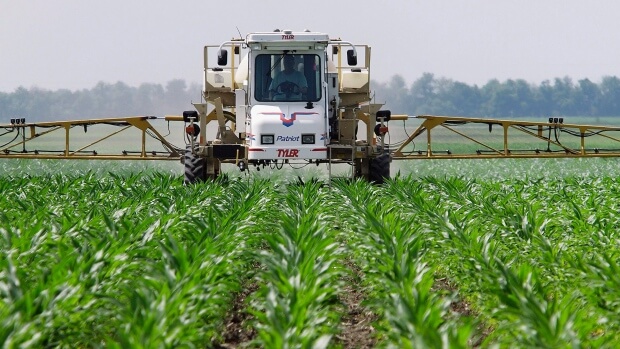
Some corn and soybean growers have been pushing for approval, saying the new crops would give them a sorely needed new tool to fight rapidly spreading weeds that can no longer be killed by Roundup, known generically as glyphosate, the usual herbicide of choice.

But critics say that cultivation of the crops, which were developed by Dow AgroSciences, will mean a sharp increase in the spraying of 2,4-D, a chemical they say would be more damaging to the environment, nearby non-engineered crops and possibly human health, than Roundup.

Crops resistant to glyphosate, known as Roundup Ready crops, now account for the vast majority of corn and soybeans grown in the United States. That is because they make it easy for farmers to control weeds. Farmers simply spray glyphosate on their fields, killing the weeds while leaving the genetically engineered crops intact.

But it was so easy that farmers ended up relying too heavily on glyphosate, allowing many types of weeds to develop resistance. Weeds that can no longer easily be killed by glyphosate now infest about 70 million acres of American farmland, double the area in 2009, according to Dow.

Farmers have had to resort to using different chemicals, or higher doses of glyphosate, or to tilling their fields, which can increase soil erosion. Some farmers have had to go back to pulling weeds by hand.

Read the full, original article: Altered to withstand herbicide, corn and soybeans gain approval

Biotech could increase crop yields by improving photosynthesis

Two down, one to go. Researchers have completed the second of three major steps needed to turbocharge photosynthesis in crops such as wheat and rice, something that could boost yields by around 36 to 60 percent for many plants. Because it’s more efficient, the new photosynthesis method could also cut the amount of fertilizer and water needed to grow food.

Researchers at Cornell University and Rothamsted Research in the United Kingdom successfully transplanted genes from a type of bacteria—called cyanobacteria—into tobacco plants, which are often used in research. The genes allow the plant to produce a more efficient enzyme for converting carbon dioxide from the atmosphere into sugars and other carbohydrates. The results are published today in the journal Nature.

Maureen Hansen, a professor of molecular biology and genetics at Cornell, says the advances won’t be seen in commercially grown food crops for at least five or 10 years.

The approach will likely be limited at first to a few plants that researchers are particularly good at genetically modifying, such as potatoes, tomatoes, eggplant, and peppers. However, Price says, there are genetic workarounds that could quickly make it possible in a wider range of crops.

Read the full, original article: Turbocharging photosynthesis to feed the world

South African chain’s committment to reduce GMOs doesn’t impress activists

Woolworths has announced that it intends to cut back genetically modified or GMO products by 50 percent but food activists are sceptical.

The chain store says they will shift from selling food with 5.7 percent to 2.7 percent GM content by July 2015. But they have declined to provide The Journalist with a list so that we can keep tabs on this promised rollout.

“Many of our customers have told us that they would prefer not to buy products that may contain ingredients from GM crop sources, and we respect their wishes,” said Woolworths Managing Director for Foods Zyda Ryland.

But a representative of the watchdog group, the African Centre for Biosafety (ACB) says the announcement is not good news.

“We were delighted when in 1999 Woolworths publicly committed to eliminate genetically modified ingredients wherever possible and to work hand-in-hand with suppliers to do so. We had applauded their stand hoping that they would lead other retail stores to do the same. We were hugely taken aback to find five years later, 79 percent GM maize in Woolworths Super Maize meal and 86 percent GM soya in the soya flour used in Woolworths White Bread.

More disappointing was the misuse of the ‘May be Genetically Modified label in clear violation of their stated policy to label products containing GM ingredients where these product could not be removed,” said Haidee Swanby, Researcher at the ACB.

Read the full, original article:  South Africa: GM – Mixed messages from Woolworths

As 60 becomes new definition of middle-aged, how is human society changing?

coupleLaptop c

For millennia, if not for eons—anthropology continuously pushes backward the time of human origin—life expectancy was short. The few people who grew old were assumed, because of their years, to have won the favor of the gods.

The typical person was fortunate to reach 40.

Beginning in the 19th century, that slowly changed. Since 1840, life expectancy at birth has risen about three months with each passing year. In 1840, life expectancy at birth in Sweden, a much-studied nation owing to its record-keeping, was 45 years for women; today it’s 83 years.

The United States displays roughly the same trend. When the 20th century began, life expectancy at birth in America was 47 years; now newborns are expected to live 79 years. If about three months continue to be added with each passing year, by the middle of this century, American life expectancy at birth will be 88 years. By the end of the century, it will be 100 years.

Viewed globally, the lengthening of life spans seems independent of any single, specific event. It didn’t accelerate much as antibiotics and vaccines became common. Nor did it retreat much during wars or disease outbreaks. A graph of global life expectancy over time looks like an escalator rising smoothly. The trend holds, in most years, in individual nations rich and poor; the whole world is riding the escalator.

Read the full, original story: What happens when we all live to 100?

Media cycle helps pepetuate misleading ‘gene of the week’ cycle

Science writer David Dobbs has definitively described the voracious appetite of the “selfish gene” meme, pointing out that the notion of individual genes exercising power on the outcome of events has been so good at mass producing itself, that “the selfish gene has become a selfish meme.”

At CGS, we have another name for this phenomenon: the gene of the week.

All “genes of the week” have something in common: they never actually live up to their billing. For starters, it is never true that a single gene just does something. Genes work together, and genomes work with their environments. But this inconvenient reality has done amazingly little to stem genetic determinism, or the funding of research that relies upon its framework.

How could this be true? Is it really the case, as Dobbs posits, that “the gene-centric model survives because simplicity is a hugely advantageous trait for an idea to possess?”

The adventures of “smart genes” provide an illuminating case study.

Read the full, original story: The stupidity of the “smart gene”

Criminal justice system needs easy and free access to DNA testing

Given the incredible power of DNA to exonerate the innocent and expose the guilty, it’s alarming that a mountain of red tape still impedes its use.

This new forensic tool has been a game-changer for our criminal justice system, exonerating more than 300 people nationwide. One of them was New Jersey’s own Gerard Richardson, an Elizabeth man who spent 19 years in prison for a murder he didn’t commit.

He finally won his freedom last year, and today, he’ll be in Trenton with his lawyer from the Innocence Project, to tell Senate lawmakers why it’s so crucial to pass a bill that fixes our state’s DNA testing laws.

Two big problems continue to ruin innocent lives and let the guilty walk free: First, it’s too difficult to use DNA test results from private laboratories to reveal the true perpetrator of a crime. Second, it’s virtually impossible for an ex-con who still swears he’s innocent to get DNA testing.

Read the full, original story: End the absurd bureaucracy around DNA testing

Advanced cancer screenings find early, slow growing cancers more often than fast aggressive ones

cee d d z

The medical definition of ‘cancer’ hasn’t changed in more than 150 years when physicians pioneering autopsy procedures first found and categorized tumors. But the science and treatment of cancer has become wildly different.

What began with simple surgeries, progressed to chemotherapy drug development now so specific doctors match drugs to the genetic profile of tumors.

Alongside treatment, screenings have progressed from physician palpitation to x-rays, CT scans and MRIs to regular hormone checks like the controversial PSA test. Soon, doctors will look for cancer’s DNA signatures in blood tests as part of a person’s annual physical.

And while we are finding more and more cancers, which has led to many saved lives, some physicians and public health experts are beginning to worry we’ve gone too far. We may now be over-screening and over-treating thousands of patients each year for small, slow cancers but still not catching and treating super aggressive cancers that pop up and grow dangerously between routine screenings reports Melinda Beck at the Wall Street Journal.

“We’re not finding enough of the really lethal cancers, and we’re finding too many of the slow-moving ones that probably don’t need to be found,” says Laura Esserman, a breast-cancer surgeon at the University of California, San Francisco.

Esserman advocates removing the label ‘cancer’ from pre-cancerous tumors which are diagnosed in tens of thousands of patients each year and creating tracking protocols for small, slow growing cancers rather than recommending treatments as a first course of action.

But this presents another challenge: How to tell a patient they have cancer but you don’t want to treat it. Patients are savvy and reactive. They want to do something. For example, many women continue to undergo preventative mastectomies rather than follow enhanced screening protocols after finding a positive genetic risk factor for breast cancer.

It’s the hope that advancements in genetic profiling of cancers will yield useful tools to identify which tumors are going to stay small and grow slowly, making them surveillance candidates, and which require immediate treatment:

As many as 60 percent of the tumors detected via screening grow so slowly that they pose little threat in a man’s lifetime, experts say, and treating them with surgery or radiation carries a substantial risk of impotence or incontinence. About 15 percent of patients now opt to monitor them instead—and some experts say more could probably do so safely.

Many companies and government labs are working on tests that would be able to pick out the cancers that need to be treated based on their biochemical and genetic signatures. “We need to start testing some of these ideas, rather than just fighting over them. People are afraid to do less. We want to figure out how to do less safely,” Esserman said.

Meredith Knight is a blogger for Genetic Literacy Project and a freelance science and health writer in Austin, Texas. Follow her @meremereknight.
Additional Resources:

Is genetic screening for all a new eugenics?

In recent weeks, there’s been talk of three types of genetic testing transitioning from targeted populations to the general public: carrier screens for recessive diseases, tests for BRCA mutations, and non-invasive prenatal testing (NIPT) to spot extra chromosomes in fetuses from DNA in the maternal bloodstream.

Are these efforts the leading edge of a new eugenics movement? It might appear that way, but I think not.

When I began providing genetic counseling 30 years ago at CareNet, a large ob/gyn practice in Schenectady, NY, few patients were candidates for testing: pregnant women of “advanced maternal age” (35+), someone with a family history of a single-gene disorder or whose ethnic background was associated with higher prevalence of a specific inherited disease. Their risks justified the cost and potential dangers of the tests.

Now the picture is rapidly changing as plummeting DNA sequencing costs and improved technologies are removing economics from the equation. It’s becoming feasible to test anyone for anything – a move towards “pan-ethnic” genetic screening that counters the “sickle-cell-is-for-blacks and cystic-fibrosis-is-for-whites” mindset.

So here’s a look at three very different types of genetic tests that are poised to make the leap to the general population. And despite new targets revealed with annotation of human genomes, some of the detection technologies themselves are decades old.

Read the full, original story: Genetic testing for all: Is it eugenics?