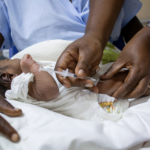
Is a dead body a person?

On the night of July 19, 1916, halfway through the First World War, troops from Australia and Great Britain attacked German positions in Fromelles, in northern France. The Germans were prepared. The battled ended the next day, after thousands of Brits and Aussies had died. It was, according to a magazine produced by the Australian government, “the worst 24 hours in Australia’s entire history.”

In 2002, an Australian amateur historian named Lambis Englezos visited Fromelles and noticed that the number of graves was far fewer than the number of soldiers reported missing from the battle. He suspected that the Germans had buried many in mass graves, and over the next few years he convinced reporters at 60 Minutes Australia of his theory. Its eventual broadcast, as well as reports from Red Cross records and aerial photos, led to an official investigation. In 2008 and 2009, archaeologists dug up five mass graves, containing 250 bodies.

Then came the question of identifying them. After more than 90 years, standard identification methods — fingerprints, medical and dental records — weren’t available. But there was DNA, deep inside the bone marrow. So the researchers extracted samples from the remains and then re-buried each body in its own grave.

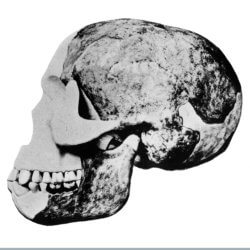
Read full, original article: Personhood Week: When Dead Bodies Become Dead People

Related Articles

Infographic: Global regulatory and health research agencies on whether glyphosate causes cancer

Infographic: Global regulatory and health research agencies on whether glyphosate causes cancer

Does glyphosate—the world's most heavily-used herbicide—pose serious harm to humans? Is it carcinogenic? Those issues are of both legal and ...

Most Popular

ChatGPT-Image-Aug-4-2026-10_15_14-AM
Viewpoint—A hard look at the Fauci diaries: Do they change what we know about COVID’s origins?
ChatGPT-Image-Mar-10-2026-01_39_01-PM
Viewpoint—“Miracle molecule” debunked: Why acemannan supplements don’t work
Picture1
Hiroshima at 81: America’s new nuclear bomb, a buried Iranian target, and a question no one wants to ask
ChatGPT-Image-Aug-4-2026-12_42_58-PM
Viewpoint: Fact-checking CNN interview with RFK, Jr. underscores the depth of his disinformation delusions
png livestock cow cattle a
Consumer skepticism about gene-edited milk is neither fixed nor particularly high—and falls even more if it’s priced lower
ChatGPT-Image-Jul-17-2026-09_50_27-AM
Viewpoint: How disease tracking and prevention has cratered under the Kennedy-Trump administration
ChatGPT-Image-Aug-4-2026-07_52_00-PM
No liability for scientific due diligence: California Supreme Court rejects bizarre lawsuit faulting Gilead for fully evaluating HIV drug before release
ChatGPT-Image-Aug-4-2026-09_31_50-AM-2
Viewpoint: Could the U.S. become dependent on China to develop critical new genetic and drug therapies?
ChatGPT-Image-Jul-31-2026-07_35_35-AM
Wikipedia has assembled an informative list of fake news websites from across the ideological spectrum
ChatGPT-Image-Aug-4-2026-02_05_46-PM
Does Congress have the guts to successfully challenge Trump’s politicization of science funding?
Screenshot-2026-07-31-at-10.52.03-AM
Love sweets and fatty foods? You can blame your genes, but there are ways to quell the obsessions
Screenshot-2026-07-17-at-1.34.59-PM
Poll: Vaccine hesitancy soars when patients distrust health providers and turn to social media
glp menu logo outlined

Get news on human & agricultural genetics and biotechnology delivered to your inbox.