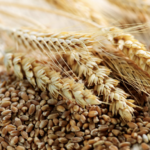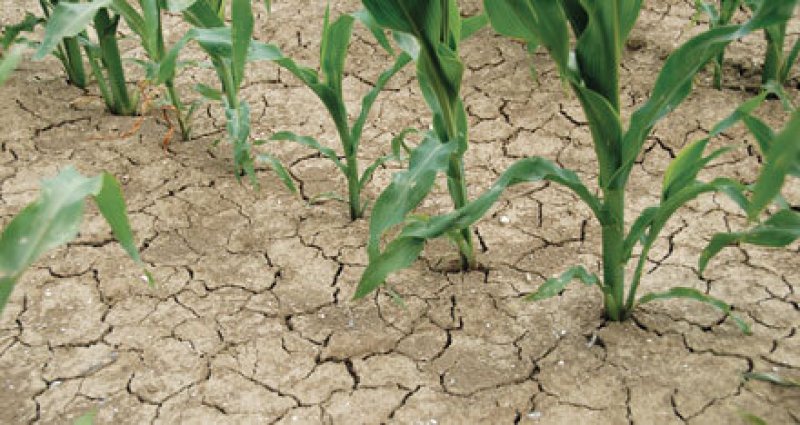
When my daughter turned 7 last week, we celebrated with a homemade chocolate cake. I wonder whether she’ll be able to do that with her own child someday. Scientists are already warning that chocolate and wheat will become harder to grow as temperature and rainfall patterns are disrupted.
But that nightmare scenario need not come to pass. We already know what works—and what doesn’t—to feed a post-climate-change world. In fact, many of the practices and technologies we need are already in use, in the United States and abroad.
What’s needed is to bring these isolated success stories to scale, to make them the rule rather than the exception. But that’s not an easy task when the agricultural approaches that actually improve people’s lives can be overshadowed by inferior alternatives propped up by large PR budgets or government support.
Take the argument that more heat- and drought-resistant seeds are what’s needed to cope with climate change. The good people at Monsanto have spent lots of advertising money to spread this message. And joined by two other high-profile backers of genetically modified organisms—the Bill and Melinda Gates Foundation and the Warren Buffet Foundation—Monsanto has claimed to have already increased corn yields in Africa by 25 percent to 35 percent. There’s a catch, though: The only documentation for those results was found on Monsanto’s own website and was later removed.
Most peer-reviewed research has found little reason for optimism that GMO seeds will revolutionize yields in the face of climate change. The most authoritative analysis is found in Agriculture at a Crossroads, the landmark report issued by the International Assessment of Agricultural Knowledge, Science and Technology for Development in 2009. Testifying before Congress, Robert Watson, the scientist who directed the assessment, explained in the gentlest possible terms that GMO crops are an unproven technology whose benefits remain highly uncertain.

So better seeds alone won’t save us. Instead, feeding the world under climate change will require a broader strategy.
“We absolutely have to develop seeds for improved and climate-adapted varieties, but we also need to increase the diversity of seeds,” says Sara Scherr, the president of Ecoagriculture Partners, an NGO in Washington, D.C. “A lot of the focus is on, ‘Let’s get a few seeds that are drought-resistant that can be used on millions of hectares.’ The current business model in agriculture is based on maximizing volume, which militates against diversity.”
Read the full, original article: How To Feed the World After Climate Change