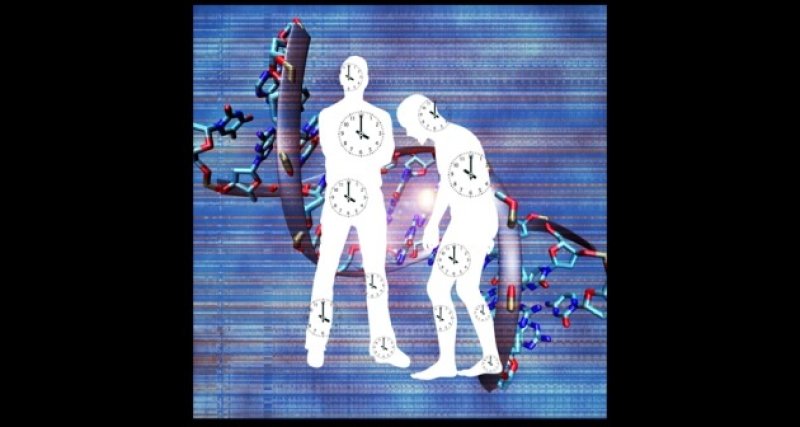
Working late is nothing new to most of us. But what about those who do it on a regular basis? According to 2004 data from the Bureau of Labor Statistics more approximately 15 million Americans worked in a shift job that requires them to be at their workplace at times other than the regular daytime hours that most of us are used to.
Now in one of the largest studies conducted to evaluate the impact of rotating shift work on health, researchers asked the question of whether working night-shift jobs for many years increases the risk of dying early. The short answer? Possibly.
The reasons have a lot to do with the body’s circadian rhythm–our ‘biological clocks’ that run on a 24 hour cycle.
A very small set of genes that have been strongly conserved through evolution in species as varied as cyanobacteria, plants and humans is thought to control 24-hour circadian rhythm. These ‘clock’ genes in turn can be controlled by external stimuli such as light or heat. Hence the periodic changes day and night is one of the major factors that regulates how these genes are turned on or off. In different species the genes are expressed in a way that makes the organism either active during the day (diurnal) or night (nocturnal).
Circadian rhythms are essential for normal function as many processes in our body such as sleep, thirst and appetite operate at specific times of the day. In the past decade or so, research has shown that disrupted circadian rhythms are strongly connected with the onset of metabolic diseases like diabetes and obesity along with various other diseases including cardiovascular disease and neurological disorders.
Results from previous studies that involved rotating night shift workers have also shown that these groups are are at a higher risk for many lifestyle diseases including diabetes and heart disease. It is thought that the increased risks have to do with long term changes to the biological clock that shift work brings about and its impact on gene expression and cellular function.
The current study however, published on January 6 was the first one to look at whether long term shift workers are at increased risk of death, in particular due to cardiovascular disease or cancer. Data from the Nurses’ Health Study, a long running public health study was used. Approximately 75,000 registered U.S. nurses from the study were considered for analysis and various factors that could have contributed to increased risks such as smoking were accounted for.
Broadly the study concluded that working rotating night shifts increased risks of serious health consequences, confirming previous smaller studies. A modest 11 percent of women who worked a night shift regularly for more than 6 years had a shortened lifespan. Nurses were 19 percent more likely to die of cardiovascular disease associated causes if they worked night shifts for 6-14 years. That number increased to 23 percent if they had rotated night shifts for 15 years or more.
The altered work timings did not seem to have an effect on death due to most cancers except for lung cancer. The risk of death by lung cancer was 25 percent more in the night shift group when compared to nurses who worked the daytime shift only.





While it may be simplistic to draw a straight line of causation, it isn’t surprising to see that circadian rhythms are strongly connected with metabolic disorders as most processes in our body are intimately interwoven with the biological clock. In a recent study researchers created a time-map of gene expression in various organs in mice and found that as much as 43% of protein coding genes were expressed in a time regulated manner in different organs. Diana Gitig wrote about the study in the GLP.
The researchers monitored expression of all genes in twelve different organs, taking samples every two hours for forty eight hours. They found that most of the oscillations were organ specific, with the liver having the most oscillating genes and the brain having the least. Only ten genes oscillated in all twelve organs, and seven of these are the core clock genes that set up the circadian rhythm for the whole body. These genes oscillated in synchrony across all of the organs.
Common sense suggests that interfering with the biological clock over long periods of time would increase the risk of disease or death. The results of the Nurses Health Study along with many other studies that have been published indicate that this line of thought has some merit. But our limited knowledge of the genetic and molecular basis of this connection means that a definitive answer will have to wait.
Can we reset our biological clocks?
A recent study, conducted by researchers from Douglas Mental Health University Institute and McGill University in Canada with a small group of 16 people suggested that we could potentially reset our biological clocks using a class of steroids known as glucocorticoids (the ‘stress hormone’ cortisol is a common example). The researchers used a non-invasive blood test for this purpose and showed that administration of glucocorticoids could be used to synchronize peripheral biological clocks in white blood cells. While this was an extremely small study and the effects on the body’s central biological clock were not evaluated, this suggests that it is possible to alter the mechanism to our benefit. More recently, Reset Therapeutics, a company that is focused on treating circadian rhythm associated diseases partnered with 23andMe for access to its more than half a million customers’ genomes which will expand our understanding of the genetic basis of circadian rhythms and identify new therapeutic avenues.
Finding a way to reset the biological clock may not only benefit night shift workers and frequent fliers but also help treat a host of disorders. With 15 million night shift workers, an estimated 40 million people suffering from sleep disorders and millions of jet-lagged travellers, this is undoubtedly an area that needs to be explored further.
Arvind Suresh is a science communicator and a former laboratory biologist. Follow him @suresh_arvind
Additional Resources:
- Tired? Biological clock out of whack? Blame genes and epigenetics, Genetic Literacy Project
- When you take your drugs might matter as much as what you’re taking, Genetic Literacy Project
- When you get jetlagged, so does your microbiome, National Geographic