China increasing support of GMO research, public education

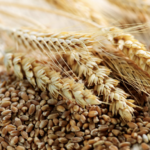
Research and commercialization of genetically modified organisms (GMO) are expected to gain momentum in China after years of GM crop decline amid public safety concerns.

The “No.1 Central Document of 2015”, jointly issued by the Communist Party of China Central Committee and State Council on Sunday, states clearly that more effort will be put into studying GMOs, supervising their safety and educating the public about them.

“We cannot lag behind others in the GMO research”, said Han Jun, deputy head of the central office for agricultural work.

Currently, only GM cotton and papaya are allowed to be grown commercially in China, with GM staple foods prohibited from being grown. But the country is a major importer of GM farm produce, including soybeans, rapeseed, cotton and corn.

China encourages its scientists to grasp the “commanding heights” of GMO technologies, Han said.

Fierce resistance from the public has turned China from one of the world’s biggest investors in this field into one of the most conservative consumers of the technology.

According to a poll by the Public Opinion Research Laboratory of Shanghai Jiao Tong University last year, less than one percent of the 1,050 respondents fully accepted the GM food. About 33 percent of them said they would not accept GM products and 36 percent were concerned about their safety.

Cheng Tongshun, professor from the Zhou Enlai School of Government with Nankai University, called for increasing the public awareness of GM products through dissemination of knowledge and public discussion.

Read full, original article: Tide to turn for China to grow GMO crops

{{ reviewsTotal }}{{ options.labels.singularReviewCountLabel }}
{{ reviewsTotal }}{{ options.labels.pluralReviewCountLabel }}
{{ options.labels.newReviewButton }}
{{ userData.canReview.message }}

Related Articles

Infographic: Global regulatory and health research agencies on whether glyphosate causes cancer

Infographic: Global regulatory and health research agencies on whether glyphosate causes cancer

Does glyphosate—the world's most heavily-used herbicide—pose serious harm to humans? Is it carcinogenic? Those issues are of both legal and ...

Most Popular

Screenshot-2026-05-01-at-1.29.41-PM
Viewpoint: What happens when whole grains meet modern food manufacturing? Labels don’t tell the whole story.
S
As vaccine rejectionism spreads, measles may be taking a more dangerous turn
Screenshot 2026-05-06 at 2.56
Singularity crisis ahead? Can super babies save us from rogue AI geniuses?
Screenshot-2026-05-06-at-2.07.43-PM
Manufacturing a conspiracy: The timeline of how  the White House embraced the fringe claim that scientists are being mysteriously murdered
Screenshot-2026-04-30-at-2.19.37-PM
5 myths about summer dehydration that could damage your health — or even kill you
Screenshot-2026-04-20-at-2.26.27-PM
Viewpoint — Food-fear world: The latest activist scientists campaign: Cancer-causing additives
Screenshot-2026-03-13-at-12.14.04-PM
The FDA wants to make many popular prescription drugs OTC—a great idea. Here’s why it’s unlikely to happen
Screenshot-2026-04-12-135256
Bixonimania: The fake disease scam that AI swallowed whole
Screenshot-2026-05-01-at-11.56.24-AM
‘Science moves forward when people are willing to think differently’: Memories of DNA maverick Craig Venter
ChatGPT-Image-May-6-2026-03_41_05-PM
‘Protecting the integrity of science’: Kennedy’s FDA blocks release of taxpayer-funded studies finding COVID and shingles vaccines safe
Screenshot 2026-05-06 at 12.49
Immortal dragons: The quest to ‘make death optional’
glp menu logo outlined

Get news on human & agricultural genetics and biotechnology delivered to your inbox.