Activists at “alternative Nobel Prize’ declare ‘GMOs are false miracles’

Food safety is this year’s theme for World Health Day, an annual health awareness day held each April 7 and sponsored by the World Health Organization. Food experts around the world have taken this year’s day as an opportunity to warn about genetically modified crops, calling them “false miracles.”

Thirty-nine winners of the Right Livelihood Award — also known as the Alternative Nobel Prize –endorsed April 1 a declaration regarding the future of nutrition, stating that genetically modified organisms (GMOs) are “false miracles” toward food security.

The statement was originally drafted by Vandana Shiva, the 1993 winner of the Right Livelihood Award, along with several coalitions of women in India in relation to this year’s International Women’s Day (March 8).

“Genetically engineered Golden Rice and GMO Bananas are being proposed by corporations hiding behind the cloak of academia as a solution to hunger and malnutrition in the Global South. But these are false miracles,” the statement said.

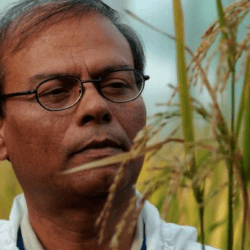
“Indigenous biodiverse varieties of food grown by women provide far more nutrition than the commodities produced by industrial agriculture,” the declaration said, adding that compared to biodiverse alternatives, genetically engineered Golden Rice is 350 percent less efficient in providing Vitamin A.

“When we consider the number of patents involved in these initiatives, it becomes all too clear that the only beneficiaries of these supposedly ‘people-led’ ventures are large companies operating for profit – not for people,” the statement read. “This needs to stop now.”

Read full, original article: Food experts warn genetically modified crops are ‘false miracles’

Related Articles

Infographic: Global regulatory and health research agencies on whether glyphosate causes cancer

Infographic: Global regulatory and health research agencies on whether glyphosate causes cancer

Does glyphosate—the world's most heavily-used herbicide—pose serious harm to humans? Is it carcinogenic? Those issues are of both legal and ...

Most Popular

ChatGPT-Image-Mar-10-2026-01_39_01-PM
Viewpoint—“Miracle molecule” debunked: Why acemannan supplements don’t work
Screenshot-2026-09-22-at-12.26.15-PM
‘Forever chemical’ concerns: Separating hysteria from reasonable concern in the debate over PFAS danger
Screenshot-2026-10-06-at-11.13.59-AM
RFK Jr.’s plan to curb America’s appetite for ultra-processed foods and artificial dyes blocked by the White House
Screenshot 2026-10-08 at 1.34
Hooked on kratom: The unregulated, natural, alcohol-free “social tonic” that is destroying lives 
Screenshot-2026-10-06-at-2.36.47-PM
Is organic farming really more sustainable? 100 recent studies say ‘no’
Resolute-Portrait-with-Injured-Teddy-Bear
Anti-vax Texas Senate candidate Ken Paxton alleges conspiracy by doctors, drugmakers, and insurers to push childhood vaccination for profit
Screenshot-2026-09-28-at-11.26.17-AM
Viewpoint: Wellness movement activists reposition nicotine from a killer addictive drug into a cure-all for brain ills
Radioactive-Americana-Collage-2
The kooky logic behind the raft of spurious cancer claims from Harvard’s T.H. Chan School of Public Health
No-Data-Center-Farm-Protest-Sign-2
Rural revival or corporate windfall? Trump’s One Big Beautiful Bill tax law opens the door to big breaks for data centers—but tech giants aren’t cashing in
ChatGPT-Image-Sep-21-2026-11_21_39-AM
Viewpoint: Food cults: Online ‘nutrition communities’ can pose unique dangers
strand of dna genetics
No, GMO foods do not “damage genes, natural disposition and hormones, or decrease physical health and intelligence”
Screenshot 2025-09-17 at 12.41
Jump-starting global warming: Rising temperatures are driving up emissions from wildfires, fermenting wetlands, and melting permafrost
glp menu logo outlined

Get news on human & agricultural genetics and biotechnology delivered to your inbox.