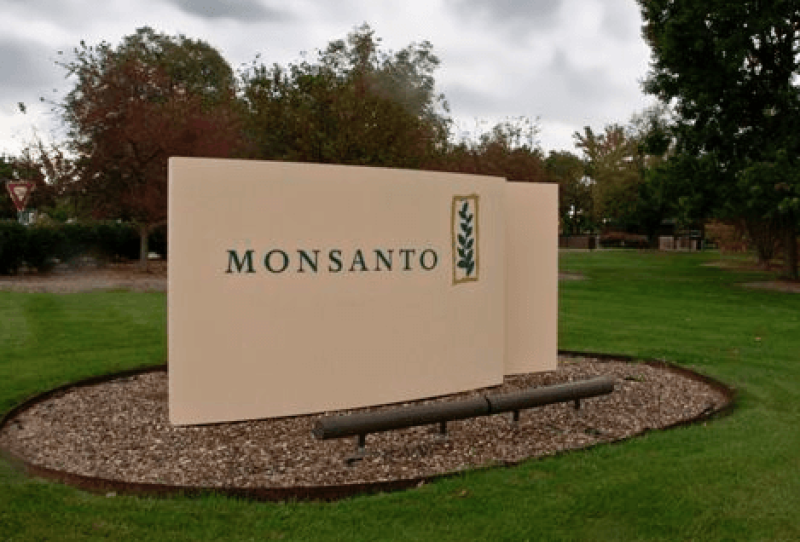
Monsanto haters take note: How it plans to protect environment

Screen Shot at PM

Monsanto has been called one of the US’s most hated companies (see this, which is credible, and this, which is not). Maybe that’s because the St. Louis-based agricultural giant has enemies who are determined, as well as self-interested. (See this petition to Hillary Clinton from the so-called Organic Consumers Association.) Maybe it’s because the  St. Louis-based ag giant historically has done a poor job of explaining itself to the public. Whatever the explanation, Monsanto has been dogged by a series of misunderstandings and outright lies.

As David Friedberg, the CEO of Climate Corporation, wrote in an email to employees after he sold his San Francisco-based data startup to Monsanto in 2013:

Calling a company evil is easy. And if you do it enough times it can become the “reality”—because reality is just the most common perception. Say something enough times and everyone thinks it’s the truth…

When I did my own research—to the source and in the science—I was amazed at how far these inaccurate statements had gone and how wrong so many people were, thinking they were right because they repeated the same things others did.

Recently, I went to see Friedberg in San Francisco to learn more about Climate Corp. and the potential for what’s often called precision agriculture. Precision agriculture is a growth business (pun intended) and that’s a very good thing.

The Guardian published my story about Friedberg and Climate Corp. explaining how Climate Corp. hopes to deliver environmental benefits as well as financial returns to farmers.

Read full, original article: How “evil” Monsanto aims to protect the planet

{{ reviewsTotal }}{{ options.labels.singularReviewCountLabel }}
{{ reviewsTotal }}{{ options.labels.pluralReviewCountLabel }}
{{ options.labels.newReviewButton }}
{{ userData.canReview.message }}

Related Articles

Infographic: Global regulatory and health research agencies on whether glyphosate causes cancer

Infographic: Global regulatory and health research agencies on whether glyphosate causes cancer

Does glyphosate—the world's most heavily-used herbicide—pose serious harm to humans? Is it carcinogenic? Those issues are of both legal and ...

Most Popular

ChatGPT-Image-Mar-10-2026-01_39_01-PM
Viewpoint—“Miracle molecule” debunked: Why acemannan supplements don’t work
ChatGPT-Image-Jun-25-2026-12_23_17-PM
No, Bill Gates did not secretly engineer ticks to promote veganism
ChatGPT-Image-Jun-30-2026-10_27_31-AM
Viewpoint: Europe clears the way for gene-edited crops — but fear-driven restrictions still slow their full potential
Screenshot 2026-07-08 at 10.13
What happens when a pro-life congresswoman needs an abortion?
ChatGPT-Image-Jul-7-2026-03_07_17-PM
Kennedy blocks preventive health care panel that reviews treatments for HIV, diabetes, and cancer from meeting — for fourth time
ChatGPT-Image-Jul-1-2026-03_33_49-PM
‘Alternative’ cancer treatments that could kill you
d a ca e c c beb x
Facts & Fallacies podcast: The 'woke' crusade against anthropology? Dr. Elizabeth Weiss
ChatGPT-Image-Jul-7-2026-12_01_35-PM
Viewpoint: 21 worthless wellness trends inspired by RFK, Jr.’s ill-informed MAHA followers that can harm or even kill you.
DtAieAIkCZy-uchn-oqg
Viewpoint: In the science misinformed grifter game plan, the organic-food-is-healthier myth might be the worst.

Sorry. No data so far.

glp menu logo outlined

Get news on human & agricultural genetics and biotechnology delivered to your inbox.