How science of GMOs can refine our environmental values

Many humans care deeply for the environment, and I really appreciate that sentiment. In order for us to have the impact on the world that we would like to have, we also need knowledge. To focus the discussion on actual issues, not idealised ones, it is important to put our feelings through some thoughtful reflection.

We should make it clear to ourselves what part of our thinking is about our values, and what part is evidence. Sometimes people may be afraid that evidence would somehow negate their values. I wish they weren’t.

Science has made me change my mind on a number of occasions, and my values have only become better defined, not dictated by vague fears or attached to simple labels.

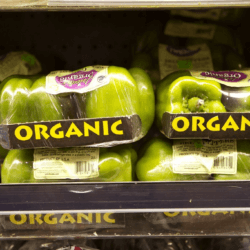
I used to buy organic because I wanted to support environmentally friendly farming. Later on I found out that, while it may be a Natural Assumption to make, unfortunately the idea organic as the champion of the environment falls flat under scrutiny. My heart is still heavily set on fighting for the wellbeing on nature and animals. Hopefully, now, I can do so with more fruitful results.
I always understood genetic engineering was simply a tool, neither good nor bad in itself, but knew it might have some unintended harmful effects. The scientific literature has taught me that it actually comes with several environmental benefits. Let’s get on with those benefits where we can use them to help the land and its animals.

The GLP aggregated and excerpted this blog/article to reflect the diversity of news, opinion and analysis. Read full, original post: Plants don’t have problems

{{ reviewsTotal }}{{ options.labels.singularReviewCountLabel }}
{{ reviewsTotal }}{{ options.labels.pluralReviewCountLabel }}
{{ options.labels.noReviewsLabel }}
{{ options.labels.newReviewButton }}
{{ userData.canReview.message }}

Related Articles

Infographic: Global regulatory and health research agencies on whether glyphosate causes cancer

Infographic: Global regulatory and health research agencies on whether glyphosate causes cancer

Does glyphosate—the world's most heavily-used herbicide—pose serious harm to humans? Is it carcinogenic? Those issues are of both legal and ...

Most Popular

ChatGPT-Image-Mar-10-2026-01_39_01-PM
Viewpoint—“Miracle molecule” debunked: Why acemannan supplements don’t work
Screenshot 2026-07-11 094410
Growing animal muscle and fat cells inside rice grains and calling it beef: One of numerous genetically engineered products shaking up our ecosystem
file-f-d-d-
Facts & Fallacies Podcast: Europe's AC debacle underscores fatal flaw in green activism
Screenshot-2026-07-16-at-11.32.12-AM
Viewpoint: Trump appoints climate change hoax promoter to head influential government policy project
Screenshot 2026-07-16 at 8.49
Pete Hegseth’s bizarre Viagra commercial as Trump administration endorses ‘hormone replacement therapy’
Screenshot 2025-09-17 at 12.41
Misinformation alert: No, glyphosate use in Canadian forests is not spurring more wildfires
ChatGPT-Image-Jun-25-2026-12_23_17-PM
No, Bill Gates did not secretly engineer ticks to promote veganism
ChatGPT-Image-Jul-9-2026-02_39_22-PM
Viewpoint: Polyphenols or NAD+ supplements to combat aging: No, Gwenyth Paltrow and followers, don’t waste your money.
Screenshot-2026-07-16-at-6.02.54-PM
Wellness grifters overwhelm information channels in the developing world, and the problem is escalating
Screenshot-2026-07-16-at-12.08.38-PM
Viewpoint: With trust in doctors and mainstream medicine collapsing, medical professionals need a new communications strategy
Screenshot-2026-07-08-at-9.36.03-AM
Viewpoint: Long-contained diseases are on the rise in the U.S. Are Trump cuts to blame?

Sorry. No data so far.

glp menu logo outlined

Get news on human & agricultural genetics and biotechnology delivered to your inbox.