Digital reconstruction of mouse brain opens path to human experimentation

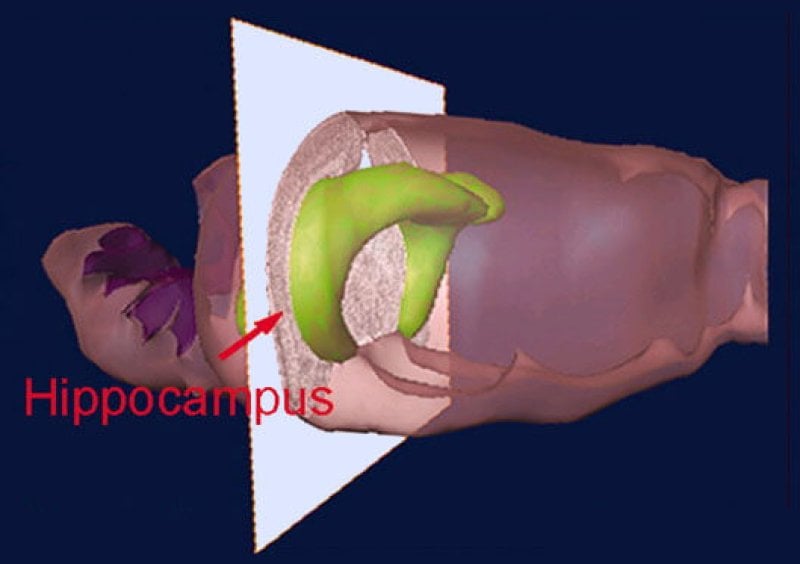
D hippocampus revised

Six years might seem like a long time to spend piecing together the structure of a scrap of tissue vastly smaller than a bead of sweat. But that is how long it has taken a team led by cell biologist Jeff Lichtman from Harvard University in Cambridge, Massachusetts, to digitally reconstruct a tiny cube of mouse brain tissue.

The resulting three-dimensional map is the first complete reconstruction of a piece of tissue in the mammalian neocortex, the most recently evolved region of the brain.

Covering just 1,500 cubic microns, it is still a far cry from reconstructing all 100 billion or so cells that make up the entire human brain. But Christof Koch, president of the Allen Institute for Brain Science in Seattle, Washington, notes that the various technologies involved will speed up “tremendously” over the next decade: “I would call this a very exciting promissory note,” he says.

The neocortex is of particular interest to neuroscientists, and is greatly expanded in humans compared with other mammals. As is the case with other brain areas, neocortical function is determined by how individual neurons are connected to each other through synapses. These tiny structures, which can be seen only with an electron microscope, allow chemical or electrical signals to pass between cells and can be pruned or created anew as an animal attunes itself to its environment.

The GLP aggregated and excerpted this blog/article to reflect the diversity of news, opinion and analysis. Read full, original post: Crumb of mouse brain reconstructed in full detail

Related Articles

Infographic: Global regulatory and health research agencies on whether glyphosate causes cancer

Infographic: Global regulatory and health research agencies on whether glyphosate causes cancer

Does glyphosate—the world's most heavily-used herbicide—pose serious harm to humans? Is it carcinogenic? Those issues are of both legal and ...

Most Popular

Picture1
Hiroshima at 81: America’s new nuclear bomb, a buried Iranian target, and a question no one wants to ask
ChatGPT-Image-Jul-31-2026-07_35_35-AM
Wikipedia has assembled an informative list of fake news websites from across the ideological spectrum
ChatGPT Image Jul 29, 2026, 09_08_15 AM 2
The retreat of environmental extremism: Why activist NGOs are losing favor
Screenshot-2026-08-03-at-2.15.16-PM
Viewpoint: Trump’s relaxed controls on supplying China with microchips could undermine U.S. AI dominance
png livestock cow cattle a
Consumer skepticism about gene-edited milk is neither fixed nor particularly high—and falls even more if it’s priced lower
Screenshot-2026-08-03-at-2.25.49-PM
As measles vaccination rates collapse, scientists push for treatments long considered unnecessary
ChatGPT-Image-Mar-10-2026-01_39_01-PM
Viewpoint—“Miracle molecule” debunked: Why acemannan supplements don’t work
Screenshot-2026-07-31-at-10.52.03-AM
Love sweets and fatty foods? You can blame your genes, but there are ways to quell the obsessions
Screenshot-2026-07-17-at-1.34.59-PM
Poll: Vaccine hesitancy soars when patients distrust health providers and turn to social media
ChatGPT Image Jul 29, 2026, 10_17_59 AM
Viewpoint: What does it mean when critics of conventional agriculture say many fruits and vegetables are “linked” to pesticide poisoning?
ChatGPT Image Jul 31, 2026, 08_05_37 AM
With trust in RFK, Jr.'s CDC vaccine advice collapsing, physicians scramble to fill the information gap
Screenshot-2026-08-03-at-2.06.39-PM
Viewpoint: Green energy supporters ‘fight back’ against conservative foundations backing  fossil fuel industry
glp menu logo outlined

Get news on human & agricultural genetics and biotechnology delivered to your inbox.