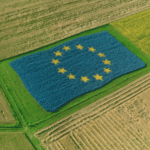
Has farm-to-table movement become a marketing sham?

Today, chefs can’t shut up about where every morsel that went into every dish got its start in life. No chef would dare to seek investors without a business plan that boasts of its “farm-to-table” cuisine — a term now so common that it has inspired its own irritating abbreviation, F2T.

But the language and iconography have been co-opted by the very companies to which the movement was supposed to be an alternative — “farm washing,” as the practice is called. “It Begins with a Farmer,” a series of ads featuring pictures of wholesome-looking tillers of the soil, carries messages such as “A Mother’s Love Begins with a Farmer.” The sponsor? Monsanto, the global purveyor of genetically modified seeds (and scourge of farmers who resist them).

It’s time, then, to retire “farm-to-table.” The term has been drained of any real meaning it may have once had. Chefs themselves are getting sick of it.

Chez Panisse itself seems to stick to a rule of less is more when it comes to listing farms on the menu, since nearly all its vegetables come from Bob Cannard, the farmer whose entire harvest the restaurant has long bought for itself. “I’m furious about fast food taking over ‘farm-to-table,’ ” Waters told me recently over pappardelle with asparagus, crème fraîche, prosciutto, and mint (no farm names in the menu listing). “They’ve hijacked the terms of the movement.”

That’s today’s real cachet: having your own farm and not making a big deal about it. That’s what the future of farm-to-table should be: food that speaks for itself without having to tell you where it comes from.

The GLP aggregated and excerpted this blog/article to reflect the diversity of news, opinion and analysis. Read full, original postIs It Time to Table Farm-to-Table?

{{ reviewsTotal }}{{ options.labels.singularReviewCountLabel }}
{{ reviewsTotal }}{{ options.labels.pluralReviewCountLabel }}
{{ options.labels.newReviewButton }}
{{ userData.canReview.message }}

Related Articles

Infographic: Global regulatory and health research agencies on whether glyphosate causes cancer

Infographic: Global regulatory and health research agencies on whether glyphosate causes cancer

Does glyphosate—the world's most heavily-used herbicide—pose serious harm to humans? Is it carcinogenic? Those issues are of both legal and ...

Most Popular

ChatGPT-Image-Mar-10-2026-01_39_01-PM
Viewpoint—“Miracle molecule” debunked: Why acemannan supplements don’t work
afb-a-b
As the EU loosens restrictions on agricultural gene editing, it remains years behind the rest of the world on equally-safe GMO foods
ChatGPT-Image-Jul-8-2026-12_32_48-PM
Viewpoint: SCOTUS strikes a blow against junk science in Bayer glyphosate case. Will it deter mass tort litigators?
Screenshot-2026-07-10-at-2.02.54-PM
Viewpoint: In abortion-restricting Florida, misinformation abounds when Republican congresswoman faces an ectopic pregnancy
ChatGPT-Image-Jul-7-2026-01_57_55-PM
Viewpoint: Europe’s rejection of air conditioning is the poster child for misunderstanding how to mitigate the impact of climate change
Screenshot-2026-07-10-at-3.10.50-PM
Snake-oil cures throughout history
ChatGPT-Image-Jun-25-2026-12_23_17-PM
No, Bill Gates did not secretly engineer ticks to promote veganism
Screen-Shot-at-PM-pe-vra-kipgaprbdo-vd-ms-jpule-n-jqqaxf-l-e
Viewpoint: Will new breeding techniques help make European agriculture more competitive?
Screenshot-2026-07-10-at-12.55.21-PM
Cancer health facts are particularly susceptible to online misinformation
Screenshot-2026-07-10-at-3.25.10-PM
Using AI for health questions? Here are 4 tips for the most accurate answers.
ChatGPT-Image-Jul-1-2026-03_33_49-PM
‘Alternative’ cancer treatments that could kill you
Screenshot-2026-07-08-at-11.25.14-AM
AI being mobilized to target misinformation about vaccines–on AI
glp menu logo outlined

Get news on human & agricultural genetics and biotechnology delivered to your inbox.