
The GLP aggregated and excerpted this blog/article to reflect the diversity of news, opinion and analysis.
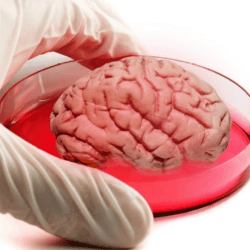
It’s a tiny little thing, no bigger than a pencil eraser and certainly not capable of thinking for itself, but it’s got all the major structures and 99 percent of the genes present in the brain of a five-week-old fetus.
In other words, scientists at Ohio State University say, it’s the most complete model of a human brain ever grown in a lab.
If approved for use in research, the tiny organoid unveiled at the Military Health System Research Symposium in Fort Lauderdale, Fla. could improve research into a whole host of brain-related illnesses, including autism, Parkinson’s and post-traumatic stress disorder.
Because the process hasn’t been published in an academic study, other scientists were hesitant to judge the quality of Rene Anand and Susan McKay’s work.



But Anand is hopeful about the model’s prospects.
“It’s a scalable model that can be engineered to carry the genetic variants that give rise to all these diseases … and it gives us incredible access to things we never have done before,” lead researcher Anand told The Washington Post. “We can screen drugs, we can ask questions, we can follow the development at every stage.”
“And,” he noted, “we can do it all in a dish.”
Read full, original post: Scientists say they’ve grown the world’s most complete petri dish brain