
The GLP aggregated and excerpted this blog/article to reflect the diversity of news, opinion and analysis.
While belief in a literal Satan has waned, Satan has not disappeared. We need him too much. In the struggle with inexplicable suffering, there is no greater comfort than finding a target for righteous blame. And so the list of secularized Infernal Names grows ever longer: Big Government, Big Pharma, Big Food.
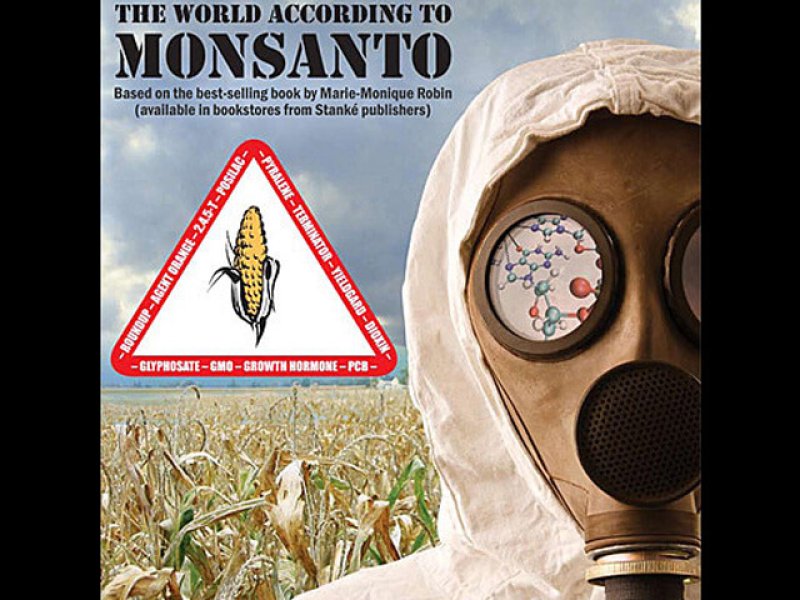
Believing in Satan is tempting. If he really exists, we can protect our deeply held beliefs by blaming any opposition on the great deceiver. There is no need for dialogue. In fact, dialogue is inadvisable, because the deceiver is so powerful that any contact risks corruption. Best to avoid it, lest you end up like Bill Nye, who changed his mind on GMOs after visiting Monsanto.
Scholar of apocalypticism Michael Barkun puts it well:
The conspiracy theorist’s view is frightening because it magnifies the power of evil… At the same time… it is reassuring, for it promises a world that is meaningful rather than arbitrary… the clear identification of evil gives the conspiracist a definable enemy against which to struggle, endowing life with purpose.
Unfortunately, reassuring narratives of good and evil are incapable of communicating complicated realities.

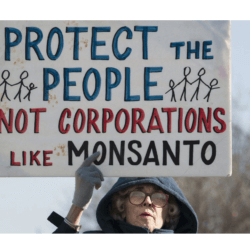



“There’s a real problem. If you don’t want to be a biased reporter, you have to talk to Monsanto, but just talking to them will be perceived as selling out,” says Nathanael Johnson, who writes about food and the environment for Grist.
When confronted with the Evil One, journalists should remember that purity of vision usually reflects ignorance, not reality. Don’t make the conspiracist’s mistake, and fear that contact with the enemy means corruption. Occasionally these efforts will confirm the existence of pure, naked evil. But most often Satan vanishes—a happy ending for those who value knowledge, over fairy tales.
Read full, original post: Is Monsanto Satan? The Pleasure and Problem of Conspiracy Theory