Invoking ‘Monsantan’ and conspiracy theories pollutes GMO debate

The majority of modern Americans—and modern Christians—do not believe that Satan walks among us, preferring instead to identify the great deceiver as a symbol of evil.

But Satan has not disappeared. We need him too much. In the ongoing struggle with inexplicable suffering, there is no greater comfort than finding a target for simple, righteous blame. And so the list of Infernal Names, now secularized, grows ever longer: Big Government, Big Business, Big Pharma, Big Food. These are complex systems, of course—too complex to serve as satisfying scapegoats. But through the alchemy of capital letters we transform them into fairy-tale caricatures of corruption and deceit, villains that help to make sense of it all.

Monsanto may well be as bad as its detractors assert (tobacco companies certainly proved worse than anyone imagined). But the current climate makes it impossible to find out. Widespread belief in Monsanto’s irredeemably evil nature discourages unbiased reporting.

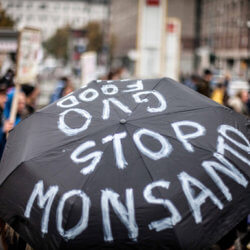
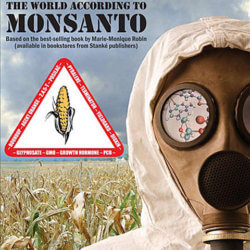
This is tremendously problematic, not least because it means the public conversation about important issues will be dominated by zealots. Take GMOs. On one side there are the activists, wearing gas masks and waving anti-Monsanto signs emblazoned with skulls. On the other are those who come to believe that any opposition to GMOs springs from deep-seated idiocy; the work of anti-science demons.
It would be nice if none of this rancor affected reporting, but that’s wishful thinking. Journalists, editors, and publishers care about accuracy, but they also worry about their audience. When that audience insists on believing in Satan, stories will be far more likely to feature him—even if he doesn’t exist.

The GLP aggregated and excerpted this blog/article to reflect the diversity of news, opinion and analysis. Read full, original post: Is Monsanto Satan? The Pleasure and Problem of Conspiracy Theory


Related Articles

Infographic: Global regulatory and health research agencies on whether glyphosate causes cancer

Infographic: Global regulatory and health research agencies on whether glyphosate causes cancer

Does glyphosate—the world's most heavily-used herbicide—pose serious harm to humans? Is it carcinogenic? Those issues are of both legal and ...

Most Popular

ChatGPT-Image-Sep-2-2026-02_03_32-PM
AI data centers and water usage: It’s a genuine and growing problem
ChatGPT-Image-Mar-10-2026-01_39_01-PM
Viewpoint—“Miracle molecule” debunked: Why acemannan supplements don’t work
Screenshot-2026-09-16-at-2.26.42-PM
Viewpoint: How to ecologically damage America’s forests: Ban glyphosate
ChatGPT-Image-Sep-16-2026-11_28_54-AM
Viewpoint: Study links childhood vaccination to autism!!! Here’s how anti-vaxxers twist evidence to corrupt science
Screenshot-2026-09-20-at-9.03.54-AM
From Malaysia to the world: A pioneering science communicator reimagines global science communication for a digital age
Screenshot-2026-09-18-at-11.35.25-AM
RFK Jr.’s latest crank obsession: Protecting Americans from perfectly safe electromagnetic radiation
ChatGPT-Image-Sep-21-2026-10_18_59-AM-2
Viewpoint: Is corporate embrace of regenerative agriculture greenwashing?
ChatGPT-Image-Sep-20-2026-09_47_55-AM
Trump says he’ll require drugmakers to end multiple vaccine doses, reviving discredited autism claims
Screenshot 2026-09-18 at 10.26
Slowdown AI development? China acknowledges serious risks but sees warnings as U.S. ploy to control the technology
ChatGPT-Image-Sep-17-2026-12_28_43-PM
Vitamin D, omega-3 fish oil and glucosamine supplements could cause brain damage 
ChatGPT-Image-Sep-18-2026-10_49_24-AM
‘Symptom borrowing’: Young people are copying health problems they see on TikTok
Screenshot-2026-09-20-at-4.31.28-PM
White House drafting executive order to control what OMB Director Vought claims are “woke” NIH science grants
ChatGPT-Image-Sep-20-2026-04_22_32-PM
What’s Trump’s ‘AI Force’? Administration rushes to announce ill-defined watchdog agency and czar amid criticism of its resistance to curb AI acceleration
glp menu logo outlined

Get news on human & agricultural genetics and biotechnology delivered to your inbox.