Allowing EU states to ban GM feed would threaten European animal food production

The GLP aggregated and excerpted this blog/article to reflect the diversity of news, opinion and analysis.

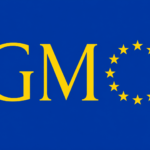
On September 10th, the agriculture committee rejected the Commission’s draft law that would give member states the power to restrict or prohibit the use of EU-approved GM food or feed on their territory.

The agriculture committee’s opinion, adopted by 28 votes in favour to eight against, with six abstentions, will now be scrutinised by the environment committee, which has the lead on this file, before the Parliament as a whole votes on the matter.

“Today’s vote in the agriculture committee sends a clear message: the Commission’s proposal to allow member states to decide whether or not to restrict or ban the use of GM food and feed on their territory must be rejected. We have not been building the EU’s single market to let arbitrary political decisions distort it completely,” said the draftsman of the opinion, Albert Dess (EPP, DE).
“The Commission’s approach is completely unrealistic. We have many sectors in the EU that rely to a great extent on imports of GM feed and would not be able to survive if it is banned. If we allowed this, then all animal food production in the EU would be at stake, which could make us much more dependent on food imports from third countries that do not necessarily respect our high production standards. And we certainly want to avoid this,” he added.

Read full, original post: Agriculture committee opposes national bans on Imports of GM food and feed

{{ reviewsTotal }}{{ options.labels.singularReviewCountLabel }}
{{ reviewsTotal }}{{ options.labels.pluralReviewCountLabel }}
{{ options.labels.newReviewButton }}
{{ userData.canReview.message }}

Related Articles

Infographic: Global regulatory and health research agencies on whether glyphosate causes cancer

Infographic: Global regulatory and health research agencies on whether glyphosate causes cancer

Does glyphosate—the world's most heavily-used herbicide—pose serious harm to humans? Is it carcinogenic? Those issues are of both legal and ...

Most Popular

Screenshot-2026-05-01-at-1.29.41-PM
Viewpoint: What happens when whole grains meet modern food manufacturing? Labels don’t tell the whole story.
S
As vaccine rejectionism spreads, measles may be taking a more dangerous turn
Screenshot 2026-05-06 at 2.56
Singularity crisis ahead? Can super babies save us from rogue AI geniuses?
Screenshot-2026-05-06-at-2.07.43-PM
Manufacturing a conspiracy: The timeline of how  the White House embraced the fringe claim that scientists are being mysteriously murdered
Screenshot-2026-04-20-at-2.26.27-PM
Viewpoint — Food-fear world: The latest activist scientists campaign: Cancer-causing additives
Screenshot-2026-04-30-at-2.19.37-PM
5 myths about summer dehydration that could damage your health — or even kill you
Screenshot-2026-03-13-at-12.14.04-PM
The FDA wants to make many popular prescription drugs OTC—a great idea. Here’s why it’s unlikely to happen
Screenshot-2026-04-12-135256
Bixonimania: The fake disease scam that AI swallowed whole
Screenshot-2026-05-01-at-11.56.24-AM
‘Science moves forward when people are willing to think differently’: Memories of DNA maverick Craig Venter
ChatGPT-Image-May-6-2026-03_41_05-PM
‘Protecting the integrity of science’: Kennedy’s FDA blocks release of taxpayer-funded studies finding COVID and shingles vaccines safe
glp menu logo outlined

Get news on human & agricultural genetics and biotechnology delivered to your inbox.