Being anti-GMO ‘doesn’t make you anti-science’

gmo

The GLP aggregated and excerpted this blog/article to reflect the diversity of news, opinion and analysis.

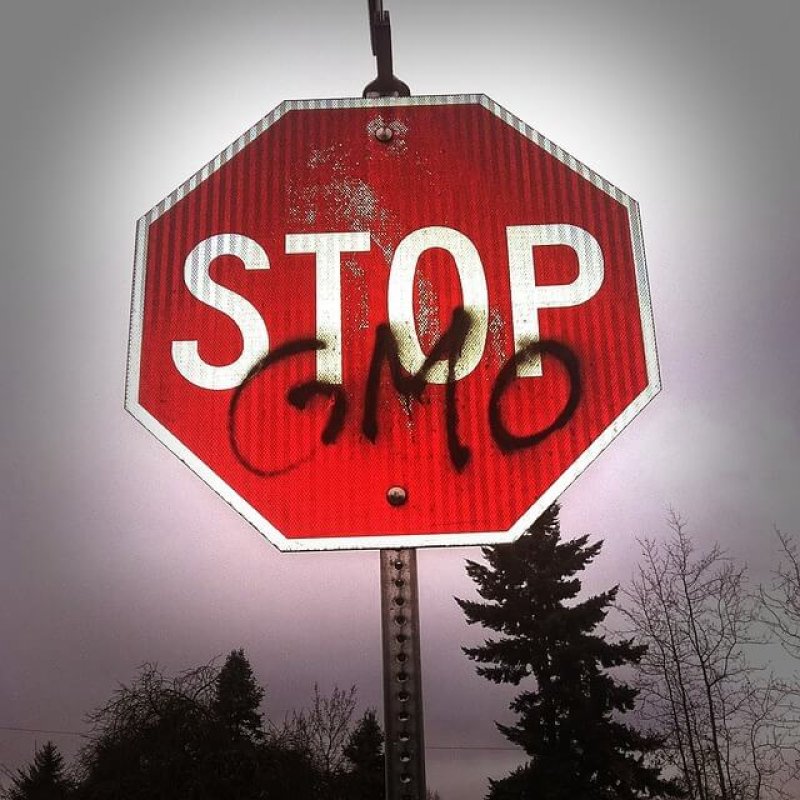
Pro-GMO rhetoric has increased tremendously in news media. And a new rhetorical talking point has come to the forefront, which threatens anyone who speaks out against this technology: If you are anti-GMOs you are anti-science.

This is a brilliant strategy to promote genetic engineering. People don’t want to be characterized as anti-science. But, there is absolutely no scientific consensus on the safety of GMOs.

So why have we fallen for the distortion that concern about GMOs is indicative of one’s lack of scientific knowledge? Because a select group of scientists and media have told us so.

Research has shown that upstream scientists – such as biotechnologists, agricultural technicians – carry far less concern for potential risks than do downstream scientists – such as epidemiologists, and environmental toxicologists.

And scientists tend to support other scientists – especially those with money and prestige, who are largely upstream scientists. Downstream scientists have to produce immaculate, rigorous research – and even then they are questioned by the industrial PR machine.

At the heart of this new rhetoric by Monsanto is the popularity of technology and science in our society. However, science and technology are not equivalent. Science and technology are all too often conflated and this has been exploited by the GMO industry to support the acceptance of their products under the guise of scientific authority.

We should not be bullied into blindly accepting a controversial technology. As of now, GMOs do nothing for society but enlarge the coffers agrichemical giants. They have not alleviated hunger or increased environmental sustainability. To question their value – and risk – is scientific at its core.

Read full, original post: GMO Propaganda and the Sociology of Science

{{ reviewsTotal }}{{ options.labels.singularReviewCountLabel }}
{{ reviewsTotal }}{{ options.labels.pluralReviewCountLabel }}
{{ options.labels.newReviewButton }}
{{ userData.canReview.message }}

Related Articles

Infographic: Global regulatory and health research agencies on whether glyphosate causes cancer

Infographic: Global regulatory and health research agencies on whether glyphosate causes cancer

Does glyphosate—the world's most heavily-used herbicide—pose serious harm to humans? Is it carcinogenic? Those issues are of both legal and ...

Most Popular

ChatGPT Image May 10, 2026, 08_16_59 PM 2
Overmedicalization? RFK Jr.’s antidepressant crackdown raises conflict questions over his fee stake in Wisner Baum, the tort firm built on suing drug makers
Picture1-5
Science Disinformation Gap: The transatlantic battle over social media and censorship
Screenshot-2026-05-01-at-1.29.41-PM
Viewpoint: What happens when whole grains meet modern food manufacturing? Labels don’t tell the whole story.
S
As vaccine rejectionism spreads, measles may be taking a more dangerous turn
Screenshot-2026-05-08-at-3.40.33-PM
Seeds of power: China turns to genetic engineering to become global superpower
ChatGPT-Image-Apr-13-2026-02_20_22-PM
Viewpoint: Misinformation infodemic? Why assessing evidence is so challenging 
Screenshot-2026-04-20-at-2.26.27-PM
Viewpoint — Food-fear world: The latest activist scientists campaign: Cancer-causing additives
Farmers can talk to plants
Farmers are a major source of misinformation—about farming

Picture1-14
When superbugs threaten vulnerable children: Can AI help solve antibiotic resistance?
Screenshot-2026-03-13-at-12.14.04-PM
The FDA wants to make many popular prescription drugs OTC—a great idea. Here’s why it’s unlikely to happen
Screenshot 2026-05-08 at 3.01
Transforming farming and nutrition with AI and robotics? Larry Ellison’s half-billion-dollar Hawaii greenhouse dream goes bust
ChatGPT-Image-Mar-27-2026-11_47_30-AM-2
FDA’s expedited drug reviews are hailed in some quarters but other approval practices are problematic
ChatGPT-Image-May-8-2026-01_41_33-PM-3
Viewpoint: Surge of climate misinformation traced to right wing and anti-wind activists 
glp menu logo outlined

Get news on human & agricultural genetics and biotechnology delivered to your inbox.