GMOs could reduce Vietnam’s dependence on feed imports

The GLP aggregated and excerpted this blog/article to reflect the diversity of news, opinion and analysis.

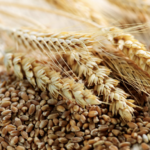
GMOs would be a good solution to the problems facing Vietnam’s cereal producers, a conference on food biotechnology held on October 16 by the Center for Vietnam Science and Technology Internationalization Promotion (VISTIP), under the Ministry of Science and Technology, and the International Food Information Council Foundation (IFIC) was told.

Mr. Le Huy Ham, Director of the Agricultural Genetics Institute at the National Center of Natural Science and Technology, told VET that GMO products would partly reduce the dependence on imported animal feed materials such as soybean and maize. “Around 95 percent of soybean for animal feed is imported,” he said. “Vietnam has 1.1 million ha of maize and produces 5 million tons a year, which is half the productivity seen in the US.”

Regarding GMO products for the cotton industry, Mr. Ham said almost all of the cotton planted in Vietnam is GMO and brings major profits to farmers because of its insect-resilience and strength.

Concerns were expressed at the conference over GMO products being harmful to human health. Many speakers, however, held the view that there is no scientific evidence of harmful effects.

In Vietnam, due to concerns over selecting GMO products, the government carefully considers the issue with advice coming from scientific committees and related ministries. Any GMO planted in Vietnam must have already been planted in at least five developed countries.

In terms of public communication over the pros and cons of GMO products, Ms. Helen Yu from the World Health Organization said that information needs to be delivered by trustworthy organizations to avoid any misunderstandings in the public domain.

Read full, original post: GMO products good for Vietnam

{{ reviewsTotal }}{{ options.labels.singularReviewCountLabel }}
{{ reviewsTotal }}{{ options.labels.pluralReviewCountLabel }}
{{ options.labels.newReviewButton }}
{{ userData.canReview.message }}

Related Articles

Infographic: Global regulatory and health research agencies on whether glyphosate causes cancer

Infographic: Global regulatory and health research agencies on whether glyphosate causes cancer

Does glyphosate—the world's most heavily-used herbicide—pose serious harm to humans? Is it carcinogenic? Those issues are of both legal and ...

Most Popular

Screenshot-2026-05-01-at-1.29.41-PM
Viewpoint: What happens when whole grains meet modern food manufacturing? Labels don’t tell the whole story.
S
As vaccine rejectionism spreads, measles may be taking a more dangerous turn
Screenshot 2026-05-06 at 2.56
Singularity crisis ahead? Can super babies save us from rogue AI geniuses?
Screenshot-2026-03-13-at-12.14.04-PM
The FDA wants to make many popular prescription drugs OTC—a great idea. Here’s why it’s unlikely to happen
Screenshot-2026-05-06-at-2.07.43-PM
Manufacturing a conspiracy: The timeline of how  the White House embraced the fringe claim that scientists are being mysteriously murdered
Screenshot-2026-04-30-at-2.19.37-PM
5 myths about summer dehydration that could damage your health — or even kill you
Screenshot-2026-04-20-at-2.26.27-PM
Viewpoint — Food-fear world: The latest activist scientists campaign: Cancer-causing additives
Screenshot-2026-05-01-at-11.56.24-AM
‘Science moves forward when people are willing to think differently’: Memories of DNA maverick Craig Venter
Screenshot-2026-04-03-at-11.15.51-AM
Paraben panic: How a flawed study, media hype, and chemophobia convinced the public of the danger of one of the safest classes of preservatives
images
The never-ending GMO debate: Pros and cons
ChatGPT-Image-May-6-2026-03_41_05-PM
‘Protecting the integrity of science’: Kennedy’s FDA blocks release of taxpayer-funded studies finding COVID and shingles vaccines safe
glp menu logo outlined

Get news on human & agricultural genetics and biotechnology delivered to your inbox.