White House mulling microbiome research initiative?

The GLP aggregated and excerpted this blog/article to reflect the diversity of news, opinion and analysis. 

Bacteria and other microbes have ruled the planet for at least 3.5 billion years, but only in the last century have we begun to appreciate their dominance. We now know that every environment has its own unseen community — its own microbiome. Microbes in the soil drive planetary cycles of important elements like carbon and nitrogen. Microbes in the oceans produce much of the oxygen we breathe. Microbes in our bodies build our organs, safeguard our health, and even steer our behavior. Thanks to these revelations, microbes have become fashionable. They’ve attracted the attention of magazine editors, book writers, museum curators, and documentary makers. Now, they’ve even stormed the Oval Office.

In 2013, President Obama appointed Jo Handelsman, a pioneer of the modern age of microbiome science, as the associate director for science at the White House Office of Science and Technology Policy. Over the last year, Handelsman, with support from the Kavli Foundation, has facilitated three successive workshops—first with scientists, and later including funding agencies and industry representatives — to determine the big remaining mysteries of the microbiome and hash out ways of solving them.
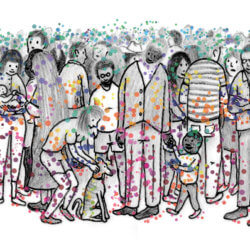

The result is a proposal, penned by a group of leading microbiologists, for a Unified Microbiome Initiative (UMI) — a national coordinated effort to develop the tools we need to truly unlock the secrets of the microbial world. It will do for microbes what the BRAIN Initiative is doing for neuroscience.

Read full, original post: Hey Obama, Can We Have A Unified Microbiome Initiative?

Related Articles

Infographic: Global regulatory and health research agencies on whether glyphosate causes cancer

Infographic: Global regulatory and health research agencies on whether glyphosate causes cancer

Does glyphosate—the world's most heavily-used herbicide—pose serious harm to humans? Is it carcinogenic? Those issues are of both legal and ...

Most Popular

ChatGPT-Image-Mar-10-2026-01_39_01-PM
Viewpoint—“Miracle molecule” debunked: Why acemannan supplements don’t work
ChatGPT-Image-Sep-10-2026-10_36_07-AM
Viewpoint: Even lousy scientific articles can shield authors when they hype dubious health claims and products
sorghum farmers in kenya FARMERS TREND
Here are all the ways CRISPR gene editing is transforming Africa’s staple crops—and there’s a lot more innovation to come
Screenshot-2026-10-01-at-11.21.27-AM
Vaccine hesitancy, like malaria, surges globally, topping 35% in some countries
ChatGPT-Image-Sep-30-2026-01_25_34-PM
Blood tests for Alzheimer’s? The latest grifter, social media scam.
ChatGPT-Image-Sep-30-2026-01_11_07-PM
How U.S. teamed with Russia to block global human AI weapons oversight
ChatGPT-Image-Sep-30-2026-01_38_36-PM
Viewpoint: Died “with measles” vs. died “from measles”: RFK, Jr.’s dangerously subversive word games
ChatGPT-Image-Sep-21-2026-03_15_09-PM
Viewpoint: Chipotle-inspired lesson: 10,000 sick customers suggest that processed foods can be safer than fresh ones
ChatGPT-Image-Sep-29-2026-12_16_42-PM
Social media influencers are driving food misinformation across Europe
Screenshot-2026-09-28-at-1.16.38-PM
Defying public perceptions, U.S. cancer deaths plunged 35% since 1991
glp menu logo outlined

Get news on human & agricultural genetics and biotechnology delivered to your inbox.