Here’s how to do GMO labeling so everyone wins

gmoapplebarcode

The GLP aggregated and excerpted this blog/article to reflect the diversity of news, opinion and analysis.

What would it look like to do GMO labeling right? A scannable bar code. This idea has real potential as a compromise. Agriculture Secretary Tom Vilsack has been talking about the barcode idea, and Gary Hirschberg, leader of the Just Label It campaign, has said that he could live with this solution. The barcode would allow anyone with a camera on their phone to access a complete document describing the product. That document should include information about all forms of genetic modification, from radiation mutagenesis, gene editing, and cell culture — not just those that fall under the narrow rubric that we’ve arbitrarily chosen to define as GMOs. It should also include information about food-worker wages, land-use conversion, pesticide use, water pollution, and greenhouse gas emissions.

. . . .On Tuesday the Grocery Manufacturers Association announced it was just going to go ahead and do this with its SmartLabel initiative, to give people more information about their food, including GMOs. Rather than fighting against transparency on GMOs, food companies should be fighting to provide much more transparency all around, so that people have the opportunity to see genetic modification in its proper, complex context.
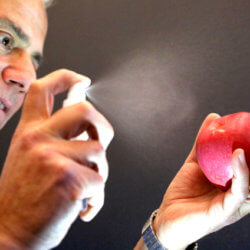
When eaters are asked if they are concerned about GMOs in their food, they overwhelmingly say yes. But as they learn more about what GMOs do and what tradeoffs the alternatives require, the numbers begin to shift. If people are allowed to see the pluses and minuses that come with choosing GMOs, they might (finally) be able to make informed decisions.

Read full, original post: Here’s how to do GMO labeling so everyone wins

Related Articles

Infographic: Global regulatory and health research agencies on whether glyphosate causes cancer

Infographic: Global regulatory and health research agencies on whether glyphosate causes cancer

Does glyphosate—the world's most heavily-used herbicide—pose serious harm to humans? Is it carcinogenic? Those issues are of both legal and ...

Most Popular

ChatGPT-Image-Mar-10-2026-01_39_01-PM
Viewpoint—“Miracle molecule” debunked: Why acemannan supplements don’t work
Screenshot-2026-10-06-at-11.13.59-AM
RFK Jr.’s plan to curb America’s appetite for ultra-processed foods and artificial dyes blocked by the White House
Screenshot-2026-09-22-at-12.26.15-PM
‘Forever chemical’ concerns: Separating hysteria from reasonable concern in the debate over PFAS danger
AI-Force-Uniform-Insignia-Close-Up
Trump wants an AI Force like Space Force, but that could make AI’s risks harder to manage
Screenshot-2026-10-07-at-2.00.02-PM
9 wellness myths busted
AI Doctor with a Digital Neural Head
Utah becomes first state to empower AI to bypass doctors and prescribe certain drugs
Concerned-Farmer-at-Golden-Hour
GAHA: The corporate-created “healthier America” movement challenging what it claims is MAHA misinformation about modern farming, chemicals, and food
Screenshot 2026-10-08 at 1.34
Hooked on kratom: The unregulated, natural, alcohol-free “social tonic” that is destroying lives 
Screenshot-2026-09-28-at-11.26.17-AM
Viewpoint: Wellness movement activists reposition nicotine from a killer addictive drug into a cure-all for brain ills
Screenshot-2026-10-06-at-2.36.47-PM
Is organic farming really more sustainable? 100 recent studies say ‘no’
Screenshot-2026-10-08-at-2.32.00-PM
Abortion rights opponents outraged after FDA says its “safety review” of the already-found-safe mifepristone abortion pill will continue into 2027
ChatGPT-Image-Sep-21-2026-11_21_39-AM
Viewpoint: Food cults: Online ‘nutrition communities’ can pose unique dangers
glp menu logo outlined

Get news on human & agricultural genetics and biotechnology delivered to your inbox.