Are neonicotinoids in foods affecting our health?

abb z
Photo by Breville USA

The GLP aggregated and excerpted this blog/article to reflect the diversity of news, opinion and analysis.

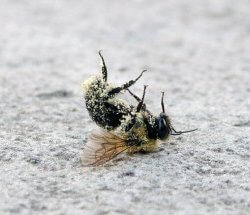
Neonicotinoids. . . have been at the center of the conversation about bee die-offs for several years. Even the U.S. Environmental Protection Agency (EPA) recently acknowledged that very small quantities can impact pollinators. But what about human health?

. . . .

Now, a number of scientists, including those at the U.S. National Toxicology Program,say a closer look is needed.

. . . .

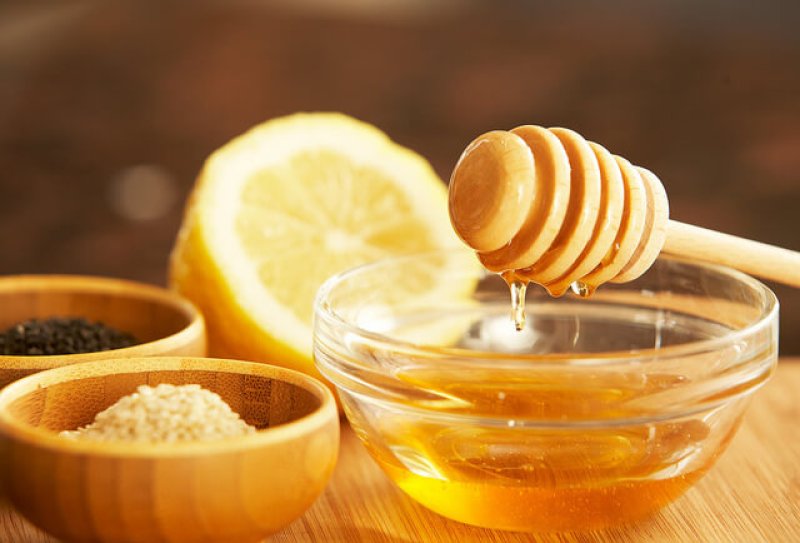
. . . The U.S. Department of Agriculture (USDA) finds neonicotinoids in its ongoing testing of food for pesticide residues. A recent study by Harvard T.H. Chan School of Public Health researchers also found neonicotinoids in nearly all the produce and honey bought at a Boston, Massachusetts, supermarket . . . And because these compounds are found in the produce flesh, rather than just on the surface, they can’t simply be washed off before eating.

. . . .
Researchers at both USGS and Harvard have noted that the levels of neonicotinoids found in water and food samples are below what the EPA considers of concern. But, as Harvard associate professor of environmental exposure biology Chenseng Lu and his team wrote in their study, the results “raise the concerns of potential health risks from chronic exposure.”

. . . .

Eric Chivian, founder and former director of Harvard Medical School’s Center for Health and Global Environment, explained that while neonicotinoids may not be as toxic to mammals as they are to insects, they do affect part of brain that is “enormously important to the nervous system,” and which is responsible for “memory, concentration, awareness, and consciousness.”

Chivian asks: “If we’re being chronically exposed [to neonicotinoids] in water and food, if they’re targeting receptors in adult, developing fetal and infant brains, shouldn’t we have more data?”

Read full, original post: Are Bee-Killing Pesticides Impacting Our Health?

{{ reviewsTotal }}{{ options.labels.singularReviewCountLabel }}
{{ reviewsTotal }}{{ options.labels.pluralReviewCountLabel }}
{{ options.labels.newReviewButton }}
{{ userData.canReview.message }}

Related Articles

Infographic: Global regulatory and health research agencies on whether glyphosate causes cancer

Infographic: Global regulatory and health research agencies on whether glyphosate causes cancer

Does glyphosate—the world's most heavily-used herbicide—pose serious harm to humans? Is it carcinogenic? Those issues are of both legal and ...

Most Popular

Screenshot-2026-05-01-at-1.29.41-PM
Viewpoint: What happens when whole grains meet modern food manufacturing? Labels don’t tell the whole story.
S
As vaccine rejectionism spreads, measles may be taking a more dangerous turn
Screenshot 2026-05-06 at 2.56
Singularity crisis ahead? Can super babies save us from rogue AI geniuses?
Screenshot-2026-05-06-at-2.07.43-PM
Manufacturing a conspiracy: The timeline of how  the White House embraced the fringe claim that scientists are being mysteriously murdered
ChatGPT-Image-Mar-27-2026-11_47_30-AM-2
FDA’s expedited drug reviews are hailed in some quarters but other approval practices are problematic
Screenshot-2026-04-20-at-2.26.27-PM
Viewpoint — Food-fear world: The latest activist scientists campaign: Cancer-causing additives
Screenshot-2026-04-30-at-2.19.37-PM
5 myths about summer dehydration that could damage your health — or even kill you
Farmers can talk to plants
Farmers are a major source of misinformation—about farming
Screenshot-2026-03-13-at-12.14.04-PM
The FDA wants to make many popular prescription drugs OTC—a great idea. Here’s why it’s unlikely to happen
Screenshot 2026-05-06 at 2.19
Vaccine shootout at the CDC 
Screenshot-2026-04-12-135256
Bixonimania: The fake disease scam that AI swallowed whole
Screenshot-2026-04-03-at-11.15.51-AM
Paraben panic: How a flawed study, media hype, and chemophobia convinced the public of the danger of one of the safest classes of preservatives
glp menu logo outlined

Get news on human & agricultural genetics and biotechnology delivered to your inbox.