Controversial test claims to gauge autism risk from placenta

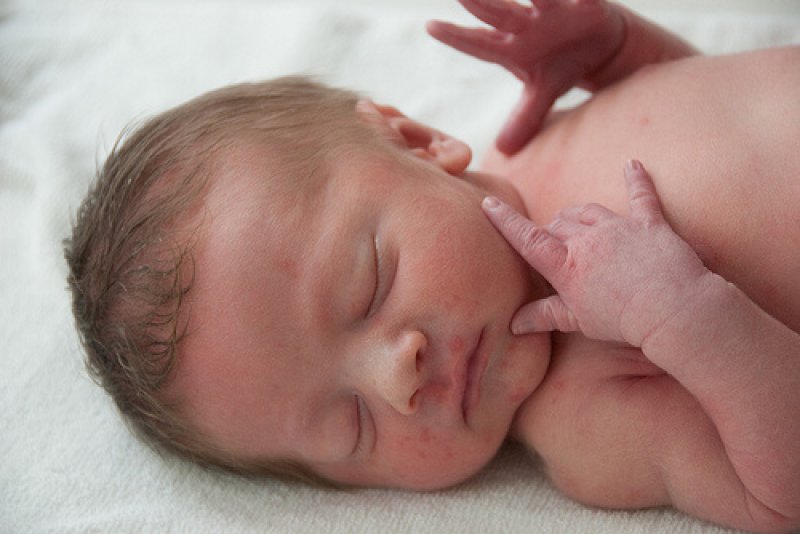
baby
Image: Dylan Parker

The GLP aggregated and excerpted this blog/article to reflect the diversity of news, opinion and analysis.

A new test claims to assess a child’s risk of autism based on abnormal folds in the placenta, and is being offered to pediatricians in the U.S. But with little evidence to support its use, experts say the test is premature and unethical.

Yale University researcher Harvey Kliman introduced the PlacentASD Test in 2013 as a tool to gauge a child’s risk of autism at birth, just months after publishing a study on placental folds.

Already, he says, parents ship thousands of freshly delivered placentas to his lab each year, though he declines to say how many are analyzed for autism risk. Some reports indicate the test could cost upward of $2,000.

Autism experts are not impressed.

“I am truly appalled at the rush to market a test that has such weak predictive power to vulnerable families,” says Helen Tager-Flusberg, director of the Center for Autism Research Excellence at Boston University.

Researchers note that no other peer-reviewed reports have linked placental folds to childhood disorders, and none establish a firm link to autism. Kliman has also not yet confirmed autism diagnoses for children whose placentas he examined at birth.

These unknowns call the test’s predictive power — and ethics — into question, says Catherine Lord, director of the Center for Autism and the Developing Brain at New York-Presbyterian Hospital. “The idea that this is being marketed without fully acknowledging its limitations is scary,” she says.

Read full, original post: Placenta test for autism risk sparks serious concern

{{ reviewsTotal }}{{ options.labels.singularReviewCountLabel }}
{{ reviewsTotal }}{{ options.labels.pluralReviewCountLabel }}
{{ options.labels.newReviewButton }}
{{ userData.canReview.message }}

Related Articles

Infographic: Global regulatory and health research agencies on whether glyphosate causes cancer

Infographic: Global regulatory and health research agencies on whether glyphosate causes cancer

Does glyphosate—the world's most heavily-used herbicide—pose serious harm to humans? Is it carcinogenic? Those issues are of both legal and ...

Most Popular

Screenshot-PM-24
Viewpoint: The herbicide glyphosate isn’t perfect. Banning it would be far worse.
d-b
Blocked arteries, kidney stones, nausea, constipation, fatigue: Long list of health problems caused by too much vitamin D 
Screenshot-2026-04-27-at-12.22.38-PM
Running ‘wild’: Last year, RFK, Jr. was given a green light to ‘reform’ chemical policies. Glyphosate illustrates how Trump now has him on a tight leash, and MAHA is furious
ChatGPT-Image-Apr-22-2026-11_06_18-AM
Wellness influencer nonsense: No, nicotine does not boost cognition and productivity, but it can damage your health 
bayer-supremecourt-lt
EPA concludes glyphosate is not carcinogenic. Missouri courts say Monsanto failed to warn it might be. SCOTUS weighs in.
ChatGPT-Image-Feb-16-2026-01_57_31-PM
Viewpoint: ‘Science-as-Satan’ unites the MAHA—MAGA movements. Is a breakup in the works?
Screenshot-2026-04-27-at-1.40.55-PM
With federal funding for scientific research already reeling, Trump fires the entire apolitical National Science Board
Screenshot-2026-04-13-at-3.54.04-PM
AI disinformation stress test: Challenges and response strategies
ChatGPT-Image-Feb-16-2026-01_04_32-PM
Raw milk myth wake-up call
glp menu logo outlined

Get news on human & agricultural genetics and biotechnology delivered to your inbox.