Fathers’ lifestyle, age affect children’s epigenome

The GLP aggregated and excerpted this blog/article to reflect the diversity of news, opinion and analysis.

Scientists from the Georgetown University Medical Center say that a growing body of research is revealing associations between birth defects and a father’s age, alcohol use, and environmental factors. They say these defects result from epigenetic alterations that can potentially affect multiple generations.

The study (“Influence of Paternal Preconception Exposures on Their Offspring: Through Epigenetics to Phenotype”), published in the American Journal of Stem Cells, suggests both parents contribute to the health status of their offspring, a common-sense conclusion that science is only now beginning to demonstrate, says the study’s senior investigator, Joanna Kitlinska, Ph.D., an associate professor in biochemistry, and molecular and cellular biology.

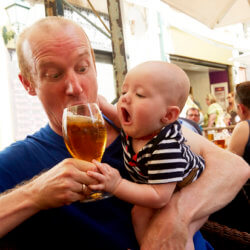
“We know the nutritional, hormonal, and psychological environment provided by the mother permanently alters organ structure, cellular response, and gene expression in her offspring,” she explains. “But our study shows the same thing to be true with fathers—his lifestyle, and how old he is, can be reflected in molecules that control gene function. In this way, a father can affect not only his immediate offspring, but future generations as well.”

Read full, original post: Blame Daddy for Some Epigenetically Induced Birth Defects in Children

Related Articles

Infographic: Global regulatory and health research agencies on whether glyphosate causes cancer

Infographic: Global regulatory and health research agencies on whether glyphosate causes cancer

Does glyphosate—the world's most heavily-used herbicide—pose serious harm to humans? Is it carcinogenic? Those issues are of both legal and ...

Most Popular

ChatGPT-Image-Mar-10-2026-01_39_01-PM
Viewpoint—“Miracle molecule” debunked: Why acemannan supplements don’t work
ChatGPT-Image-Sep-2-2026-02_03_32-PM
How much of a problem is AI’s water use?
ChatGPT-Image-Sep-22-2026-10_32_46-AM
There has been a slew of recent reports of food recalls and foodborne outbreaks. Do we face an escalating problem?
ChatGPT-Image-Aug-26-2026-12_46_16-PM
Viewpoint: The fake controversy over whether combining childhood vaccines is dangerous— a debate science resolved 25 years ago
Screenshot-2026-09-17-at-1.07.08-PM
'We are dangerously addicted to antidepressants': Should we heed RFK Jr.’s sobering warning?
ChatGPT-Image-Sep-23-2026-01_52_03-PM
Viewpoint: 4 very real AI doomsday scenarios
Screenshot-2026-09-03-at-10.51.20-AM
Viewpoint: Why do online health lies outlive the evidence that debunks them? Read "Everyone Else Is Lying to You"
Screenshot-2026-09-23-at-11.55.01-AM
How can we know if social media bans actually help teens?
Screenshot-2026-09-17-at-12.00.30-PM
Investigative group ProPublica finds links between ectopic pregnancy deaths and abortion bans
Screenshot-2026-09-23-at-3.15.09-PM
Anti-GMO activists in Pakistan rev up their campaign of dire warnings
Screenshot-2026-09-22-at-11.40.28-AM
After Idaho criminalized abortion providers in 2022, one-third of obstetricians fled. Health care advocates are making rural health the case for repealing the ban
Screenshot-2026-09-16-at-2.26.42-PM
Viewpoint: How to ecologically damage America’s forests: Ban glyphosate
ChatGPT-Image-Sep-23-2026-11_47_32-AM
Facing pressure from Trump administration, fewer hospitals offer medical treatment for transgender minors
glp menu logo outlined

Get news on human & agricultural genetics and biotechnology delivered to your inbox.