Is domination of running by African descended athletes genetic or cultural?

Screen Shot at PM
[T]he white American liberal tends to worry that even talking about innate athletic aptitudes risks bolstering racist views – since if genetically determined physical differences exist between races, might it not be argued that psychological and cognitive ones do too?

In men’s track, athletes of African ancestry hold every major record in all running events, from the 100m to the marathon. Every last one of the 64 finalists in the hundred-meter dash in the last eight Olympics has been of African descent. Only two white runners hold places in the top 500 times ever posted in the 100 meter sprint. And similar racial dominance characterizes the long-distance running contests.

Harvard sociologist Orlando Patterson…all but dismisses the idea of genetic advantage, attributing Jamaica’s success first to an institutional and cultural history…[and] “combative individualism”…

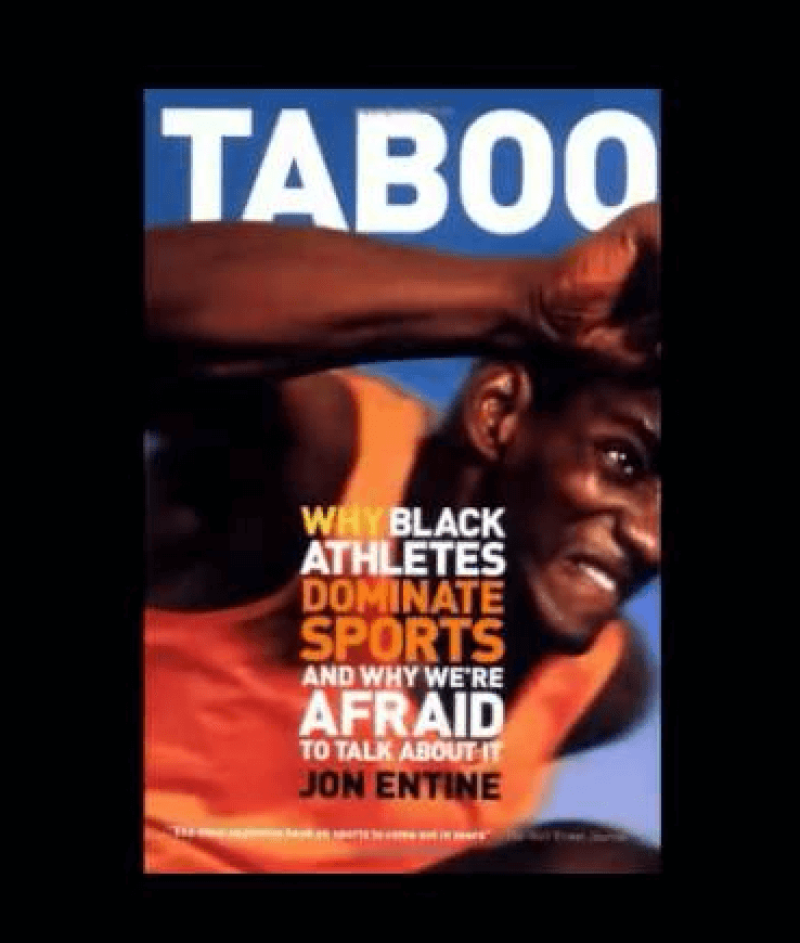
A contrary take comes from journalist Jon Entine,…[who] acknowledges the cultural factors Patterson lists, but insists that “culture alone can only take one so far;” beyond that, we have to turn to biology. …“genetically linked, highly heritable characteristics” determine outcomes across various contests, he writes, and “they are not evenly distributed among human populations.”

[G]enetic differences may determine small but decisive advantages among world-class athletes [but they do not] hold any implication for character, personality, intelligence, or any of the myriad factors that make up the individual human being as we know him or her in the real world.

The GLP aggregated and excerpted this blog/article to reflect the diversity of news, opinion and analysis. Read full, original post: Race and Footrace

{{ reviewsTotal }}{{ options.labels.singularReviewCountLabel }}
{{ reviewsTotal }}{{ options.labels.pluralReviewCountLabel }}
{{ options.labels.newReviewButton }}
{{ userData.canReview.message }}

Related Articles

Infographic: Global regulatory and health research agencies on whether glyphosate causes cancer

Infographic: Global regulatory and health research agencies on whether glyphosate causes cancer

Does glyphosate—the world's most heavily-used herbicide—pose serious harm to humans? Is it carcinogenic? Those issues are of both legal and ...

Most Popular

Picture1
The Orange Bowl without oranges: Can CRISPR save Florida citrus?
ChatGPT-Image-May-22-2026-10_26_09-AM
Gutting the National Science Board: How the Trump-RFK, Jr. crusade is erasing the separation of science and state
Screenshot-2026-04-14-at-11.11.06-AM
‘Turbo cancer’ or mRNA cancer cure? Strategies to counter misinformation
Screenshot-2026-04-22-at-12.21.32-PM
Viewpoint: Why the retracted Monsanto glyphosate study doesn’t change the science—the world’s most popular herbicide is safe 
Screenshot 2025-11-12 at 3.28
GLP podcast: Evolutionary biologist debunks the 'sex spectrum'
Screenshot 2026-05-22 at 3.28
Vagus nerve wellness grift: How to build a billion dollar business. Are you listening, Kelly Ripa?
ChatGPT-Image-May-26-2026-09_19_32-AM
Viewpoint— “A safe space to chat, flirt, and be intimate without sex”: Are new AI companies exploiting vulnerable asexuals?
global warming
‘Implausible’: Top climate scientists reject worst-case scenario—soaring temperatures and fast-rising sea levels
ChatGPT-Image-May-26-2026-09_04_31-AM-2
Hantavirus revives COVID-era conspiracies and distrust in public health 
Screenshot 2026-05-22 at 11.31
‘Realistic and durable’: EPA proposes loosening restrictions on some PFAS ‘forever chemicals.’
ChatGPT-Image-Apr-16-2026-02_56_53-PM
Financial incentives, over diagnosis, and weak oversight: Autism claims are driving up Medicare costs
glp menu logo outlined

Get news on human & agricultural genetics and biotechnology delivered to your inbox.