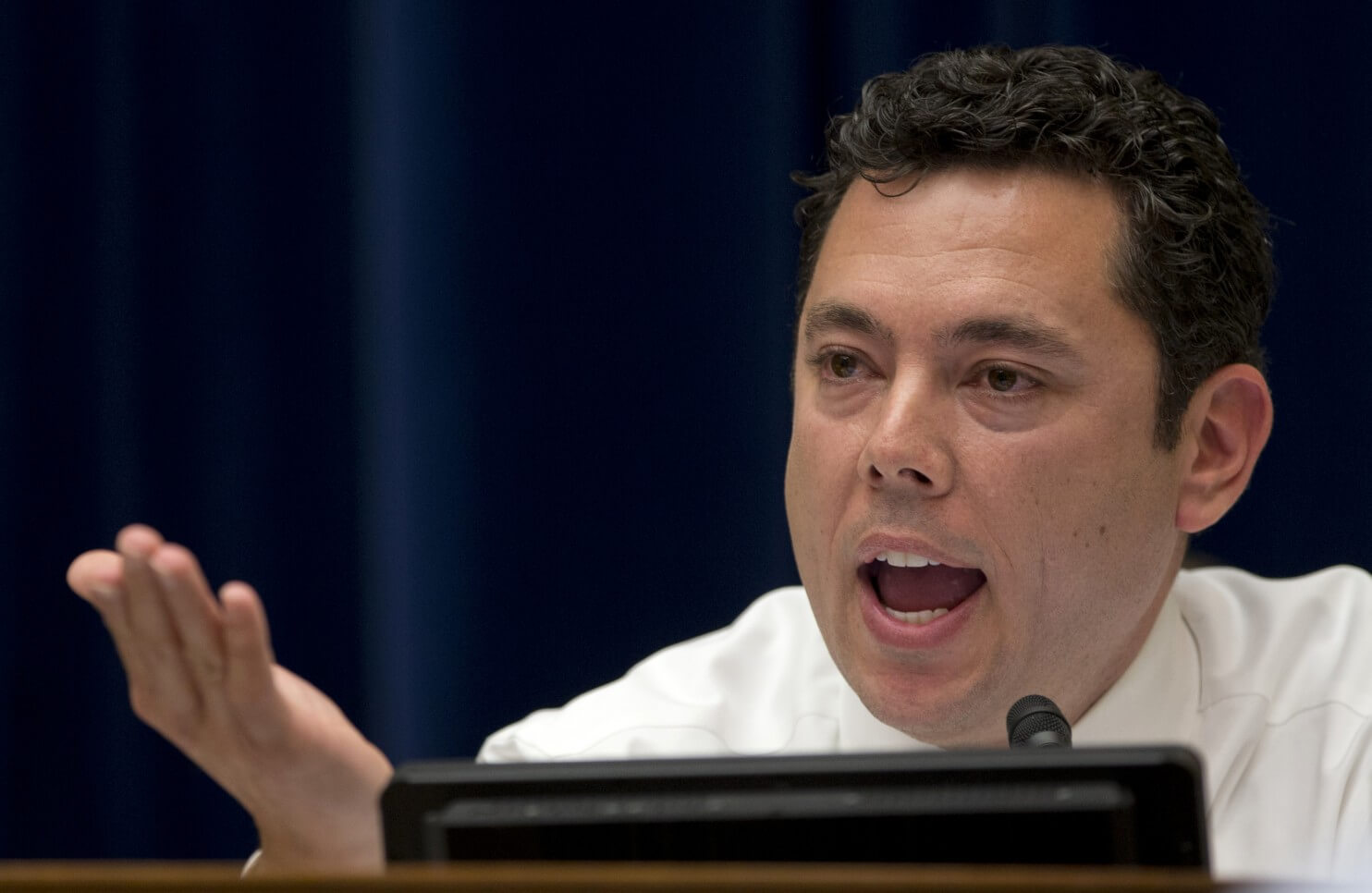
Jason Chaffetz, Utah congressman and chairman of the House Oversight and Government Reform Committee, wants to know why U.S. taxpayers are funding an international agency that routinely finds nearly everything the it evaluates causes cancer, from drinking hot beverages to working as a hairdresser. Its reports have also branded coffee, mobile phones and processed meat as dangerous products that cause cancer. The International Agency for Research on Cancer (IARC) has come under fire recently for using bad science to reach politically motivated conclusions in an attempt to shape public policy.
In a Sept. 26 letter to the National Institutes of Health, which spends millions to fund IARC, Chaffetz said IARCs “standards and determinations for classifying substances as carcinogenic, and therefore cancer-causing, appear inconsistent with other scientific research, and have generated much controversy and alarm.” Chaffetz accuses IARC of having a “record of controversy, retractions, and inconsistencies” and asked NIH Director Francis Collins to explain why taxpayers continue to support the flawed agency.
Based in France, IARC operates under the purview of the World Health Organization. One of its core duties is “elucidating the role of environmental and lifestyle risk factors….and understanding that most cancers are, directly or indirectly, linked to environmental factors and thus are preventable.” Each year, IARC scientists evaluate a list of certain exposures that might cause cancer. In its 50-year history and after assessing nearly 1,000 factors, IARC has deemed only one thing non-carcinogenic.
Chaffetz is specifically interested in IARCs controversial report that claims glyphosate, one of the world’s most widely-used herbicides, is a probable human carcinogen. Sold under the brand name Roundup, glyphosate is now the target of the global anti-GMO movement because it’s applied on many genetically engineered crops like corn and soybeans. The weedkiller is also used on conventional farms, open spaces and residential yards in more than 160 countries. Despite hundreds of studies confirming the chemical’s safety, anti-GMO activists are pushing hard to ban glyphosate on the grounds it harms human health and the environment.
Those activists received a major gift in March 2015 when IARC claimed glyphosate is carcinogenic, the only agency to do so. Even though IARC admits it found only limited evidence of carcinogenicity for one type of cancer, non-Hodgkins lymphoma, the agency nonetheless put glyphosate in the same cancer-causing category as human papillomavirus and mustard gas.
IARC has been heavily criticized for that report and rebuked by several scientific organizations. Bernard Url, head of the European Food Safety Authority (EFSA), blasted IARCs move as “the first sign of the Facebook age of science. You have a scientific assessment; you put it on Facebook, and you count how many people like it.” A few months later, EFSA concluded: “glyphosate is unlikely to pose a carcinogenic hazard to humans, and the evidence does not support classification with regard to its carcinogenic potential.”
Other groups followed suit, including the United Nation’s Food and Agriculture Organization, which said, “glyphosate is unlikely to pose a carcinogenic risk to humans.” Two recent reports from the Environmental Protection Agency also conclude glyphosate does not cause cancer (the agency is updating its safety review of the chemical). One EPA report specifically delinks glyphosate use and a number of cancers including lung and brain. In a letter to the NIH in May, Rep. Robert Aderholt, chairman of the House Appropriations Committee, said the IARC study “appears to be the result of a significantly flawed process; unfortunately, because the study was funded through NIH, the conclusions will be taken more seriously than they might have been.”

That is no understatement. The glyphosate-causes-cancer meme is repeated in every news article about glyphosate and heavily pushed by anti-GMO activists. Lawsuits are being filed against food companies, and Monsanto (the maker of both Roundup and genetically engineered seeds) on the basis glyphosate is unsafe.
It’s also having an impact on public policy here and abroad. Last summer, the EU battled for months over recertifying glyphosate use; member states like France and Germany opposed it. Glyphosate use was approved for the 18 months in the EU instead of 15 years, which was the original timetable and some countries like Italy are instituting their own restrictions.
Based on the IARC report, California put glyphosate on its list of unsafe chemicals. Chaffetz says “IARCs determinations influence American policymaking, even though IARC avoids having to meet the strict scientific standards and government scrutiny afforded to science advisory committees in America.”
At a time when Americans are increasingly wary about scientific subjects like GMOs and vaccines, why should taxpayers fund an agency that peddles bogus science? It’s a question worth asking and kudos to Chaffetz for asking it.
This article appeared originally on The Hill under the title “Chaffetz investigating taxpayers funding for flawed cancer agency” and is being reproduced here with permission of the author.
Julie Kelly is a cooking teacher, food writer and National Review online contributor. Follow her on Twitter at @julie_kelly2