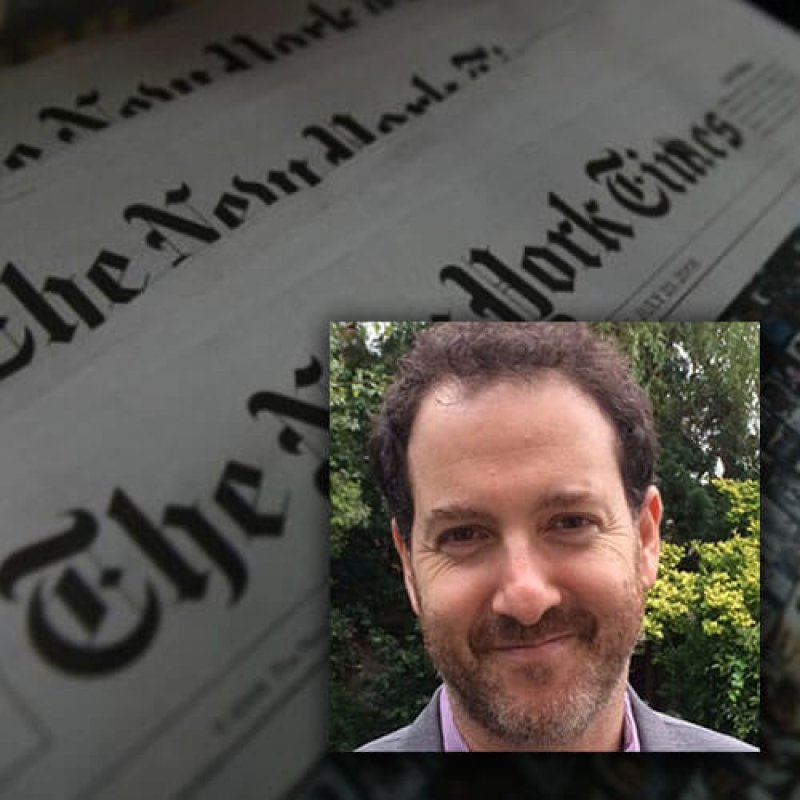
Former AAAS president Nina Fedoroff on Danny Hakim’s “disingenuous” NYT GMO ‘hit piece’

Danny Hakim New York Times
[Editorโ€™s note: A recent articleย ย byย Danny Hakimย in the New York Times claims that GMO crops have not lived up to their promises of increased yields and reduced herbicide use. In this article by Nina Fedoroff, the former president of the American Association for the Advancement of Science saysย that Hakim’s analysis of pesticide toxicity is misleading.]

Danny Hakimโ€™s attempt to skewer biotech crops in his recent article on the front page Sundayโ€™s New York Times (Doubts About the Promised Bounty of Genetically Modified Crops, Oct. 29, 2016) is skewed from beginning to end. ย His insight โ€“ what he says the debate has missed โ€“ is that genetic modification has not accelerated increases in crop yields.

Well โ€“ duh! โ€“ they werenโ€™t meant to.ย  The two major modifications in widespread use today are resistance to certain types of pests and tolerance to the herbicide glyphosate. These biotech traits were designed to be advantageous to farmers by decreasing their input costs through reduced use of insecticides, and reduced necessity for weed control. So citing yield data is simply disingenuous.ย Itโ€™s kind of like accusing the body shop that just fixed your dented car door of not making your engine run better.

Hakim makes much of the fact that herbicide use has gone up, but neglects to mention that the major herbicide used, glyphosate, is much less toxic than its predecessors. Hence, most sound analyses do not analyze simple amounts used, but a more sophisticated measure called the โ€œenvironmental impact quotientโ€ or EIQ.

The GLP aggregated and excerpted this blog/article to reflect the diversity of news, opinion, and analysis. Read full, original post:ย Hakimโ€™s Effort to Skewer Biotech Crops in Sunday’s NY Times

{{ reviewsTotal }}{{ options.labels.singularReviewCountLabel }}
{{ reviewsTotal }}{{ options.labels.pluralReviewCountLabel }}
{{ options.labels.newReviewButton }}
{{ userData.canReview.message }}

Related Articles

Infographic: Global regulatory and health research agencies on whether glyphosate causes cancer

Infographic: Global regulatory and health research agencies on whether glyphosate causes cancer

Does glyphosateโ€”the world's most heavily-used herbicideโ€”pose serious harm to humans? Is it carcinogenic? Those issues are of both legal and ...

Most Popular

ChatGPT-Image-May-7-2026-12_16_37-PM-2
Viewpoint: Are cancer rates โ€˜skyrocketingโ€™ as RFK, Jr. and MAHA claims? The evidence says mostly the opposite
Screenshot-2026-04-13-at-1.39.26-PM
Viewpoint: โ€˜Safer for children?โ€™ Stonyfield yogurt under fire for deceptive organic marketing
Screenshot-2026-04-22-at-10.46.29-AM
Viewpoint: How to counter science disinformation? Science journalist offers 12 practical tips
png-pill-omega-Supp-fish-oil
Millions take omega-3 fish oil for brain health. New research suggests it may do the opposite.
Screenshot-2026-04-23-at-11.00.36-AM
Regulators' dilemma: Thalidomide, Metformin, and the cost of getting drug approvals wrong
ChatGPT Image May 14, 2026, 09_51_35 PM
Facebook swamped by hundreds of thousands of scam ads for illegal or dangerous medical products
ChatGPT Image May 12, 2026, 01_21_30 PM
How big health brands are funding online medical misinformationย 
ChatGPT-Image-May-12-2026-08_39_41-PM
GLP podcast: Big Pharma, Big Ag, Big Foodโ€”health harming industries or life-saving innovators?
ChatGPT-Image-May-13-2026-12_43_37-PM-2
Longevity: Is cellular rejuvenation even possible?
Picture1-1
Cooling the planet with balloons: Could a geoengineering gamble slow global warming?
Screenshot 2026-05-12 at 11.01
Viewpoint: Can this California pediatrician and Congressional hopeful quell anti-vaccine extremists?

Sorry. No data so far.

glp menu logo outlined

Get news on human & agricultural genetics and biotechnology delivered to your inbox.