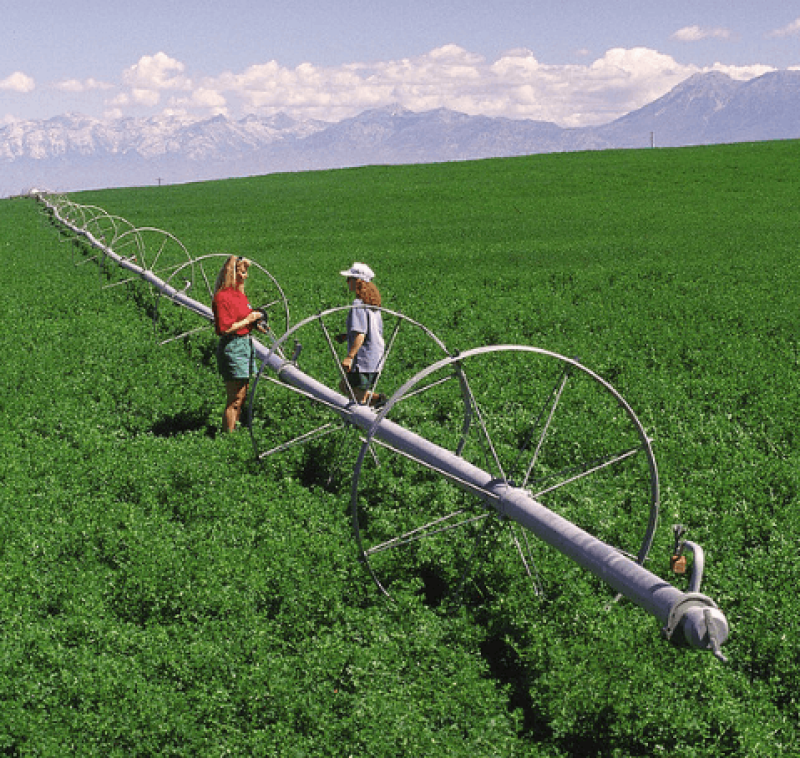

Adoption of genetically engineered alfalfa among farmers has lagged behind other biotech crops, with the vast majority of U.S. acreage remaining conventional, according to USDA.
Only about 13.5 percent of harvested U.S. alfalfa acreage is genetically modified, compared to more than 90 percent of corn, soybeans, cotton, canola and sugar beets acres, according to a new USDA report that cites 2013 farmer surveys.
. . . .
Farmers have been slower to adopt genetically engineered alfalfa partly because it’s a perennial crop that stays in the ground for roughly five years, said Dan Putnam, an alfalfa extension specialist at the University of California-Davis.
Cultivars can be shifted more quickly with annual crops, he said. “You can change your mind next year and do something completely different than this year.”
. . . .





Alfalfa has particularities that have hindered greater adoption of genetically modified varieties, Putnam said.
In the Midwest and Northeast, farmers commonly plant a mixture of alfalfa, grass and clover for hay and forage, since each crop performs differently in fields with varying drainage conditions, he said.
“Using Roundup Ready doesn’t make any sense in that situation,” since glyphosate would kill the grass and clover, Putnam said.
The GLP aggregated and excerpted this blog/article to reflect the diversity of news, opinion and analysis. Read full, original post: Adoption of biotech alfalfa lags other GMO crops