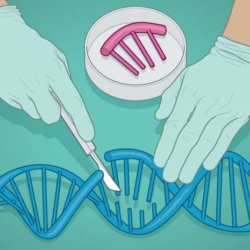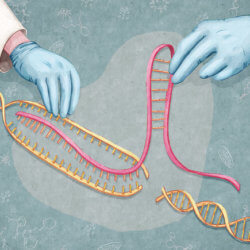
Could CRISPR, gene editing radically affect human evolution?

doudna crispr

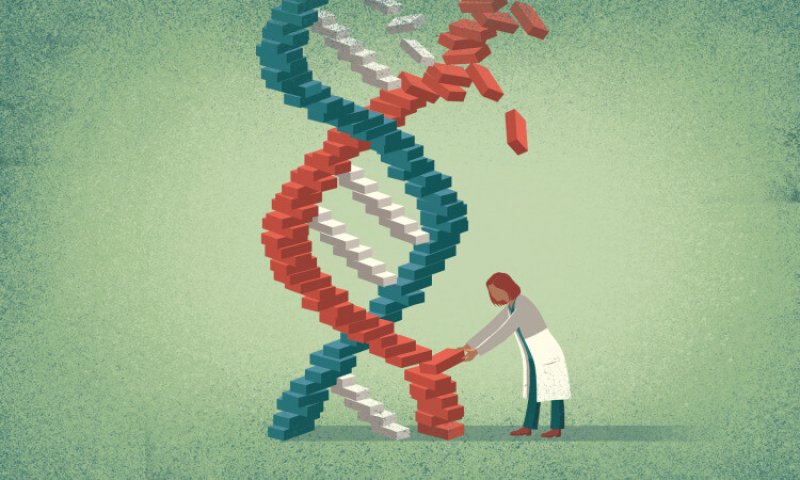
CRISPR-Cas9, the new gene modification tool, which has been heralded as a means for inserting ourselves into evolution, is itself evolving as a technology…On the immediate horizon, we are starting to see the silhouette of what Marcy Darnovsky, director of the Center for Genetics and Society, calls “market-based eugenics.”

Whether I agree with them should be separated from the ambition to “industrialize the human genome”—and why the alteration of our biology evokes hubris, and our applications and intents can go wrong.

[N]umerous studies of late have demonstrated that thousands of genetic variants straddled over the entire genome contribute to autism and psychiatric risk, as well as personality traits, and even intelligence.

[M]any of these genetic variants may be pleiotropic, meaning they have different, often unrelated effects in different cells or tissues. The severity of their enhancing or diminishing effects may also vary, depending on their genetic background, the other genetic variants they’re inherited with.

There are no superior genes. Genes have a long and layered history, and they often have three or four unrelated functions, which balance against each other under selection. Those risky variants that can, in the right scenario, say, make us better at numbers are actually helpful to remain in the population in low frequencies.

The GLP aggregated and excerpted this blog/article to reflect the diversity of news, opinion, and analysis. Read full, original post: How Gene Editing Could Ruin Human Evolution

Related Articles

Infographic: Global regulatory and health research agencies on whether glyphosate causes cancer

Infographic: Global regulatory and health research agencies on whether glyphosate causes cancer

Does glyphosate—the world's most heavily-used herbicide—pose serious harm to humans? Is it carcinogenic? Those issues are of both legal and ...

Most Popular

ChatGPT-Image-Mar-10-2026-01_39_01-PM
Viewpoint—“Miracle molecule” debunked: Why acemannan supplements don’t work
ChatGPT-Image-Sep-17-2026-12_28_43-PM
Vitamin D, omega-3 fish oil and glucosamine supplements could cause brain damage 
Screenshot-2026-08-12-at-11.31.46-AM
AI is helping develop new vaccines
Screenshot-2026-08-19-at-6.19.42-PM
Facts & Fallacies podcast: 'Regenerative farming'? RFK Jr.’s federal push romanticizes the past and risks food security
ChatGPT-Image-Aug-28-2026-03_33_46-PM
Viewpoint: Bad science—Five bogus Trump administration claims about vaccines and autism
Screenshot-2026-09-14-at-4.31.14-PM
Viewpoint: What’s the likely impact when the EPA loosens rules limiting methane pollution from oil and gas wells?
ChatGPT-Image-Sep-9-2026-02_48_24-PM
Viewpoint: Trump-RFK Jr. report on “Gender Ideology & Left-wing Ideology’ targets LGBTQ community—and science
Screenshot-2026-09-10-at-12.20.19-PM
'Jet fuel didn't melt the steel': 9/11 conspiracy theories debunked
ChatGPT-Image-Sep-13-2026-10_46_11-AM
“Hit the brakes”: Anthropic warns the race to superintelligence could spawn internet-seizing AI swarms—and empower authoritarians. Here’s how to stop it.
Screenshot-2026-09-15-at-11.04.54-AM
Viewpoint: Childhood deaths in dispute: Why the CDC vs Pennsylvania conflict over measles vaccines matters
organic-labeling-slide-dcba-aa-c-a-dde-a-fcd-e-c-d-
Viewpoint: Organic food costs more—but is it healthier, safer, and more nutritious? The latest science findings may surprise you.
glp menu logo outlined

Get news on human & agricultural genetics and biotechnology delivered to your inbox.