Sustainability activists fear agrochemical, seed company monopolies will damage food security

Screen Shot at PM

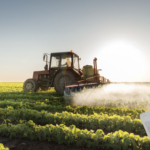
In the global agriculture sector, there have long been seven international manufacturers of pesticides and seeds, the report says. But that’s changing.

Once German chemicals company Bayer completes its planned takeover of seed company Monsanto, that will make it the world’s biggest agrochemical producer.

Meanwhile, US giants DuPont and Dow Chemicals are also planning a merger, and ChemChina wants to buy Swiss agrochemical and seed company Syngenta.

“Soon, we won’t be dealing with an oligopoly, but three huge monopolies,” Barbara Unmüßig of the Heinrich-Böll foundation told DW.

Fewer varieties of crops can also threaten food security. Normally, if one variety is wiped out by disease, others may survive. But farmers around the world are increasingly planting the same industrially produced seeds.

“In order to insure food security, you need high agro-diversity so that climate change, floods and other weather impacts don’t have such a strong effect on the farming system,”Kathrin Wenz, agriculture policy expert at Friends of the Earth Germany, said.

Despite food industry claims of fighting world hunger by increasing production, the current trend in farming practices tends to actually promote depletion of agricultural land in the long term.

“We are destroying the fertility of the soil with the overuse of chemical fertilizers and monocultures,” explains Unmüßig. “We lose 24 billion tons of fertile soil every year, which could be used to build up food security.”

The GLP aggregated and excerpted this blog/article to reflect the diversity of news, opinion, and analysis. Read full, original post: Who controls our food?

{{ reviewsTotal }}{{ options.labels.singularReviewCountLabel }}
{{ reviewsTotal }}{{ options.labels.pluralReviewCountLabel }}
{{ options.labels.newReviewButton }}
{{ userData.canReview.message }}

Related Articles

Infographic: Global regulatory and health research agencies on whether glyphosate causes cancer

Infographic: Global regulatory and health research agencies on whether glyphosate causes cancer

Does glyphosate—the world's most heavily-used herbicide—pose serious harm to humans? Is it carcinogenic? Those issues are of both legal and ...

Most Popular

Screenshot-2026-04-22-at-12.21.32-PM
Viewpoint: Why the retracted Monsanto glyphosate study doesn’t change the science—the world’s most popular herbicide is safe 
Picture1
The FDA couldn’t find a vaccine safety crisis, so it buried its own research
ChatGPT-Image-May-1-2026-11_42_59-AM-2
Viewpoint: NAD is the wellness grifters latest evidence-lite longevity fad. At least the mice are impressed.
ChatGPT-Image-Apr-16-2026-02_56_53-PM
Financial incentives, over diagnosis, and weak oversight: Autism claims are driving up Medicare costs
global warming
‘Implausible’: Top climate scientists reject worst-case scenario—soaring temperatures and fast-rising sea levels
ChatGPT-Image-May-12-2026-11_27_01-AM-2
AI likely to improve health care, research shows—but not for blacks and ethnic minorities
ChatGPT-Image-May-7-2026-01_23_27-PM-2
Viewpoint: Will AI democratize personalized cancer treatment or fuel medical misinformation?

Sorry. No data so far.

glp menu logo outlined

Get news on human & agricultural genetics and biotechnology delivered to your inbox.