Brain cancer in children: Unique ‘genetic drivers’ open door to precision medical treatments

lulla saratsis patient

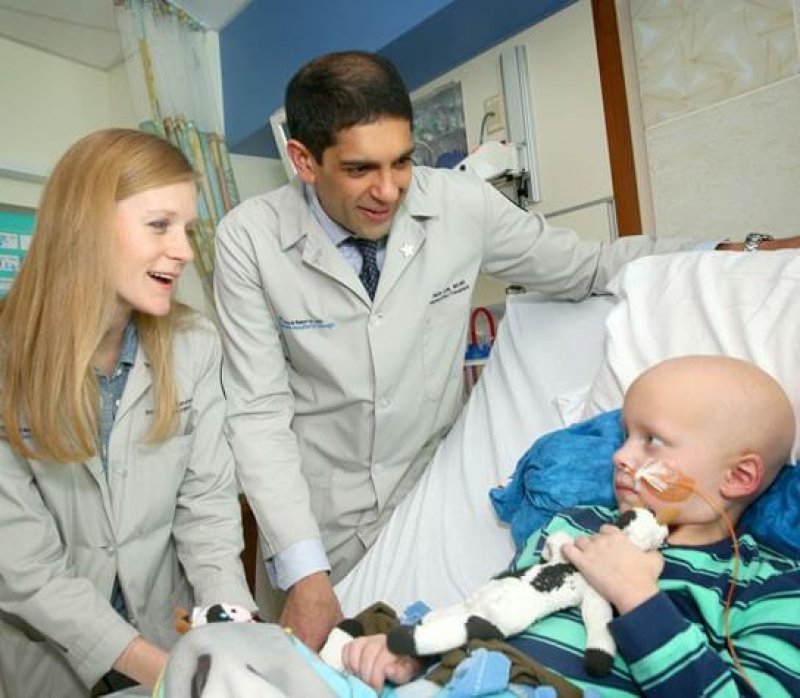
In the past 30 years, childhood deaths from cancer have declined by 50 percent overall, but those from pediatric brain cancer have only decreased by 30 percent.

Researchers at the Dana-Farber Cancer Institute and Boston Childrenโ€™s Hospital think precision medicine…could help improve those rates.

Investigators conducted genetic testing on 203 patient tumor samples and found that 56 percent of them harbored genetic abnormalities that could either help doctors diagnose or treat the brain tumor with drugs that are already available or those being studied in clinical trials.

The findings of their study…[also suggest]ย that brain tumors in children and adults need to be treated differently.

For decades, every child with the same tumor type received the same treatment, says Pratiti Bandopadhayay, a pediatric neuro-oncologist at Dana-Farber/Boston Childrenโ€™s Cancer and Blood Disorders Center. โ€œWeโ€™re learning that when you look at these tumors under the microscope, even if they look the same, they might have different genetic drivers.โ€

[However,] Ann Kingston, director of research and scientific policy at the National Brain Tumor Society…says even people with the same genetic mutations in their tumors might not respond similarly to the same treatment.

[The study can be found here.]

The GLP aggregated and excerpted this blog/article to reflect the diversity of news, opinion, and analysis. Read full, original post:ย Genetic Testing Offers New Hope for Children with Brain Cancer

{{ reviewsTotal }}{{ options.labels.singularReviewCountLabel }}
{{ reviewsTotal }}{{ options.labels.pluralReviewCountLabel }}
{{ options.labels.newReviewButton }}
{{ userData.canReview.message }}

Related Articles

Infographic: Global regulatory and health research agencies on whether glyphosate causes cancer

Infographic: Global regulatory and health research agencies on whether glyphosate causes cancer

Does glyphosateโ€”the world's most heavily-used herbicideโ€”pose serious harm to humans? Is it carcinogenic? Those issues are of both legal and ...

Most Popular

Screenshot-2026-04-22-at-12.21.32-PM
Viewpoint: Why the retracted Monsanto glyphosate study doesnโ€™t change the scienceโ€”the worldโ€™s most popular herbicide is safeย 
Picture1
The FDA couldnโ€™t find a vaccine safety crisis, so it buried its own research
ChatGPT-Image-May-1-2026-11_42_59-AM-2
Viewpoint: NAD is the wellness grifters latest evidence-lite longevity fad. At least the mice are impressed.
global warming
โ€˜Implausibleโ€™: Top climate scientists reject worst-case scenarioโ€”soaring temperatures and fast-rising sea levels
Screenshot-2026-05-21-at-12.15.17-PM
UK gene-editing milestone: Livestock barley that increases ruminant value and reduces methane emissions is first-approved CRISPR crop
vax-misinformation-main
Facts & Fallacies Podcast: Limit free speech to blunt social media misinfo?
ChatGPT-Image-Apr-16-2026-02_56_53-PM
Financial incentives, over diagnosis, and weak oversight: Autism claims are driving up Medicare costs
Screenshot-2026-05-21-at-3.15.53-PM
Chiropractors may no longer be modern-day snake oil salesmen, but the benefits of their therapy are limitedโ€“at best
ChatGPT-Image-May-12-2026-11_27_01-AM-2
AI likely to improve health care, research showsโ€”but not for blacks and ethnic minorities
Screenshot-2026-05-20-at-5.11.17-PM
Viewpoint: No, sugar doesnโ€™t โ€˜feedโ€™ cancer โ€” common cancer myths, debunked

Sorry. No data so far.

glp menu logo outlined

Get news on human & agricultural genetics and biotechnology delivered to your inbox.