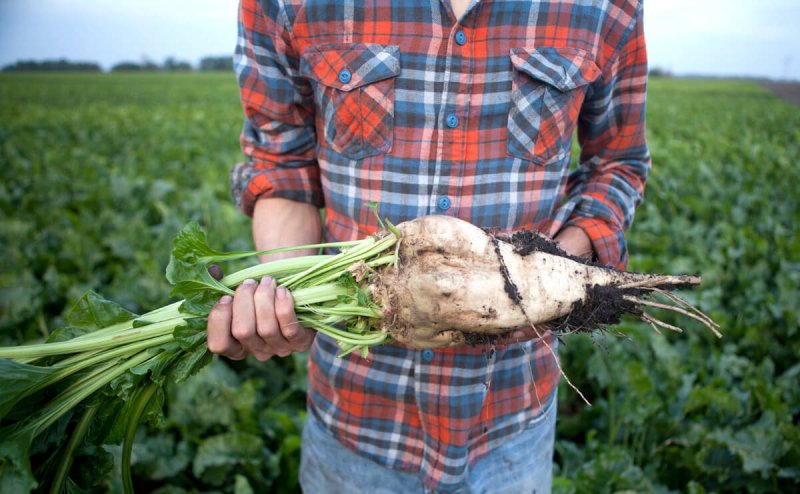
Idaho GMO sugar beet farmers mull ditching crop as more food companies adopt non-GMO label

sugarbeethero

Idaho sugar beet farmers have grown increasingly dependent on genetically modified seeds for cost savings and greater yields over the last decade. But large companies like Hershey are switchingย from genetically modified beets to traditional beets or cane sugar to fill their needs.

Idaho farmers are now askingย if itโ€™s worth growing sugar beets at all, said Garth Taylor, extension specialist at the University of Idaho Department of Agricultural Economics.

โ€œFarmers are saying they wonโ€™t go back to hoeing sugar beets,โ€ Taylor said. โ€œThey say they would rather farm potatoes or another crop then go back to conventional seeds.โ€

โ€œHershey, Danone and Del Monte โ€“ I could show you a list,โ€ said John McCreedy, president of Amalgamated Sugar, which is owned by farmers. โ€œWe have lost 15 percent of our customers who used to buy beet sugar and cane sugar interchangeably based on price, quality and delivery service. They will now not buy beet sugar regardless of the price because they want to be able to label their food products non-GMO.โ€

The food news website Food Navigator USA reported that non-GMO food labels have increased significantly over the last decade. In 2009, 1.9 percent of food and beverage products were labeled non-GMO. In 2015, 15.7 percent of food and beverage products made non-GMO claims.

The GLP aggregated and excerpted this blog/article to reflect the diversity of news, opinion, and analysis. Read full, original post:ย Idaho sugar industry plans a response to GMO critics

{{ reviewsTotal }}{{ options.labels.singularReviewCountLabel }}
{{ reviewsTotal }}{{ options.labels.pluralReviewCountLabel }}
{{ options.labels.newReviewButton }}
{{ userData.canReview.message }}

Related Articles

Infographic: Global regulatory and health research agencies on whether glyphosate causes cancer

Infographic: Global regulatory and health research agencies on whether glyphosate causes cancer

Does glyphosateโ€”the world's most heavily-used herbicideโ€”pose serious harm to humans? Is it carcinogenic? Those issues are of both legal and ...

Most Popular

Screenshot-2026-04-13-at-1.39.26-PM
Viewpoint: โ€˜Safer for children?โ€™ Stonyfield yogurt under fire for deceptive organic marketing
Screenshot-2026-04-22-at-10.46.29-AM
Viewpoint: How to counter science disinformation? Science journalist offers 12 practical tips
ChatGPT-Image-May-7-2026-12_16_37-PM-2
Viewpoint: Are cancer rates โ€˜skyrocketingโ€™ as RFK, Jr. and MAHA claim? The evidence says mostly the opposite
Picture1-14
When superbugs threaten vulnerable children: Can AI help solve antibiotic resistance?
ChatGPT-Image-May-12-2026-08_39_41-PM
GLP podcast: Big Pharma, Big Ag, Big Foodโ€”health harming industries or life-saving innovators?
Screenshot-2026-04-23-at-11.00.36-AM
Regulators' dilemma: Thalidomide, Metformin, and the cost of getting drug approvals wrong
Picture1-1
Cooling the planet with balloons: Could a geoengineering gamble slow global warming?
png-pill-omega-Supp-fish-oil
Millions take omega-3 fish oil for brain health. New research suggests it may do the opposite.
glp menu logo outlined

Get news on human & agricultural genetics and biotechnology delivered to your inbox.