On/off switch? Chronic pain could be eased if we identify the right genes

Chronic Pain

[Editor’s note: Blair Smith is a professor of population science at the University of Dundee in Scotland.]

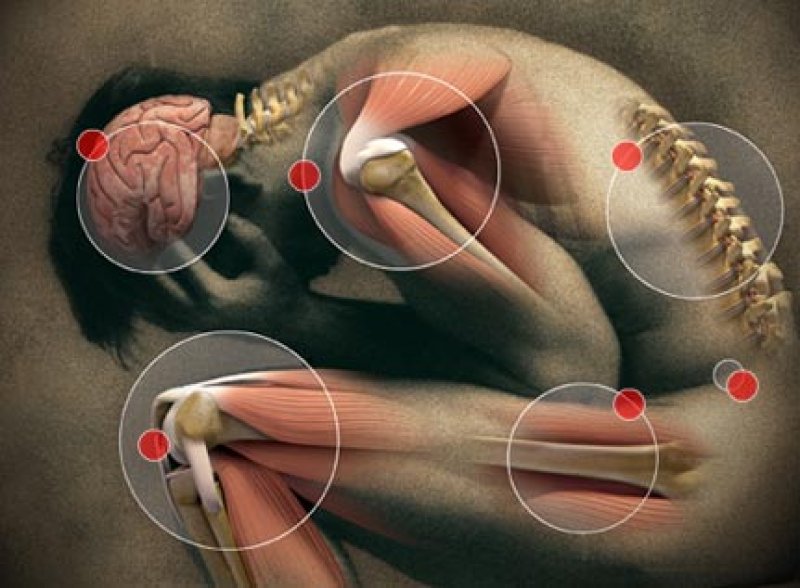
Two of the most common disorders which occur alongside chronic pain are depression and angina.

[W]e found that people with depression were two and a half times more likely to experience chronic pain; while people with both depression and heart disease were nine times more likely to experience chronic pain.

A familial risk was confirmed when we looked at siblings of people affected by these conditions. A sibling of someone with heart disease was twice as likely to have chronic pain, and siblings of those with depression were twice as likely to suffer from heart disease. This suggests that genetics plays a part in these chronic diseases, in addition to known social and demographic factors.

In identical twins, it was consistently more likely that both individuals would be affected, by any of the conditions, than non-identical twins, which further confirms that there is significant genetic contribution.

The exact genes involved in the occurence and co-occurrence of chronic pain need to be identified, so that we may switch them off at an early stage and try to develop new treatments.

[Read the full study here.]

The GLP aggregated and excerpted this blog/article to reflect the diversity of news, opinion, and analysis. Read full, original post: How genetics can uncover links in chronic pain and other conditions

{{ reviewsTotal }}{{ options.labels.singularReviewCountLabel }}
{{ reviewsTotal }}{{ options.labels.pluralReviewCountLabel }}
{{ options.labels.newReviewButton }}
{{ userData.canReview.message }}

Related Articles

Infographic: Global regulatory and health research agencies on whether glyphosate causes cancer

Infographic: Global regulatory and health research agencies on whether glyphosate causes cancer

Does glyphosate—the world's most heavily-used herbicide—pose serious harm to humans? Is it carcinogenic? Those issues are of both legal and ...

Most Popular

Screenshot-2026-05-01-at-1.29.41-PM
Viewpoint: What happens when whole grains meet modern food manufacturing? Labels don’t tell the whole story.
S
As vaccine rejectionism spreads, measles may be taking a more dangerous turn
Screenshot 2026-05-06 at 2.56
Singularity crisis ahead? Can super babies save us from rogue AI geniuses?
Screenshot-2026-03-13-at-12.14.04-PM
The FDA wants to make many popular prescription drugs OTC—a great idea. Here’s why it’s unlikely to happen
Screenshot-2026-05-06-at-2.07.43-PM
Manufacturing a conspiracy: The timeline of how  the White House embraced the fringe claim that scientists are being mysteriously murdered
Screenshot-2026-05-01-at-11.56.24-AM
‘Science moves forward when people are willing to think differently’: Memories of DNA maverick Craig Venter
Screenshot-2026-04-30-at-2.19.37-PM
5 myths about summer dehydration that could damage your health — or even kill you
Screenshot-2026-04-20-at-2.26.27-PM
Viewpoint — Food-fear world: The latest activist scientists campaign: Cancer-causing additives
Screenshot-2026-04-03-at-11.15.51-AM
Paraben panic: How a flawed study, media hype, and chemophobia convinced the public of the danger of one of the safest classes of preservatives
images
The never-ending GMO debate: Pros and cons
glp menu logo outlined

Get news on human & agricultural genetics and biotechnology delivered to your inbox.