How dyslexia affects brain function: It’s not just about reading and language

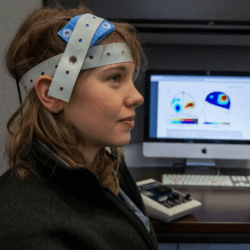
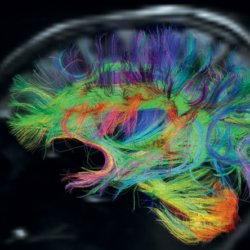
Dyslexia is not just about reading, or even language. It’s about something more fundamental: How much can the brain adapt to what it has just observed? People with dyslexia typically have less brain plasticity than those without dyslexia, two recent studies have found.

Though the studies measured people’s brain activity in two different ways and while performing different tasks, researchers at the Hebrew University of Israel, reporting in eLife, and researchers from MIT, reporting in Neuron, both found that dyslexics’ brains did not adapt as much to repeated stimuli, including spoken words, musical notes, and faces.

In the Hebrew University study, led by Merav Ahissar, researchers gave subjects a musical task: The researchers played two different notes and asked which was higher. Previous research has found that people do better on this task when one of the notes is a repeat of a note they’ve heard recently. But Ahissar found that people with dyslexia did not benefit as much from the repetition.

The MIT study, led by John Gabrieli, found similar results through a different experiment….Gabrieli’s team simply presented people with repeated things, including spoken words, written words, faces, and common objects like tables or chairs. During this task, dyslexic people’s neural activity demonstrated less adaptation.

The GLP aggregated and excerpted this blog/article to reflect the diversity of news, opinion, and analysis. Read full, original post: Dyslexia Doesn’t Work the Way We Thought It Did

For more background on the Genetic Literacy Project, read GLP on Wikipedia

{{ reviewsTotal }}{{ options.labels.singularReviewCountLabel }}
{{ reviewsTotal }}{{ options.labels.pluralReviewCountLabel }}
{{ options.labels.newReviewButton }}
{{ userData.canReview.message }}

Related Articles

Infographic: Global regulatory and health research agencies on whether glyphosate causes cancer

Infographic: Global regulatory and health research agencies on whether glyphosate causes cancer

Does glyphosate—the world's most heavily-used herbicide—pose serious harm to humans? Is it carcinogenic? Those issues are of both legal and ...

Most Popular

Screenshot 2025-08-25 203032
Mazzenga’s 20-year old muscles: How a still-going-strong 92-year old sprinter wins every race she enters
Screenshot-2026-06-08-at-10.19.30-AM
‘Natural’ wellness supplements linked to liver injury
ChatGPT-Image-May-28-2026-12_56_54-PM
Viewpoint: Vaccines' non-specific effects? The ‘shoddy’ Danish couple whose 'research’ inspires RFK, Jr.’s health delusion
Screenshot-2026-06-05-at-2.12.30-PM
Some plants can poison you. So how did humans figure out what is safe to eat?
Credit: ACSH
Viewpoint: Who and what’s to blame for the surge in vaccine-preventable diseases?
Screen Shot at AM
Facts & Fallacies Podcast: Right-wing politics bad for your health? Separating speculation from science
ChatGPT-Image-Jun-9-2026-03_24_05-PM
Misinformed parents overdosing children with Vitamin A to fight measles
Screenshot 2025-07-30 at 10.48
Can gene editing eliminate Down syndrome? Scientists have done it in lab-grown cells
Screenshot-2026-06-05-at-1.44.09-PM
Viewpoint: Scientists have scrapped the worst-case climate scenario. Is that proof that climate change is a hoax, as Trump claims?
ChatGPT-Image-Mar-10-2026-01_39_01-PM
Viewpoint—“Miracle molecule” debunked: Why acemannan supplements don’t work
ChatGPT-Image-Jun-9-2026-11_54_59-AM
Why weight-loss drugs might be reducing cancer rates and making treatment more effective
Screenshot-2026-06-08-at-11.05.51-AM
Can vaping lead to cancer? New ‘association study’ raises questions of “links"
glp menu logo outlined

Get news on human & agricultural genetics and biotechnology delivered to your inbox.