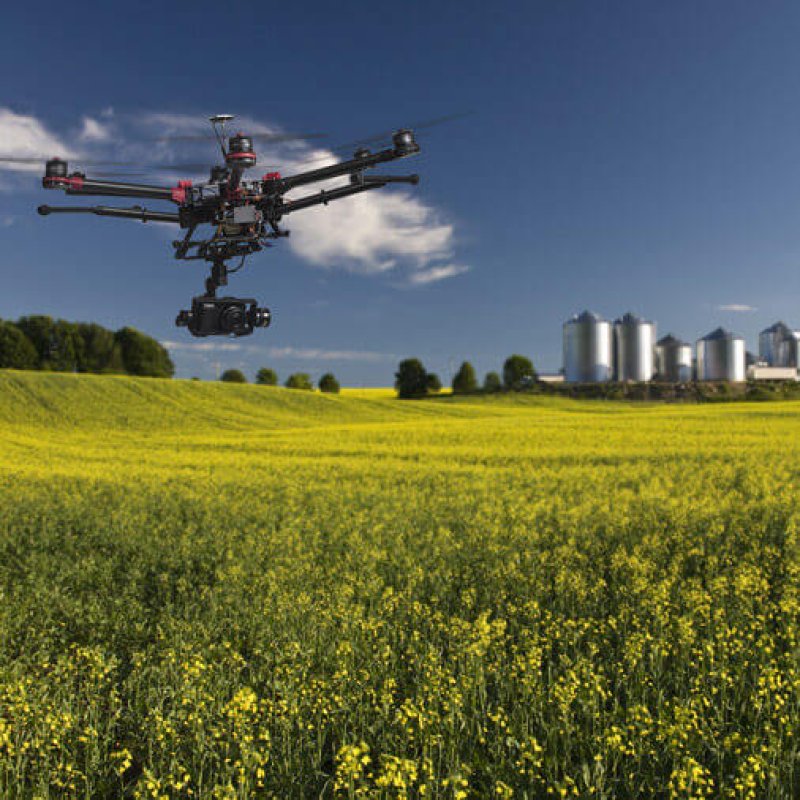
Camera-equipped drones may soon detect plant disease before any visible signs

agricultural precision farming drone air e

Researchers are developing drones that could detect plant disease before any visible signs show, allowing farmers to stop infections in their tracks.

Disease can negatively impact plant health before any visible signs like leaf discolouration show. While these stresses are invisible to the naked eye, cameras using special filters could detect these subtle changes.

Now, [Imperial College London] researchers … are partnering with agriculture services company Agrii to create cameras mounted on drones. These cameras could automatically detect early disease stages, and tell farmers when to spray, before the disease damages the crop.

Chris Adams, who is taking on the project for his PhD, said: “Allowing farmers to identify stress before full infection occurs is particularly important as the climate changes. An unpredictable environment makes it challenging to track and forecast disease.

“Diseases reduce yields when we need them to be high, as the global population grows and we need to feed more people than ever. Reducing yield loss to diseases like Septoria will allow us to grow more food, more efficiently and on less land, benefiting the agricultural industry, the public and the environment.”

The GLP aggregated and excerpted this blog/article to reflect the diversity of news, opinion, and analysis. Read full, original post: Drones that detect early plant disease could save crops

For more background on the Genetic Literacy Project, read GLP on Wikipedia

{{ reviewsTotal }}{{ options.labels.singularReviewCountLabel }}
{{ reviewsTotal }}{{ options.labels.pluralReviewCountLabel }}
{{ options.labels.newReviewButton }}
{{ userData.canReview.message }}

Related Articles

Infographic: Global regulatory and health research agencies on whether glyphosate causes cancer

Infographic: Global regulatory and health research agencies on whether glyphosate causes cancer

Does glyphosate—the world's most heavily-used herbicide—pose serious harm to humans? Is it carcinogenic? Those issues are of both legal and ...

Most Popular

Picture1
The FDA couldn’t find a vaccine safety crisis, so it buried its own research
ChatGPT-Image-Apr-16-2026-02_56_53-PM
Financial incentives, over diagnosis, and weak oversight: Autism claims are driving up Medicare costs
Screenshot-2026-04-22-at-12.21.32-PM
Viewpoint: Why the retracted Monsanto glyphosate study doesn’t change the science—the world’s most popular herbicide is safe 
Screenshot-2026-05-08-at-11.55.47-AM
Anti-vax activists falsely blame COVID vaccines for the rising U.S. cancer rate among younger people.
Screenshot-2026-05-19-at-11.23.34-AM
West-originated vaccine disinformation sparks murders of health care workers across Africa
ChatGPT-Image-May-7-2026-12_32_36-PM
Viewpoint: The state of U.S. vaccine policy? Dismal nationally, but some states are stepping up.
ChatGPT-Image-May-12-2026-11_27_01-AM-2
AI likely to improve health care, research shows—but not for blacks and ethnic minorities
modi visit sikkim
Viewpoint: Indian PM wants farmers to switch to 50% organic. It would take at least 10 years, likely won’t work, and isn’t more sustainable
Screenshot-2026-04-13-at-1.39.26-PM
Viewpoint: ‘Safer for children?’ Stonyfield yogurt under fire for deceptive organic marketing
placebo
Viewpoint — Alternative medicine and the placebo effect: Selling a reassuring illusion of health
glp menu logo outlined

Get news on human & agricultural genetics and biotechnology delivered to your inbox.