GMO-free top labeling issue for 13% of consumers

gmo

In recent years, public awareness campaigns have aimed to inform consumers of the presence of genetically modified organisms (GMOs), but stopped short (so far) of eliminating them. According to Mintel Reports, consumers do not avoid GMOs on quite the same level as artificial preservatives, flavors and sweeteners. That said, sizable portions of Baby Boomers (34%) and Millennials (29%) are actively avoiding genetically modified foods.

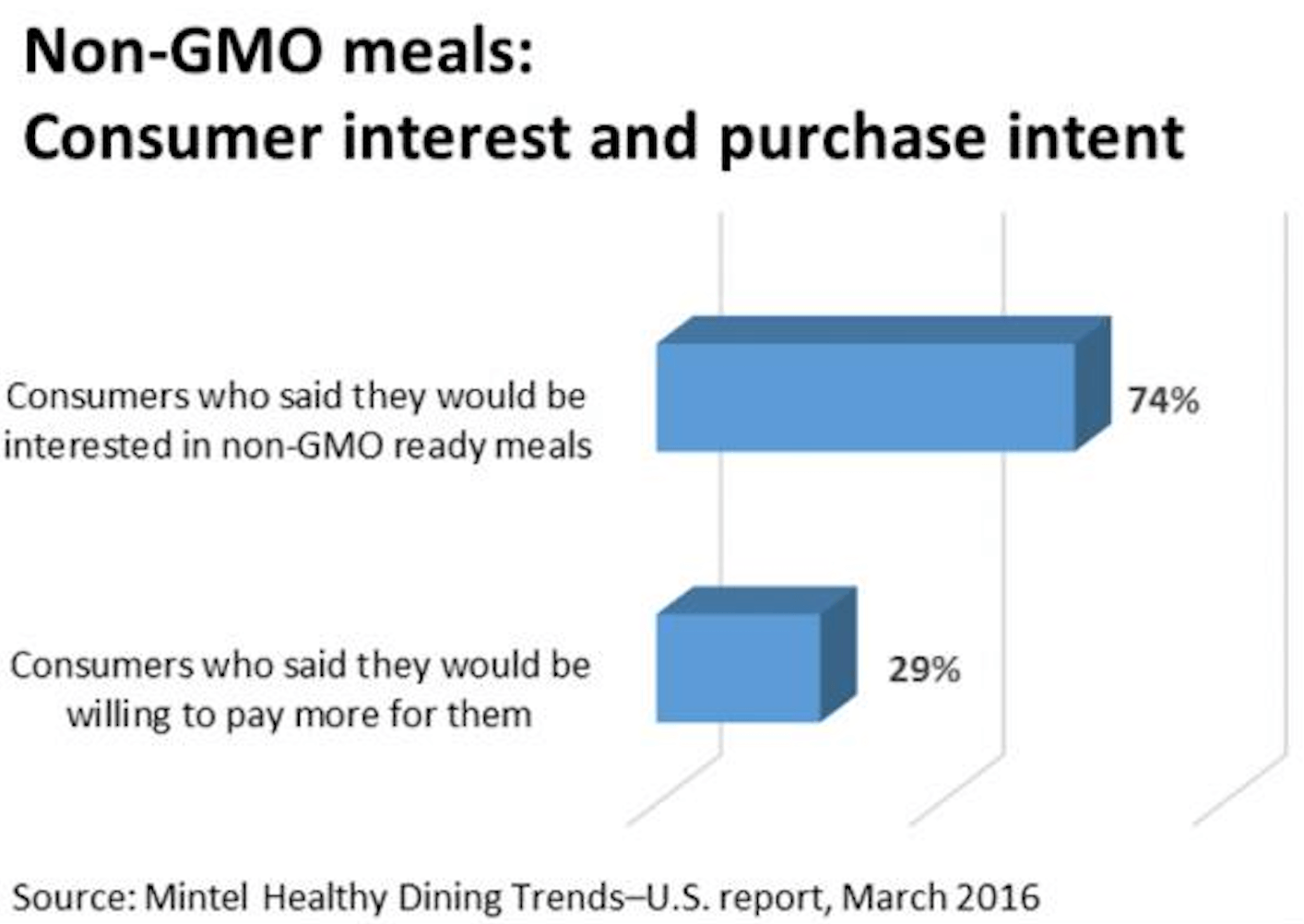
According to Mintel’s Free From Food Trends, GMO-free is the top issue for 13% of consumers who purchase any free-from food. By contrast, 27% rank “trans fat-free” as the most important issue when buying food. But, tallying the top two rankings, GMO-free claims are cited by a quarter of respondents, the same percentage who are looking for preservative-free claims. However, Mintel’s Global New Products database actually shows a 5% decline between January 2012 and December 2016 in the percentage of new food introductions in North America with GMO-free on-pack claims.
Screen Shot at PM

[C]onsumer perception of qualities for the 10 GMO-free food and drink products with the highest purchase intent significantly outranked food and drink products without a GMO-free claim in nearly every attribute, including such attributes as taste, quality, whether the brand was trustworthy, and if the product appeared premium, natural, organic, or even unique, among other attributes.

The GLP aggregated and excerpted this blog/article to reflect the diversity of news, opinion, and analysis. Read full, original post: GMO labeling remains a ‘front-panel’ issue for brands

{{ reviewsTotal }}{{ options.labels.singularReviewCountLabel }}
{{ reviewsTotal }}{{ options.labels.pluralReviewCountLabel }}
{{ options.labels.noReviewsLabel }}
{{ options.labels.newReviewButton }}
{{ userData.canReview.message }}

Related Articles

Infographic: Global regulatory and health research agencies on whether glyphosate causes cancer

Infographic: Global regulatory and health research agencies on whether glyphosate causes cancer

Does glyphosate—the world's most heavily-used herbicide—pose serious harm to humans? Is it carcinogenic? Those issues are of both legal and ...

Most Popular

ChatGPT-Image-Mar-10-2026-01_39_01-PM
Viewpoint—“Miracle molecule” debunked: Why acemannan supplements don’t work
ChatGPT-Image-Jul-22-2026-09_13_07-AM
Viewpoint—The Strategic Litigation boom: Understanding the tightening coalition among NGOs, foundations, journalists, and tort lawyers
ChatGPT-Image-Jun-25-2026-12_23_17-PM
No, Bill Gates did not secretly engineer ticks to promote veganism
ChatGPT-Image-May-22-2026-10_26_09-AM
Trump-RFK, Jr. National Science Board firings: Accountability vs. partisan meddling
How to Include More Strawberries in Your Diet
Strawberries are berries—and 35 other surprising food and drink myths
Screenshot-2026-07-07-at-12.55.44-PM
Viewpoint: Yes, we can adapt to a changing climate without devastating the environment and the economy
close up arabica coffee farmer s hands picking beans plant his farm colombia
Viewpoint: Why do so many ‘mainstream’ and ‘respected’ media outlets exaggerate climate change threats?
diversity
We are entering a new era of personalized medicine—if you’re white

Sorry. No data so far.

glp menu logo outlined

Get news on human & agricultural genetics and biotechnology delivered to your inbox.