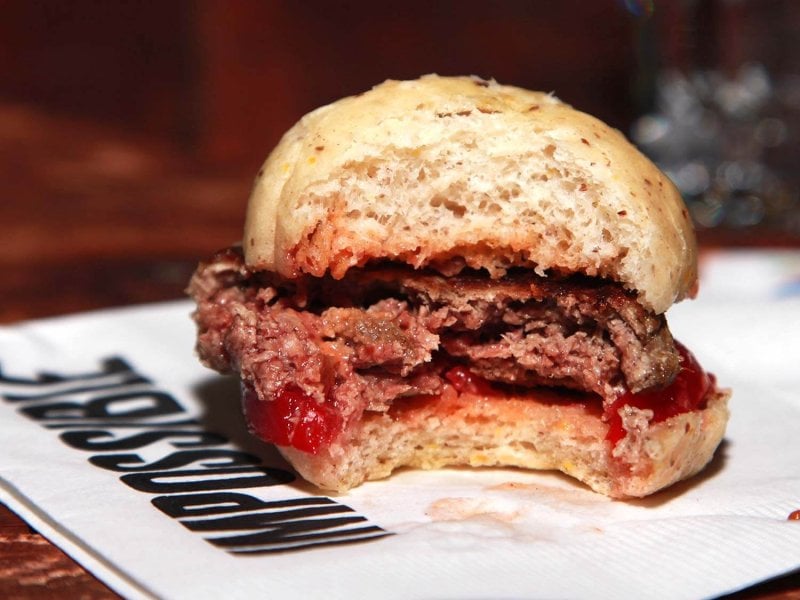
21st century veggie burger: ‘Bloody-pink and fleshy’ thanks to genetic engineering

beyond burger impossible burger

The 20th century veggie burger was a beige patty packed with whole grains and carrot chunks, sold in a brown paper wrapper. The 21st century version? It’s bloody-pink and fleshy, thanks to heme, an ingredient created via genetic engineering.

To those steeped in the natural-food movement, the acronym GMO — for genetically modified organisms — has traditionally been almost as taboo as a plate of braised veal. However, that view could be changing as a new generation of Bay Area entrepreneurs upends the alternative meat and dairy industry, using biotechnology to create vegetarian foods that taste more like meat and promise ecological advantages to boot.

“As somebody who has my entire life been a hard-core environmentalist — I went vegan for a large part for that reason — genetic engineering is one of the most important tools we can use in terms of environmental conservation,” said Mike Selden, co-founder and CEO of Finless Foods in San Francisco, which is replicating fish fillets out of stem cells, though not currently with genetic engineering.


Not everyone agrees, and as these products hit the market — including the aforementioned “veggie burger that bleeds” from Impossible Foods — consumer and environmental groups have called for greater oversight and testing than what’s currently required by the federal government.

The GLP aggregated and excerpted this blog/article to reflect the diversity of news, opinion, and analysis. Read full, original post: Meatless, tasty and genetically modified: a healthy debate

{{ reviewsTotal }}{{ options.labels.singularReviewCountLabel }}
{{ reviewsTotal }}{{ options.labels.pluralReviewCountLabel }}
{{ options.labels.newReviewButton }}
{{ userData.canReview.message }}

Related Articles

Infographic: Global regulatory and health research agencies on whether glyphosate causes cancer

Infographic: Global regulatory and health research agencies on whether glyphosate causes cancer

Does glyphosate—the world's most heavily-used herbicide—pose serious harm to humans? Is it carcinogenic? Those issues are of both legal and ...

Most Popular

ChatGPT-Image-May-7-2026-12_32_36-PM
Viewpoint: The state of U.S. vaccine policy? Dismal nationally, but some states are stepping up.
Screenshot-2026-04-22-at-10.46.29-AM
Viewpoint: How to counter science disinformation? Science journalist offers 12 practical tips
Screenshot-2026-04-13-at-1.39.26-PM
Viewpoint: ‘Safer for children?’ Stonyfield yogurt under fire for deceptive organic marketing
the magic of mRNA
Viewpoint: Anti-vax fake ‘turbo cancer’ claims threaten cancer treatment breakthroughs
ChatGPT-Image-May-7-2026-12_16_37-PM-2
Viewpoint: Are cancer rates ‘skyrocketing’ as RFK, Jr. and MAHA claim? The evidence says mostly the opposite
Picture1-1
Cooling the planet with balloons: Could a geoengineering gamble slow global warming?
artificial intelligence brain think illustration md
Viewpoint — Digital gods and human extinction: Will we be the first species ever to design our own descendants?
Defense_Secretary_Ash_Carter_tours_the_Microsoft_Cybercrime_Center_in_Seattle_March_3_2016
How criminals are using AI to target social media users and steal their money and confidential data
ChatGPT-Image-May-7-2026-01_23_27-PM-2
Viewpoint: Will AI democratize personalized cancer treatment or fuel medical misinformation?
Picture1-14
When superbugs threaten vulnerable children: Can AI help solve antibiotic resistance?
glp menu logo outlined

Get news on human & agricultural genetics and biotechnology delivered to your inbox.