Study: Food products from livestock raised on GMO feed no different than those fed conventional grain

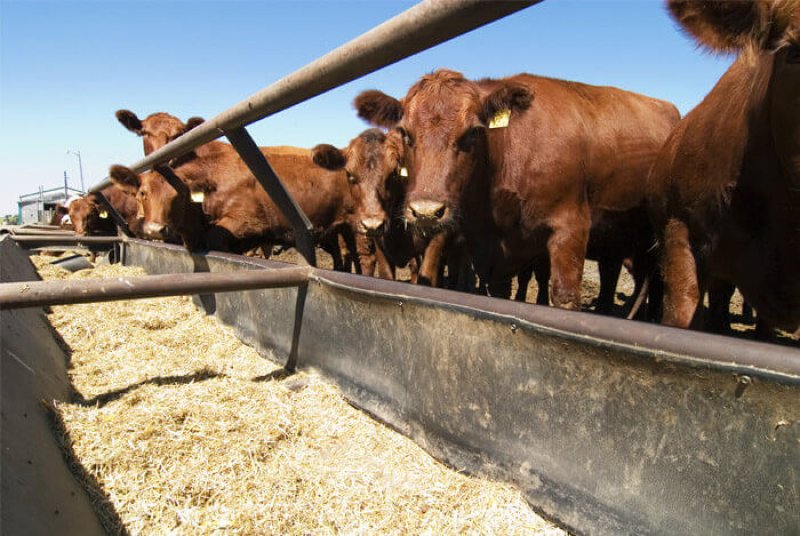
grain fed cattle

This review summarizes the available scientific literature on the detection of dietary DNA and protein in animal products and briefly discusses the implications of mandatory GE labeling for products from animals that have consumed GE feed. 

Researchers have concluded that there is nothing to suggest that DNA from GE crops behaves any differently in the gastrointestinal tract of animals than non-GE counterparts. Absorption of dietary DNA across the intestinal wall appears to be a normal process that does not have adverse effects on food animals, regardless of whether the DNA is transgenic or endogenous.

Traces of dietary DNA and protein cannot be reliably detected in meat, milk, or eggs. Numerous studies have looked for the presence of rDNA and recombinant proteins in animal products, and the bottom line is that meat, milk, and eggs from animals that have consumed GE feed are analytically indistinguishable from those that have eaten non-GE feed. This makes mandatory labeling of such products misleading, because it would require labeling for something that was not discernible in the products. Given the wide trade and usage of GE livestock feeds globally, managing separate supply chains for indistinguishable animal products based on the GE content of the diet they consumed would be inefficient and expensive and would have no public health benefit based on available scientific data.


The GLP aggregated and excerpted this article to reflect the diversity of news, opinion and analysis. Read full, original post: Detection of dietary DNA, protein, and glyphosate in meat, milk, and eggs

{{ reviewsTotal }}{{ options.labels.singularReviewCountLabel }}
{{ reviewsTotal }}{{ options.labels.pluralReviewCountLabel }}
{{ options.labels.noReviewsLabel }}
{{ options.labels.newReviewButton }}
{{ userData.canReview.message }}

Related Articles

Infographic: Global regulatory and health research agencies on whether glyphosate causes cancer

Infographic: Global regulatory and health research agencies on whether glyphosate causes cancer

Does glyphosate—the world's most heavily-used herbicide—pose serious harm to humans? Is it carcinogenic? Those issues are of both legal and ...

Most Popular

ChatGPT-Image-Mar-10-2026-01_39_01-PM
Viewpoint—“Miracle molecule” debunked: Why acemannan supplements don’t work
Screenshot 2026-07-11 094410
Growing animal muscle and fat cells inside rice grains and calling it beef: One of numerous genetically engineered products shaking up our ecosystem
file-f-d-d-
Facts & Fallacies Podcast: Europe's AC debacle underscores fatal flaw in green activism
Screenshot-2026-07-16-at-11.32.12-AM
Viewpoint: Trump appoints climate change hoax promoter to head influential government policy project
Screenshot 2025-09-17 at 12.41
Misinformation alert: No, glyphosate use in Canadian forests is not spurring more wildfires
Screenshot 2026-07-16 at 8.49
Pete Hegseth’s bizarre Viagra commercial as Trump administration endorses ‘hormone replacement therapy’
ChatGPT-Image-Jun-25-2026-12_23_17-PM
No, Bill Gates did not secretly engineer ticks to promote veganism
ChatGPT-Image-Jul-9-2026-02_39_22-PM
Viewpoint: Polyphenols or NAD+ supplements to combat aging: No, Gwenyth Paltrow and followers, don’t waste your money.
Screenshot-2026-07-16-at-6.02.54-PM
Wellness grifters overwhelm information channels in the developing world, and the problem is escalating
Screenshot-2026-07-16-at-12.08.38-PM
Viewpoint: With trust in doctors and mainstream medicine collapsing, medical professionals need a new communications strategy
Screenshot-2026-07-08-at-9.36.03-AM
Viewpoint: Long-contained diseases are on the rise in the U.S. Are Trump cuts to blame?

Sorry. No data so far.

glp menu logo outlined

Get news on human & agricultural genetics and biotechnology delivered to your inbox.